
Academic laboratories
Academic laboratory: fume hoods and air conditioning ducts
The hood pulls air out of the lab and someone has to put it back. When nobody does, the air comes in where it can, and it is almost always where it should not.
 By
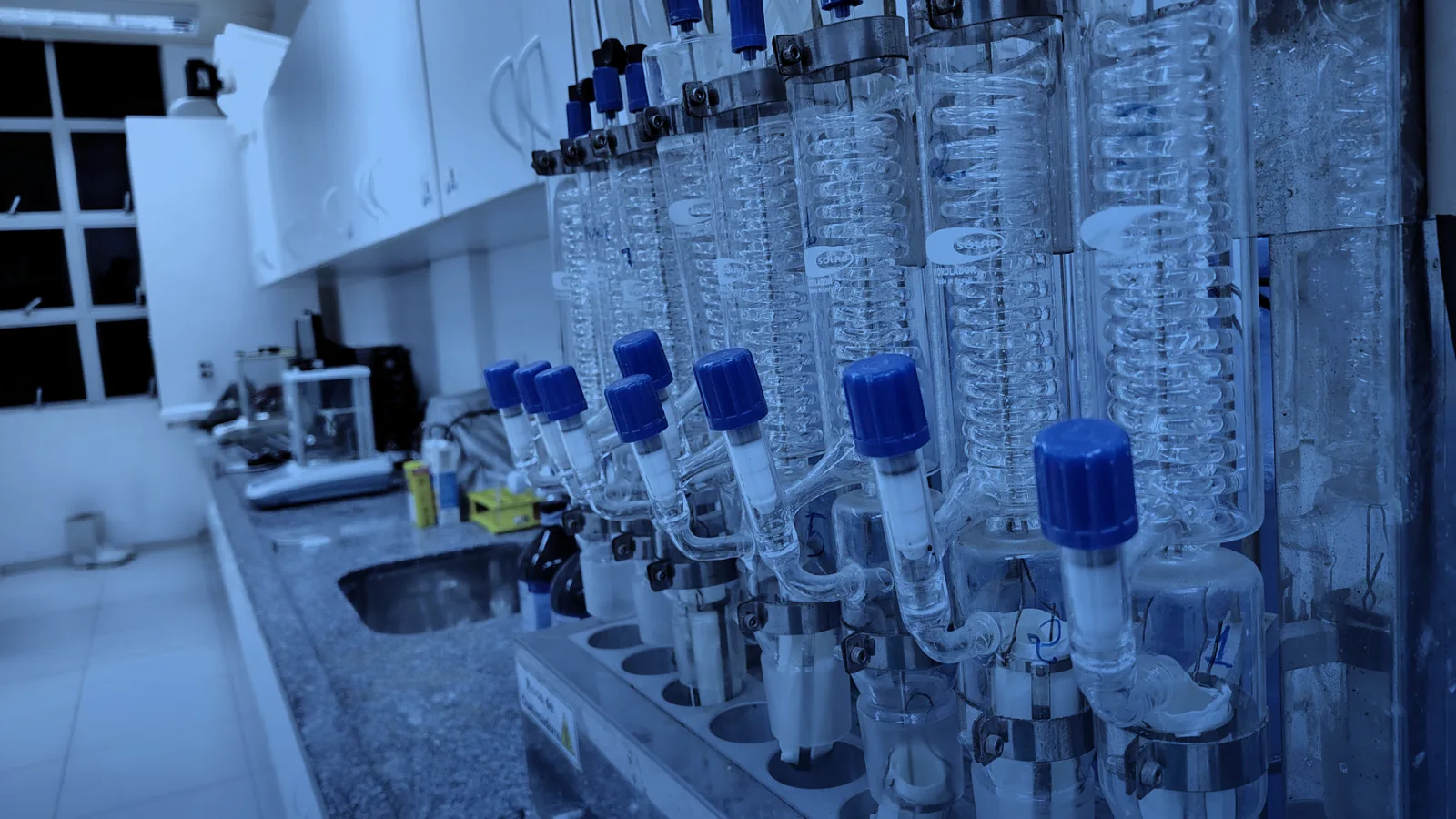
The fume hoods of a teaching laboratory pull air out of the building, and that air is replaced by the air conditioning system. If replacement falls short, the lab ends up under negative pressure and draws air from the door gap, the hallway and the returns. Balance is checked with simple signs and the ducts with a camera when the hoods have been off for days.
A teaching laboratory has two air systems designed separately that live together badly. The hood extracts. The air conditioning cools and recirculates. In a chemistry practical with three or four hoods open, the coordinator notices that the door is hard to open, that the air conditioning does not reach temperature and that the hallway suddenly smells of reagent.
Those three signs tell the same story. When the hood is on and the air conditioning is not adjusted to replace what leaves, the lab pulls air from wherever it can: the door gap, the hallway, the ceiling and the return ducts themselves. Understanding that relationship avoids blaming the ducts for what is a balance problem.
Why do the hoods and the air conditioning fight?
OSHA’s laboratory safety guidance describes the hood as the primary control when working with flammable or toxic products, and requires it to be maintained and working when used. To work, the hood needs a flow of air to leave the building. That flow has to be replaced by the ventilation system, and in a school or university lab the only system moving air is usually the air conditioning.
Anyone who needs to see the real condition of the ducts in the case of academic laboratories can request a camera inspection from the team at Climatiza, a technical duct cleaning service in Panama, which documents every section with images.
The EPA describes the mechanism in its guide for building managers: local exhaust keeps negative pressure around the source, and air always moves from the higher pressure zone to the lower through any opening. With several hoods open, the lab becomes the lowest pressure zone of the hallway. The same occurs in a plant with process extraction, only there it was designed for that.
Which signs reveal an imbalance in the lab?
| Sign | What it indicates |
|---|---|
| Door hard to open outward or closing by itself | The lab is under negative pressure against the hallway |
| Whistle at the door gap with hoods on | Make-up air enters where it should not |
| Hood indicator outside the marked range | Insufficient flow: OSHA asks to check the indicator before use |
| Air conditioning not reaching temperature during practicals | The unit cools air that the hood then expels |
| Reagent smell in the hallway or the next classroom | The return recirculated what the hood did not capture |
| Dust on the supply grille next to the hood | Cross flow between supply and hood face |
Why does it matter that the lab is balanced?
Because balance decides whether the hood does its job. A hood with little make-up air does not capture well, and what it does not capture stays in the room or leaks into the hallway. It matters for the safety of the practical, which belongs to lab coordination and not to whoever cleans ducts, but also for comfort, since a room that never cools during practicals takes attention away from students. And it matters for the unit, which cools air that is expelled and works harder.
The scope should be clear. Duct cleaning does not correct a pressure imbalance and has not been shown to prevent health problems, according to the EPA and the CDC. What the camera provides is evidence: whether there is a deposit in the return next to the hood, whether the lining is damaged or whether there is an opening through which air enters uncontrolled. With that, coordination can ask the ventilation design for what cleaning cannot give: make-up air.
What does the lab visit look like?
It is scheduled when the hoods have been off for days and no reagents are open, for example in the week between semesters or during a break. Before entering, the coordination agrees on what is touched and what is not: the hood’s exhaust duct, with its certificate and maintenance, stays out. What is checked is the lab’s air conditioning system, with the camera run through returns and branches.
An illustrative case, not a real client: a general chemistry lab with four hoods. One hood indicator reads below range during practicals, the door shuts itself and the air conditioning does not get below a certain temperature. The camera finds no deposit in the ducts, just light dust on the grille by one hood. The report concludes the problem is not cleaning but make-up air, notes it with the visit’s readings and passes it to the coordination. Nothing is cleaned.
Which mistakes repeat and what should be asked of the provider?
Asking for duct cleaning to solve a smell that comes from an imbalance repeats. Opening a window or leaving the door ajar so the hood works better also repeats, which disrupts the flow and scatters what the hood was meant to contain. And mixing air conditioning and extraction in one contract repeats, though they have different owners and certifications. A study of California classrooms recommended periodic testing or carbon dioxide monitoring precisely because ventilation problems go unnoticed.
- Photos per stretch and the reading of each hood indicator on the day of the visit.
- Description of the door test and of the pressure signs observed.
- List of what was not touched because it belongs to the extraction.
- One recommendation per finding, separating what is cleaning from what is design.
Safety coordination usually keeps each hood’s certificate and the air conditioning maintenance log separately. The duct report is built to fit between the two. The rest of a campus’s spaces are covered in the work at universities, the other kinds of place are in the places where the team works and, if a stretch is to be cleaned, the service with prior inspection describes how it is done.
The next step after this guide is usually a visit to check the system, which is arranged with the team at Climatiza using the details in their duct cleaning page.
Sources
On this site
- Universities and schoolsHow the work is organized in this sector
- Industry and logistics parksA neighboring sector
- Camera inspectionThe real condition before deciding
Climatiza and Radar Panamá
Why does inspecting and cleaning ducts matter?
These are the technical reasons, with their source, why the condition of the ducts is checked before deciding. Duct cleaning has not been shown to prevent health problems according to the EPA and the CDC, and it is proposed only when the observed condition justifies it.
| Advantage | Data with source | What it means in practice |
|---|---|---|
| Know whether cleaning is needed before deciding | The EPA states in its duct cleaning guide that cleaning is justified for visible mold, pests or a notable buildup of dust and debris. | A camera inspection documents the condition and allows a decision based on evidence, without unnecessary work. |
| Anticipate the tropical humidity | According to ETESA (Tocumen station, 1977 to 2010), mean annual relative humidity in Panama is 75.7 % and rises to between 78.2 and 82.4 % in the rainy months. | The condensate pan, the drain and the coil are checked first, because that is where moisture builds up. |
| Keep humidity under control | The EPA recommends in its guide to mold and moisture keeping indoor relative humidity below 60 % and drain pans clean and draining freely. | A humidity reading and a clean pan limit the conditions in which mold grows. |
| Check classroom and hall ventilation | A peer reviewed study of 104 classrooms (Chan et al., 2020) found problems in 51 % of them. | The camera and readings show whether air reaches where it should before each school term. |
| A local figure that changes the decision | In 2024 total enrollment in the country was 1,213,119 students, 82.6% in the public sector. University education reached 193,773 students (preliminary figure) and the University of Panama had 88,094, or 45.6% of university enrollment. (INEC, Education 2024). | It is the sector context taken into account when planning the visit. |
Frequently asked questions
Do fume hoods affect the lab's air conditioning?
Yes. The hood pulls air out of the building and the air conditioning must replace it. If it falls short, the lab goes under negative pressure, the door is hard to open and the unit does not reach temperature. It is a balance matter, not a cleaning one.
Does cleaning the lab ducts improve how the hoods work?
Not directly. The hood depends on its own exhaust duct and on make-up air. The camera in the air conditioning ducts serves to rule out deposits or damage and to document the state, but it does not correct pressure.
When are the ducts of a teaching lab checked?
When the hoods have been off for days and no reagents are open, in the week between semesters or during a break. What is touched and what belongs to the extraction is agreed beforehand with safety coordination.
What signs show that a laboratory with fume hoods is under negative pressure?
A door that is hard to open outward or closes by itself, a whistle at the gap with the hoods running, a hood gauge outside its marked range, and reagent odor in the hallway. They indicate that makeup air is coming in where it should not.
Why does a laboratory's air conditioning fail to reach temperature during practice hours?
Because the unit cools air that the hoods expel right away. The EPA explains that air always moves from the higher-pressure zone to the lower-pressure one through any opening, so with several hoods open the laboratory becomes the lowest-pressure zone in the hallway.
Keep reading the guide

Request an inspection
Do you want to know the condition of your system?
A camera inspection lets you see the inside of the ducts before deciding what to do. Message us and we will confirm availability.
- +507 6388-2083
- info@climatizapanama.com
- Calle Gervasio García, 8, Panama City