
Appliance stores
Appliance store: ducts between showroom and stockroom
In an appliance store the dust is born in the stockroom, but the customer notices it in the showroom, on the screens and in the air.
 By
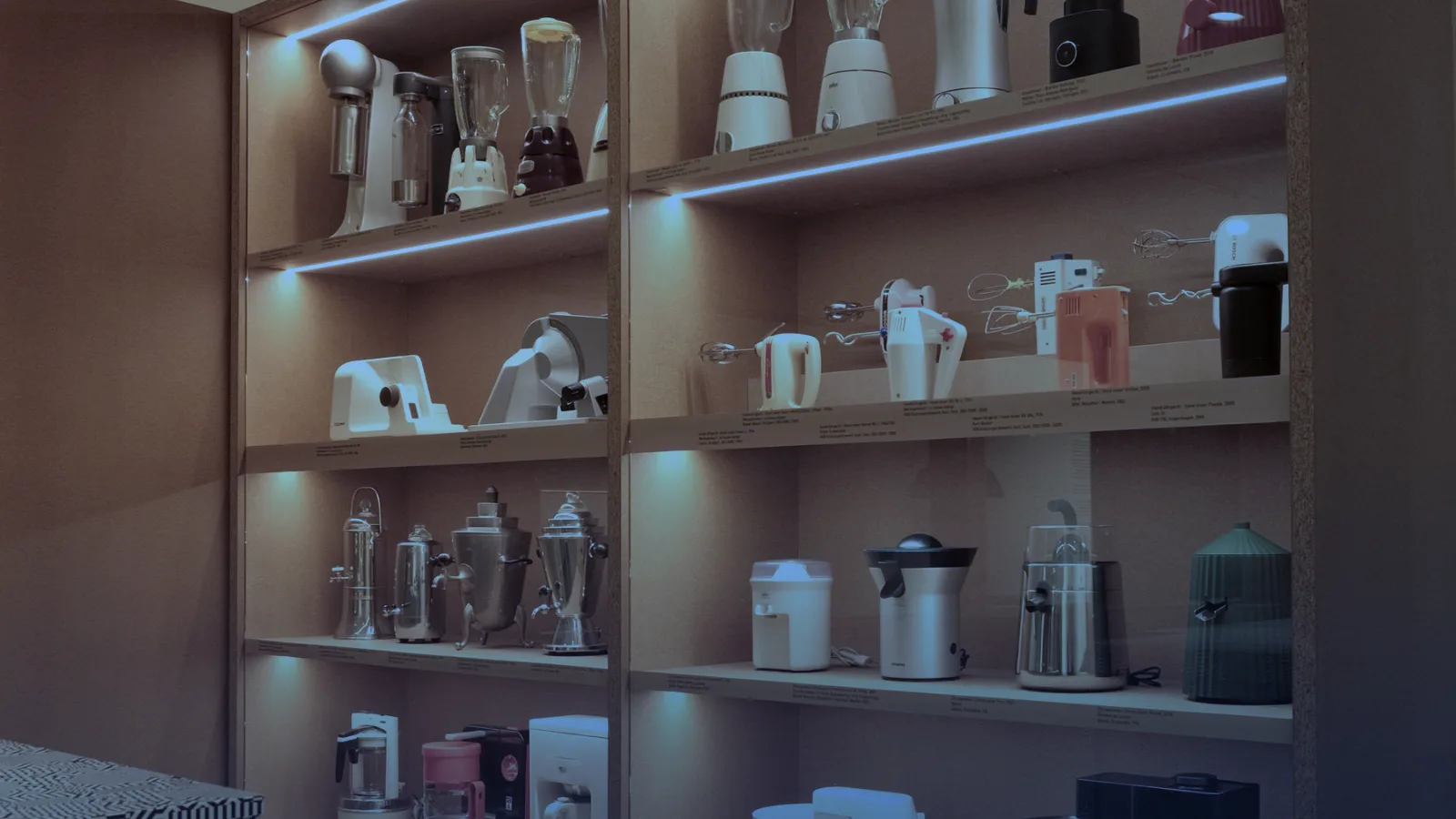
The ducts of a store with a showroom and a stockroom are looked after by checking first the return closest to the unpacking table, because cardboard fiber and foam beads pile up there. The camera shows how much reached the air handler and the showroom. Only the loaded section is cleaned and the stockroom air is kept apart from the showroom air.
The manager of an appliance store knows a scene that repeats every Monday. A truck arrives, twenty boxes are opened, a wall of televisions and a row of washing machines are unpacked. By mid morning the display screens carry a dull film that staff wipe away with a cloth, and an hour later it is back. Nobody connects it with the air conditioning, and yet that is where the trip begins.
Corrugated cardboard sheds short fibers every time it is cut or torn. Expanded polystyrene crumbles into beads and fine dust when a unit comes out of its box. These loads are light, which is why they stay afloat long enough for a return grille to pull them in and spread them through the system.
Why does stockroom dust end up on the showroom floor?
It ends up on the showroom floor because stockroom and display area almost always share an air handler or at least a stretch of return. Stockroom air, with its load of fiber, mixes with showroom air before reaching the filter, and the filter is a barrier with limits. When it saturates, the fiber gets through, sticks to the grille vanes and the duct joints, and comes out again through the diffusers over the merchandise.
The fieldwork is carried out by the Climatiza team, who check branches, grilles and air handlers and record the result in an illustrated report, also in the case of appliance stores.
There is a useful difference from other dusts. Construction dust is mineral and heavy, and street dust is fine and dark. Cardboard and foam dust is dry, pale and fibrous, and it compacts when humidity rises. Panama has an annual mean humidity of 75.7% according to ETESA, which explains why in the rainy season that fiber stops being loose dust and turns into a gray crust at the joints.
Why does it matter if sales stay the same?
It matters because the cost of dust does not show up as a failure, it shows up as small losses that add up. Screens look dirty and have to be wiped more often. The filter is replaced sooner than planned. The showroom unit runs longer hours, because a wall of televisions switched on and refrigerators open to show the inside already add a good deal of heat. And a customer trying out a unit in a heavy air showroom stays for less time.
It also matters for the order of the operation. When nobody knows whether the dust comes from the duct, the filter or the unpacking, decisions are made blind. An image of the inside of the duct settles the discussion among the store manager, the air conditioning technician and the premises administration. And it is fair to say plainly that duct cleaning has not been shown to prevent health problems, according to the EPA and the CDC, so the reason to do it is the condition of the equipment and the showroom, not a promise of wellbeing.
What is a visit to a store with a showroom and a stockroom like?
The visit begins with a simple question to the manager: where is unpacking done and at what time do trucks arrive. With that answer the technician decides where to enter. First the return grille closest to the unpacking table is looked at, along with the section leaving it. Then the run to the air handler is followed, the filter is opened and the coil is checked. Last come the branches that feed the display area.
What turns up most is pale fiber bonded in the first section, a filter loaded to the edge and showroom branches much cleaner than the manager feared. That points the decision. An illustrative case, not a real client: a store with the stockroom at the back and a single return near the unpacking table. The camera shows the first section covered in fiber and the showroom almost clean. The sensible move is to clean that section and the air handler, ask for a better capture filter on the stockroom return and consider whether unpacking can move away from the grille. Cleaning the whole system would have meant more work for the same result.
The general logic of a shop with a storeroom is explained in how the work is organized in a store, and when the volume of goods weighs more than the display area it helps to look at what changes in a warehouse. The camera route is in how a camera inspection is carried out.
Which mistakes repeat and what is worth asking for?
The first mistake is treating the stockroom and the showroom as a single space, with a single report, so nobody knows where the load comes from. The second is changing the filter more often without moving the unpacking, which is the source. The third is cleaning the ducts and not the work table, and then the fiber is back within weeks. The fourth is not keeping reference images, because without them nobody knows how fast the load returns.
- Images of the first return section and of the air handler, with date.
- A note that separates what was found in the stockroom from what was found in the showroom.
- Condition of the filter and the coil when the unit was opened.
- Sections without access, with the reason.
- A suggestion of when to look again, tied to merchandise turnover and not to a fixed calendar.
With that, the criteria for deciding whether cleaning is due are applied to evidence and not to habit.
More about the inspection and cleaning service that applies these criteria is on the Climatiza duct cleaning page and on the Climatiza home page.
Sources
On this site
- Stores and supermarketsHow the work is organized in this sector
- Warehouses and storageA neighboring sector
- Camera inspectionThe real condition before deciding
Climatiza and Radar Panamá
Why does inspecting and cleaning ducts matter?
These are the technical reasons, with their source, why the condition of the ducts is checked before deciding. Duct cleaning has not been shown to prevent health problems according to the EPA and the CDC, and it is proposed only when the observed condition justifies it.
| Advantage | Data with source | What it means in practice |
|---|---|---|
| Anticipate the tropical humidity | According to ETESA (Tocumen station, 1977 to 2010), mean annual relative humidity in Panama is 75.7 % and rises to between 78.2 and 82.4 % in the rainy months. | The condensate pan, the drain and the coil are checked first, because that is where moisture builds up. |
| Protect equipment performance | In a laboratory test with dust equivalent to one year of use, coil pressure drop rose between 6 and 30 % and efficiency (EER) fell between 1 and 9 % (Yang, Braun and Groll, ARTI, 2004). | It is a laboratory result and not a promise of savings: it points to the components worth checking. |
| Follow a technical inspection reference | The ANSI/ASHRAE/ACCA 180 standard is the standard practice for inspection and maintenance of commercial HVAC systems. | It is an industry reference, not a legal requirement in Panama, and helps organize the review plan. |
| A local figure that changes the decision | INEC’s Business and Establishment Directory (reference year 2022) records 39,937 wholesale and retail trade establishments, including Free Zones, and vehicle repair, the sector with the most establishments in the country, out of 96,397. The category is broad and does not separate supermarkets or stores. (INEC, Business and Establishment Directory 2022). | It is the sector context taken into account when planning the visit. |
Frequently asked questions
Do the ducts need cleaning every time a large shipment arrives?
No. A large shipment loads the filter, not necessarily the duct. It helps to check the filter and the first return section more often and to clean the duct only if the camera shows bonded fiber.
Does cardboard and foam dust damage the display screens?
The dust settles on the surface and forces more frequent wiping, but that is not a duct matter. The useful question is whether fiber comes out of the diffusers above the display, and that is confirmed with the camera.
Can stockroom air be kept apart from showroom air?
Often yes, with a dedicated return for the stockroom or a filtered grille near the unpacking area. The air conditioning technician decides it from the report, not from a general rule.
What should be checked first in an appliance store, the storeroom or the showroom?
The first thing to check is the return nearest the unpacking area, whether in the storeroom or the showroom, because that is where cardboard and foam dust enters. Next come the diffusers over the display units. The order is set by the return’s location, not the name of the space.
How are diffusers over display products cleaned without soiling them?
The units in the area are covered with plastic, the work is done outside sales hours and dust is vacuumed directly at the diffuser so it does not fall on the product. Afterward the plastic is removed and the result is photographed for the report.
Keep reading the guide

Request an inspection
Do you want to know the condition of your system?
A camera inspection lets you see the inside of the ducts before deciding what to do. Message us and we will confirm availability.
- +507 6388-2083
- info@climatizapanama.com
- Calle Gervasio García, 8, Panama City