
Car dealerships
Dealership: why the workshop and showroom should not share air
The showroom smells of new car. The workshop smells of oil, exhaust and brakes. What matters is that each smell stays where it started.
 By
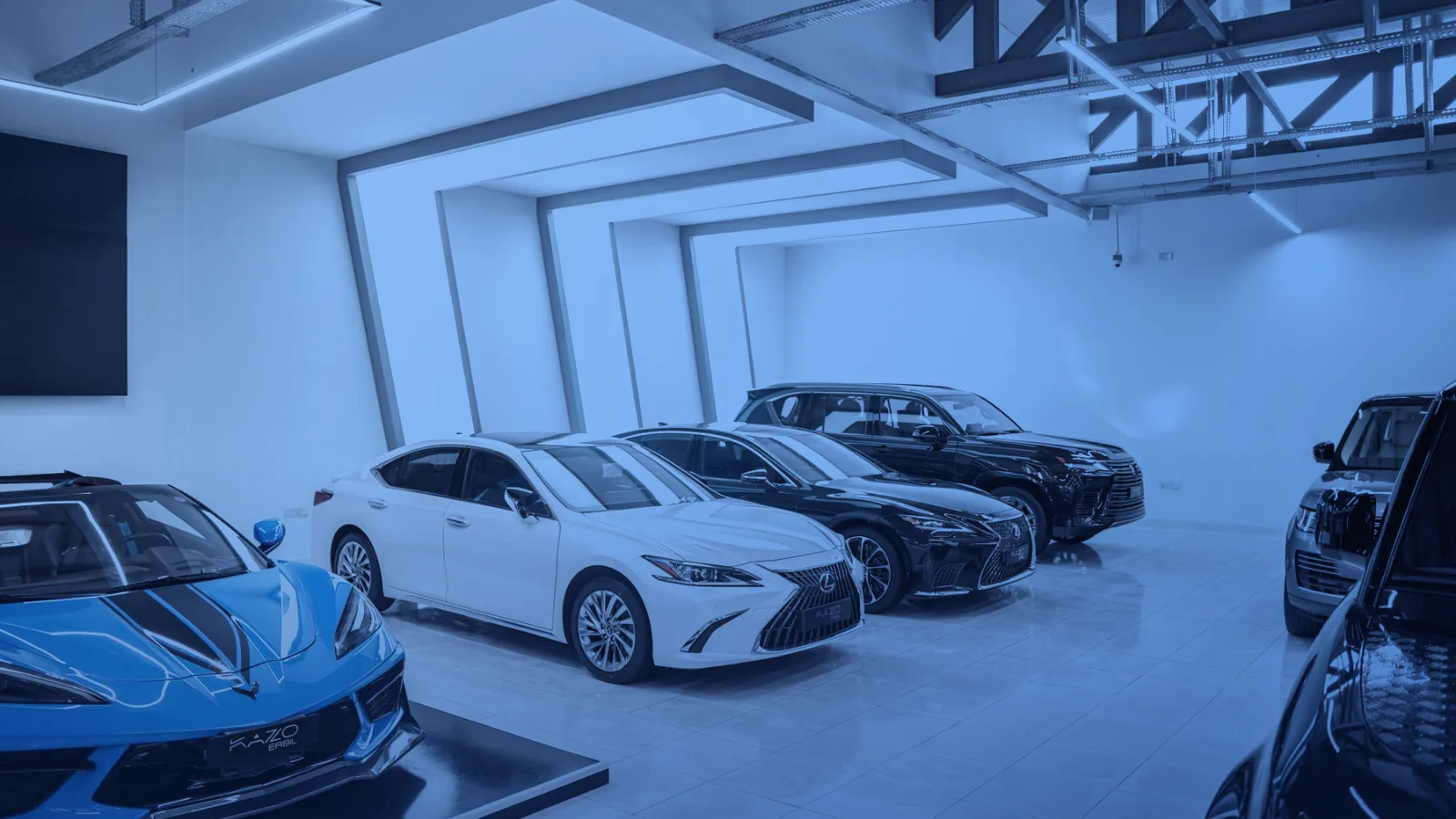
It is advisable that the workshop and showroom do not share air because what the workshop generates, exhaust, brake dust, solvent vapors, travels through a shared return and reaches the display and the offices. It is confirmed by tracing returns, observing doors and pressures and looking with a camera. If separation is not possible, filtering is reinforced and connections are sealed.
The manager of a dealership receives a couple in the showroom who are looking at a new vehicle. Between one word and another, the customer remarks: “it smells like a workshop in here”. The manager smiles, but knows he is right. The door between the workshop and the sales corridor opens thirty times an hour, and the air goes back and forth with it.
That smell creeping in is a clue. Behind it is a system question: do the workshop and the showroom share the same air return, the same ducts or the same unit? When the answer is yes, what happens on one side is spread to the other.
What leaves the workshop and where does it go?
Several things leave an automobile workshop. Exhaust from engines started for testing, vapors from solvents, oils and cleaners, brake and sanding dust, and welding fumes if the shop does it. Those emissions have their own extraction, and as long as it works well, most of it leaves. What does not leave spreads through the workshop air and looks for a way out.
Behind this guide is Climatiza, an inspection and duct cleaning service, which always starts from the real condition of the system before proposing any work in car dealerships.
A study of garages attached to homes in Michigan illustrates the mechanism: air flowed from the garage into the house at about 6.5% of the total air exchange, and nearly all the benzene found inside the homes came from the garage (Batterman and colleagues, 2007, Environmental Research). It is a home garage, not a commercial workshop, but it shows that even a small, constant flow between two spaces is enough to carry contaminants over. In a dealership, with doors that open daily and a shared return, the transfer may be larger.
How is it confirmed whether the systems are connected?
It is confirmed with a combination of simple observations. The climate control plan is requested if there is one, and it is traced which returns feed which unit. The direction of air at the door between the workshop and the showroom is observed: with a strip of paper or a tissue it is seen whether air goes from the workshop to the showroom or the reverse. And the return section is looked at with a camera from each side, to see whether the duct crosses the wall or each side has its own.
One sign of connection is dark, oily dust on the grilles of the showroom or the offices, identical to that of the workshop. Another is a solvent smell that appears when the workshop is working and disappears when it stops. Another is that the showroom air feels warm and heavy at the busiest hour in the workshop.
Why does it matter to keep the air of both spaces apart?
It matters for the customer experience, for the state of what is displayed and for the equipment. A new vehicle with an oily film on the paint or the interior loses appeal, and a showroom smelling of workshop signals neglect. It also matters for the sales and office staff, who spend the day in air carrying traces of the workshop. And for the system: filters and coils loaded with brake dust and oil saturate sooner and cool worse.
Regarding carbon monoxide, OSHA recommends ventilation that removes the gas from work areas and limits exposure to 50 parts per million as an eight-hour average. That responsibility belongs to the workshop’s extraction, not to the air conditioning duct, but mixing both systems makes it harder to control. On cleaning, the EPA and the CDC indicate that duct cleaning has not been shown to prevent health problems, and it is not framed here as protection but as upkeep of the system and order between areas.
What options are there when full separation is not possible?
In many dealerships the building already exists and redoing the system is not viable. Then work proceeds in layers. First the avoidable connections are sealed: gaps in the wall, returns that cross, doors that do not close. Then an automatic closer is placed on the door between areas and the workshop is kept at slightly lower pressure than the showroom, so that air goes toward the workshop and not the reverse. And lastly the filtering of the shared return is reinforced and the review interval is shortened.
None of those measures replaces the workshop’s source extraction, which comes first. The air conditioning technician decides with the building in sight, and the camera provides what is missing: seeing whether the duct crosses or not, and how much load there is in each run. An illustrative case, not a real client: a dealership with a single return serving the showroom and the workshop corridor. The camera shows an oily film in the first run and the rest of the system acceptable. The sensible decision is to separate the workshop return, clean that run and check the filter more often.
What is checked in each section and what is asked of the provider?
The visit covers four sections. In the workshop, the return, the filter and the extraction, if there is one. In the connecting corridor, the doors, grilles and openings. In the showroom, the diffusers and the return. In the offices, the grilles and the filter. In each, the condition is compared with that of the neighboring section to see whether the load is its own or comes from the other. The criteria for a showroom with product on display apply to the commercial side, and how the work is organized in a dealership explains how the visit is split.
- A drawing or sketch of which return feeds which unit, even if by hand.
- Dated photos of the return, filter and first run in the workshop and the showroom.
- Direction of air at the door between areas, noted at busy hours.
- One recommendation per section: separate, seal, clean or monitor.
- A list of what was left unchecked and the reason.
To set the cadence, the criteria for when to clean and the condition shown by the camera inspection help. The rest of the types of premises where two different uses share a building are in the list of types of premises.
Those who want to go from this reading to a real review can start at the Climatiza service page or write through the main Climatiza site.
Sources
On this site
- Car dealershipsHow the work is organized in this sector
- Stores and supermarketsA neighboring sector
- Camera inspectionThe real condition before deciding
Climatiza and Radar Panamá
Why does inspecting and cleaning ducts matter?
These are the technical reasons, with their source, why the condition of the ducts is checked before deciding. Duct cleaning has not been shown to prevent health problems according to the EPA and the CDC, and it is proposed only when the observed condition justifies it.
| Advantage | Data with source | What it means in practice |
|---|---|---|
| Protect equipment performance | In a laboratory test with dust equivalent to one year of use, coil pressure drop rose between 6 and 30 % and efficiency (EER) fell between 1 and 9 % (Yang, Braun and Groll, ARTI, 2004). | It is a laboratory result and not a promise of savings: it points to the components worth checking. |
| Keep humidity under control | The EPA recommends in its guide to mold and moisture keeping indoor relative humidity below 60 % and drain pans clean and draining freely. | A humidity reading and a clean pan limit the conditions in which mold grows. |
| Require method and a report from the provider | NADCA published in 2025 the current edition of its ACR standard on assessment, cleaning and restoration of air systems. | It is an industry reference and not a seal: it helps ask for method, photographs and scope in writing. |
| A local figure that changes the decision | INEC publishes, with data from the Panama Automobile Distributors Association and the ATTT, that 54,384 new cars were registered in 2024 (preliminary figure), against 48,919 in 2023. SUVs were the largest segment, with 28,685 units. (INEC, table 18, new cars registered 2020-24). | It is the sector context taken into account when planning the visit. |
Frequently asked questions
Is it a problem if the workshop and showroom share the return?
It is better to avoid it, because what the workshop generates, exhaust, brake dust and vapors, spreads to the showroom and offices. If it is already so, connections are sealed, what can be separated is separated and the filtering of the shared return is reinforced.
How do I know whether workshop air reaches the showroom?
The direction of air at the door between areas is checked with a strip of paper, the grilles on both sides are compared and the return is surveyed with a camera. Oily dust or a solvent smell that appears with activity are clues.
Does cleaning the duct fix the workshop smell?
Only in part. If the smell comes from residue inside the duct, cleaning helps. If it comes from air crossing through doors or shared returns, it returns. That is why the source is confirmed first with a camera and observation, and then it is decided.
How is air from the workshop kept from reaching the sales floor?
The sales floor is held at slightly positive pressure relative to the workshop, with separating doors closed and local extraction in the work areas. Each area should have its own returns and filters. If the system is shared, the camera inspection shows where the airflows mix.
Which smells on the sales floor suggest the air comes from the workshop?
Smells of exhaust fumes, solvents, rubber or engine grease, especially when the air starts in the morning, point to the workshop. If they show up near the sales floor returns, it is worth confirming with plans and a camera whether a connection exists between the two spaces.
Keep reading the guide

Request an inspection
Do you want to know the condition of your system?
A camera inspection lets you see the inside of the ducts before deciding what to do. Message us and we will confirm availability.
- +507 6388-2083
- info@climatizapanama.com
- Calle Gervasio García, 8, Panama City