
Clean rooms
Cleanroom: ducts and particle classification, what to check
When the particle count of a cleanroom starts to rise, the first suspect is the filter. The second, which almost nobody checks, sits a few meters higher up.
 By
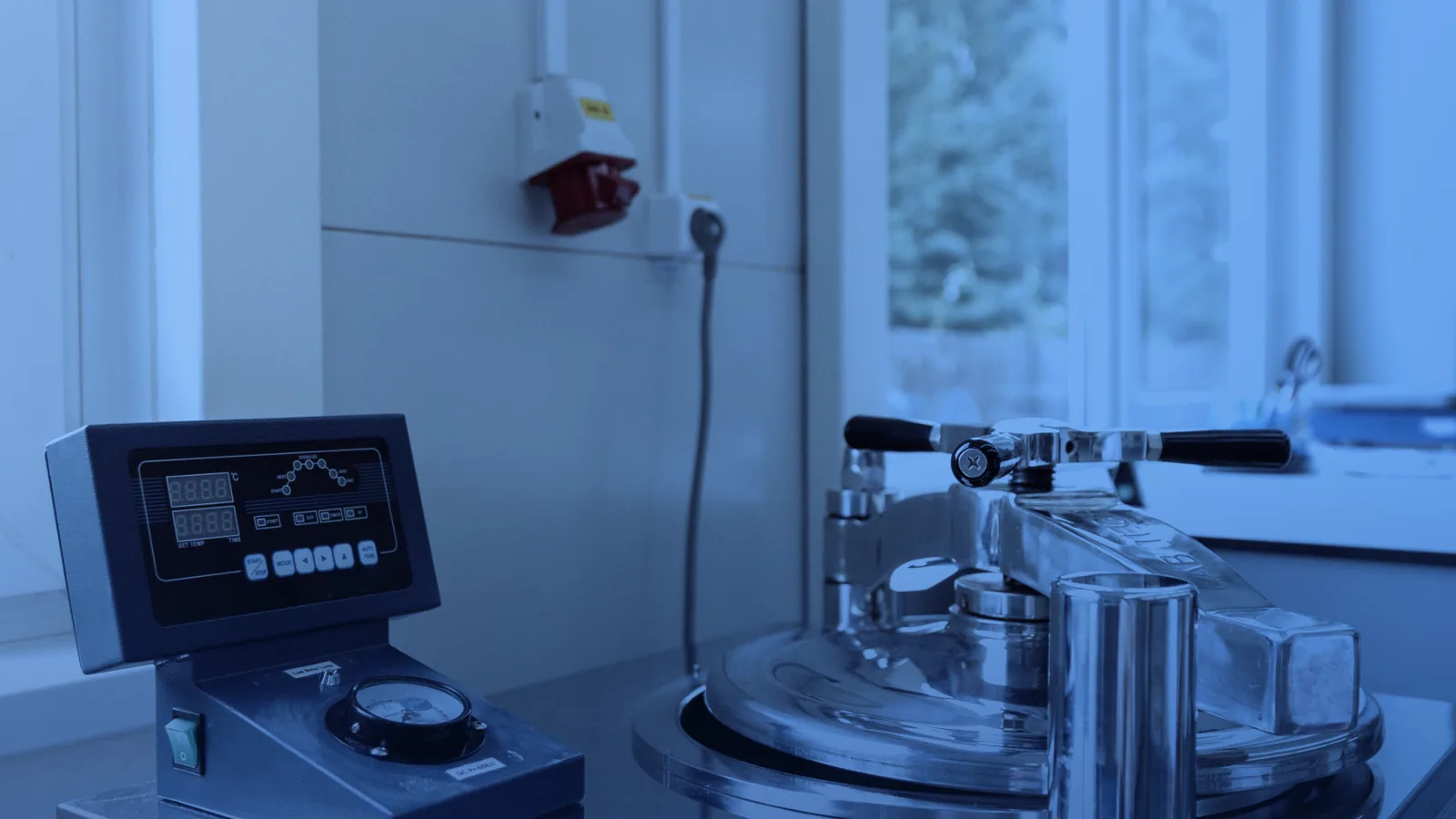
To know whether the duct compromises the classification of a cleanroom, the count records, differentials and pressure drop are checked first, and it is confirmed that the terminal filter leak tests pass. If the count keeps rising in operation, the look moves upstream with a camera from outside the classified area, without opening the ceiling or touching the terminal filter.
The quality manager of a classified room lives watching a number. The particle count per cubic meter, measured at rest and in operation, decides whether the room stays in its class or whether the batch stops. One month the number gets close to the limit, the next it gets closer, and the usual explanations begin to run out: the staff is the same, the procedures are the same, the terminal filters passed the leak test. Then someone asks about what sits before the filter.
What role does the duct play in the classification of a cleanroom?
Less than many assume and more than almost anybody monitors. The duct does not deliver air to the room: it delivers air to the terminal filter, and the filter decides what gets through. A HEPA filter retains, in theory, at least 99.97 % of 0.3 micrometer particles according to the EPA, so the dust traveling through the duct does not reach the room as long as the filter is intact and properly sealed.
What the dirty duct does do is load the filter faster. As the pressure drop rises, resistance climbs and airflow falls, and less airflow means fewer air changes. The FDA guidance on aseptic processing equates ISO 8 with the old class 100,000 and mentions that for a room of that class a minimum of about 20 air changes per hour is usually accepted, with higher rates in the cleaner classes. When airflow drops, the room takes longer to recover after an intervention and counts in operation climb exactly when people are working.
Behind this guide is Climatiza, an inspection and duct cleaning service, which always starts from the real condition of the system before proposing any work in clean rooms.
Why does it matter if the terminal filters pass their tests?
Because a leak test measures the filter, not the system. An experiment in a laboratory cleanroom (Nikoopayan Tak et al., 2023) showed that adding filtration reduced airflow and that ventilation effectiveness could drop by almost half, a reminder that anything that takes air away from the room, whether a finer filter or a loaded duct, affects the count. A perfect filter with little air behind it stops being proof of anything.
It matters for the speed of the answer. When the count moves, knowing that the ducts have been checked rules out one cause within hours, instead of replacing expensive terminal filters blindly. And it deserves precision: duct cleaning has not been shown to benefit health according to the EPA and the CDC, and in a cleanroom it does not replace periodic counting or requalification either. It is information about the condition of the stretch before the filter, nothing more and nothing less.
How can a dirty terminal filter be told apart from a dirty duct?
It is told apart with the records before anything is opened. A high count at a single point, under one particular filter, points to a leak at the gasket or in the filter medium. A high count across the whole room in operation, normal at rest, points to reduced airflow throughout the branch. A filter pressure drop above the manufacturer maximum sooner than expected points to a duct that saturated it. The FDA recommends leak tests when the HEPA filter is installed and at suitable intervals afterward, for example twice a year in an aseptic process room. If those tests are up to date and pass, and the count keeps rising, the look has to move upstream.
The camera inside the duct shows whether the stretch before the filter is loaded, damp or has open joints. Entry is through the access points in the technical ceiling or at the air handler, without opening the room ceiling or touching the terminal filter, and with the room out of operation according to the plant procedure. What turns up most is loose dust accumulated in the first stretch after the air handler, a worn seal at a damper and, occasionally, moisture in a section that passes through a cold zone.
An illustrative case, not a real client: an ISO 7 room whose in operation count rises slowly over four months, with leak tests passed and the pressure drop of the terminal filters close to the limit. The camera shows loose dust in the branch feeding the room and an air handler prefilter already saturated. The branch is cleaned, the prefilter is changed and only then are the terminal filters certified. The order matters, because a new filter under a dirty duct loads as fast as the old one.
Which mistakes come up most, and what is documented for the room owner?
The most frequent mistake is changing the terminal filter before looking at the duct. Next come entering the room for the check without respecting the classification, opening the technical ceiling without isolating the branch, and not requalifying at the end. A fourth mistake is treating every cleanroom the same: an aseptic process room, a laboratory one and an electronics assembly one have different tolerances, which is why the report uses the branch and filter codes the plant already handles, as is done in other plants with controlled process areas.
- Plan of the branch with the sections checked and cleaned marked.
- Camera photos before and after each section, with date and code.
- Pressure drop reading of prefilters and terminal filters on the day of the visit.
- What was not touched: terminal filters, room ceiling and airlocks.
- Recommendation for the interval to the next look, based on what was seen and not on a fixed calendar.
A cleanroom with up to date filters and checked ducts does not stop needing its periodic count. What changes is that, when a count moves, the cause is found in the first place anyone looks. The technical guide explains how the report is structured by components, and the kinds of place the service covers show how the same method adapts to very different settings.
To ask about availability or request a camera inspection, the Climatiza website lists the ways to contact the team and the duct cleaning service page explains how the work is organized.
Sources
On this site
- Industry and logistics parksHow the work is organized in this sector
- Data centers and server roomsA neighboring sector
- Camera inspectionThe real condition before deciding
Climatiza and Radar Panamá
Why does inspecting and cleaning ducts matter?
These are the technical reasons, with their source, why the condition of the ducts is checked before deciding. Duct cleaning has not been shown to prevent health problems according to the EPA and the CDC, and it is proposed only when the observed condition justifies it.
| Advantage | Data with source | What it means in practice |
|---|---|---|
| Require method and a report from the provider | NADCA published in 2025 the current edition of its ACR standard on assessment, cleaning and restoration of air systems. | It is an industry reference and not a seal: it helps ask for method, photographs and scope in writing. |
| Know whether cleaning is needed before deciding | The EPA states in its duct cleaning guide that cleaning is justified for visible mold, pests or a notable buildup of dust and debris. | A camera inspection documents the condition and allows a decision based on evidence, without unnecessary work. |
| Protect equipment performance | In a laboratory test with dust equivalent to one year of use, coil pressure drop rose between 6 and 30 % and efficiency (EER) fell between 1 and 9 % (Yang, Braun and Groll, ARTI, 2004). | It is a laboratory result and not a promise of savings: it points to the components worth checking. |
| A local figure that changes the decision | According to INEC, in 2024 Colón Free Zone imports totaled B/.12,646.5 million, 35.9% below 2023, and re-exports B/.12,208.2 million, 8.6% below. 74.6% of imported value arrived by sea. The figures give the scale of the goods that pass through warehouses and sheds. (INEC, Foreign Trade Yearbook, Colón Free Zone 2024). | It is the sector context taken into account when planning the visit. |
Frequently asked questions
Can a dirty duct make a cleanroom lose its classification?
Indirectly, yes. With an intact terminal filter the duct dust does not get through, but it does load the filter, raise the pressure drop and cut airflow. Fewer air changes mean slower recoveries and higher counts in operation.
Is the room entered to inspect the duct?
No. The camera enters through duct access points in the technical ceiling or at the air handler, from outside the classified area. The room ceiling is not opened and the terminal filter is not touched, so that the classification is not lost.
Which comes first, cleaning the duct or changing the terminal filter?
First the duct upstream is checked and, if needed, cleaned. Then the terminal filters are changed or certified and the room is requalified. A new filter under a loaded duct saturates just as fast and the problem comes back.
How many air changes per hour are accepted in an ISO 8 cleanroom?
The FDA aseptic processing guidance (2004) equates ISO 8 with the old class 100,000 and notes that a minimum of 20 air changes per hour is usually accepted for that classification. Cleaner classes call for considerably higher rates, which is why a drop in duct airflow shows up in the particle count.
How often are HEPA filter leaks tested in an aseptic processing room?
The FDA recommends testing them at installation and afterward at suitable intervals, for example twice a year in an aseptic processing room. According to the EPA, a HEPA filter captures at least 99.97 percent of 0.3 micrometer particles, so a leak is a filter problem and not a duct problem.
Keep reading the guide
Request an inspection
Do you want to know the condition of your system?
A camera inspection lets you see the inside of the ducts before deciding what to do. Message us and we will confirm availability.
- +507 6388-2083
- info@climatizapanama.com
- Calle Gervasio García, 8, Panama City