
Convenience stores and corner shops
Mini market: ducts or just splits, how to tell and what to check
Before talking about cleaning ducts it helps to know whether the shop has them. Many mini markets do not.
 By
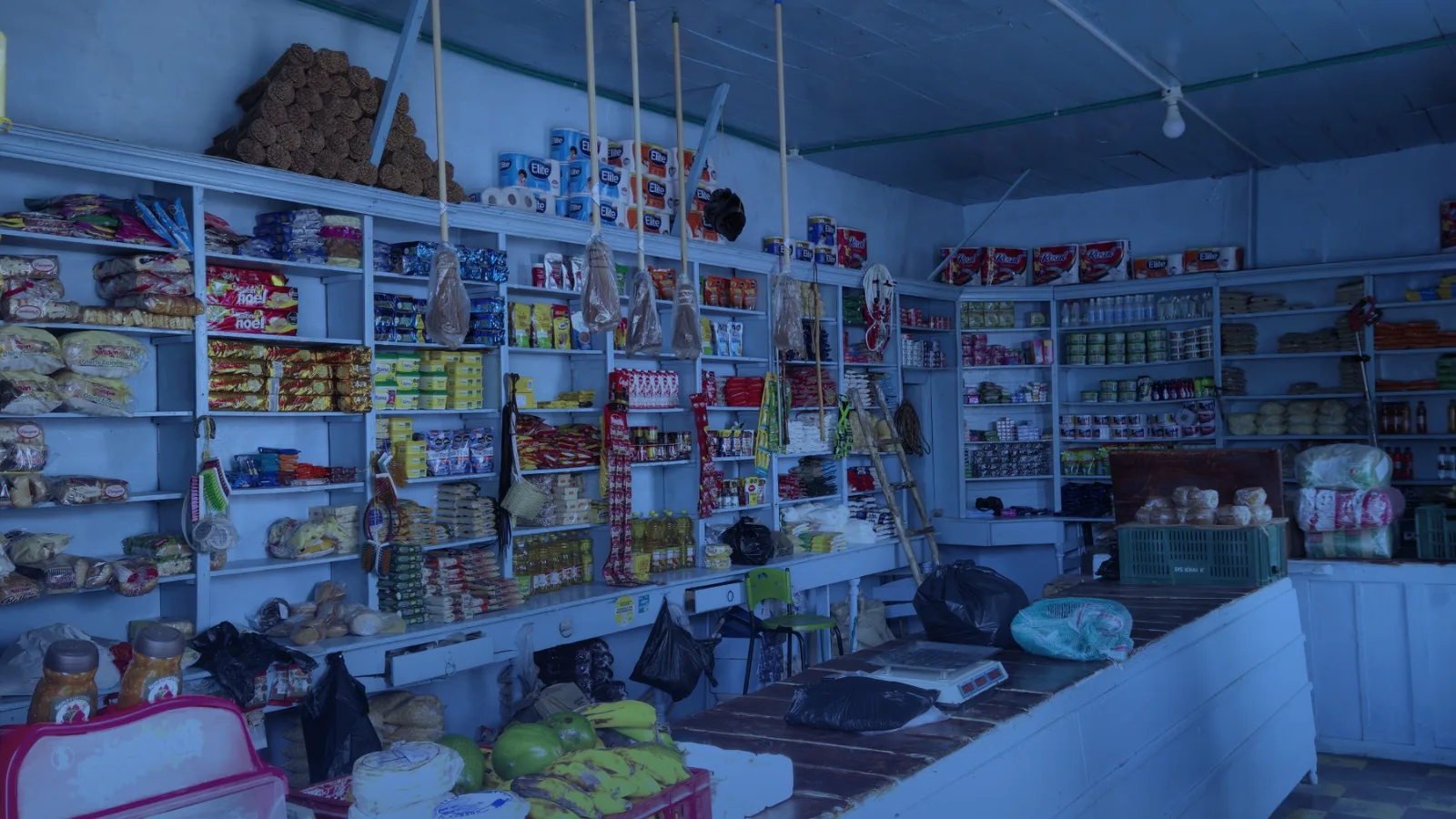
A mini market has ducts if air comes out of grilles spread over the ceiling from a central unit, and has only splits if there is a wall unit or a ceiling panel with copper piping and no runs. A split needs its filters, coil and drain cleaned. Ducts also call for a camera inspection when there is smell, dust on grilles or water.
The owner of a mini market gets a message from a supplier offering “duct cleaning”. He looks at the ceiling of his shop: a white unit on the back wall and another over the register. Does that have ducts? He is not sure. He asks a neighbor with a similar business and gets three different answers.
The confusion is common and has a concrete cost: paying for a service that does not apply, or, the other way around, skipping the upkeep that does. The good news is that the system can be identified in a few minutes, with no tools, and everything else depends on it.
How can it be told whether the shop has ducts or just splits?
The ceiling and walls are looked at with three questions. First, is there a unit hanging on the wall or a square panel in the ceiling, with copper piping going outdoors? That is a split or a cassette. Second, are there grilles spread through the shop, connected to one another, that seem to come from a central unit or a closet? That is a duct system. Third, is there a large return grille, almost always near the central unit? That reinforces the previous point.
Anyone who needs to see the real condition of the ducts in the case of convenience stores and corner shops can request a camera inspection from the team at Climatiza, a technical duct cleaning service in Panama, which documents every section with images.
| System | How to recognize it | What is checked |
|---|---|---|
| Wall split | Wall unit, copper piping outdoors, no grilles on the ceiling. | The unit's own filters, coil and pan, and the drain. |
| Ceiling cassette | Square panel in the ceiling with vanes, no visible runs. | Filter, pan and drain, the points that fail first. |
| Duct system | Several ceiling grilles connected to a central unit and a return grille. | All of the above, plus the runs with a camera if there is smell, dust or water. |
If doubt remains after looking, there are two quick exits. One is to ask the original installer or whoever does the upkeep for the system layout. The other is a short identification visit, which commits to nothing and makes clear what the shop has before any service is decided.
What does each system need?
A split needs what the owner can see: clean filters, a coil without a layer of dust, a free pan and drain. A test on a ductless split, in which 30% of the indoor coil surface was covered to simulate dirt, showed that cooling capacity fell 19.1% and efficiency 13.5% (Niknami and colleagues, 2024, Energy and Buildings). It is a laboratory simulation, not a real shop, but it says something useful: in a split, what weighs most is dirt on the indoor unit coil, and that is cleaned without ducts.
A duct system needs the same and something more. The filter and the air handler coil are the first point, but the dust that gets through settles in the return and the first runs. The ASHRAE 180 standard follows a sensible logic for commercial systems: inspect at a defined frequency and act on the condition found. In a neighborhood shop that means a simple check of filters and grilles on a regular basis, and the camera only when something calls for it.
What signs reveal a dirty duct in a neighborhood shop?
Caked dust on the grille edges that does not go away with a puff of air. A shut-in smell that rises when the unit starts. Drops on a diffuser. One corner of the shop that cools less than another. With the mean humidity of 75.7% that ETESA records for Panama and San Miguelito, street dust entering the return gets damp and sticks, which explains why a neighborhood shop with an open door dirties its grilles faster than expected.
None of these signs proves by itself that cleaning is needed. They are reasons to look. And in a split they have nothing to do with ducts, because there are none.
Why does it matter to know?
It matters because it avoids spending where it does not apply and avoids neglecting what does. A small shop has a tight budget, and putting money into cleaning ducts that do not exist, or overlooking a dirty coil that does, are the two most frequent mistakes. It also matters for customer comfort and for the state of the units, which in a business open all day work without rest.
On health, the EPA states in its guide that duct cleaning has never been shown to prevent health problems, and it recommends considering it when there is visible mold, pests or obstruction. That logic works for deciding here: what looks dirty or damaged is cleaned, not out of blind routine.
When is a camera inspection worth it and what is it like?
It is worth it when there are ducts and one of the signs above appears, or when the shop changed hands and nobody knows what state the system is in. The visit starts with an identification of the system, continues with a look at filters, coil and pan, and the camera runs through the return and the first section of the supply. How work is organized in a retail business is explained in how the work is organized in a store, and the camera method in the camera inspection.
An illustrative case, not a real client: a mini market with two wall units and one central unit with three grilles over the register and the aisle. The technician identifies that the two wall units are splits and the central one has short ducts. The camera shows the return with a layer of dust and the three runs almost clean. The sensible decision is to have the splits’ filters and coils cleaned by the owner or the air conditioning technician, clean the return and leave the other runs alone.
Which mistakes recur and which simple routine is worth keeping?
Duct cleaning is hired without confirming that ducts exist. The duct is cleaned and the split filter is forgotten. The filter is changed when it “already smells”, and the unit is left to fail before anyone looks. And a report with no photos is accepted, which says neither what was there nor what was done.
- Check each unit's filters regularly and note the date.
- Clean the return grille closest to the door, which takes the most dust.
- Check that each unit's drain is not blocked or dripping onto the floor.
- Ask the installer or the maintenance technician for a sketch of the system.
- Call for a camera inspection only if there are ducts and a sign appears.
With a routine like that the owner has a basis to apply the criteria for when to clean, and if the shop shares a wall with a business that makes its own dust, such as a hardware store or another business with a storeroom, it is worth looking at what comes through that wall too. The rest of the places where this applies are in the list of types of premises.
More about the inspection and cleaning service that applies these criteria is on the Climatiza duct cleaning page and on the Climatiza home page.
Sources
On this site
- Stores and supermarketsHow the work is organized in this sector
- Hardware storesA neighboring sector
- Camera inspectionThe real condition before deciding
Climatiza and Radar Panamá
Why does inspecting and cleaning ducts matter?
These are the technical reasons, with their source, why the condition of the ducts is checked before deciding. Duct cleaning has not been shown to prevent health problems according to the EPA and the CDC, and it is proposed only when the observed condition justifies it.
| Advantage | Data with source | What it means in practice |
|---|---|---|
| Keep humidity under control | The EPA recommends in its guide to mold and moisture keeping indoor relative humidity below 60 % and drain pans clean and draining freely. | A humidity reading and a clean pan limit the conditions in which mold grows. |
| Follow a technical inspection reference | The ANSI/ASHRAE/ACCA 180 standard is the standard practice for inspection and maintenance of commercial HVAC systems. | It is an industry reference, not a legal requirement in Panama, and helps organize the review plan. |
| Know whether cleaning is needed before deciding | The EPA states in its duct cleaning guide that cleaning is justified for visible mold, pests or a notable buildup of dust and debris. | A camera inspection documents the condition and allows a decision based on evidence, without unnecessary work. |
| A local figure that changes the decision | INEC’s Business and Establishment Directory (reference year 2022) records 39,937 wholesale and retail trade establishments, including Free Zones, and vehicle repair, the sector with the most establishments in the country, out of 96,397. The category is broad and does not separate supermarkets or stores. (INEC, Business and Establishment Directory 2022). | It is the sector context taken into account when planning the visit. |
Frequently asked questions
Does a split need duct cleaning?
No, because it has no ducts. It needs cleaning of filters, indoor coil, pan and drain, which is upkeep of the unit itself. Hiring duct cleaning for a shop with only splits would be paying for something that does not exist.
How do I know whether my shop has ducts?
If air comes out of several grilles spread across the ceiling, connected to a central unit and with a return grille, there are ducts. If there is only a wall unit or a panel with copper piping outdoors, it is a split or a cassette.
When is a camera inspection worth it in a mini market?
When there are ducts and a shut-in smell, caked dust on grilles, drops on a diffuser or a change of owner with no system history. Without ducts, the camera has nothing to survey and the upkeep of the unit is enough.
What is checked on a split unit that has no ducts?
The filter, evaporator coil, pan and drain, fan and air outlet are checked. There is no duct to inspect, so the camera is not needed for this kind of equipment. A well-maintained split is handled by cleaning its own visible parts on a regular basis.
Does a mini-market with ducts need more maintenance than one with a split?
Not necessarily more, but something different. Besides the filter, coil and pan, it has grilles and duct stretches that cannot be seen at a glance. An occasional camera inspection shows whether there is a deposit that justifies cleaning or whether changing the filter is enough.
Keep reading the guide
Request an inspection
Do you want to know the condition of your system?
A camera inspection lets you see the inside of the ducts before deciding what to do. Message us and we will confirm availability.
- +507 6388-2083
- info@climatizapanama.com
- Calle Gervasio García, 8, Panama City