
Courts
Courthouse: hearing room and archive ducts without suspending hearings
A courthouse has a calendar nobody can move and a paper archive nobody can afford to wet. The ducts touch both.
 By
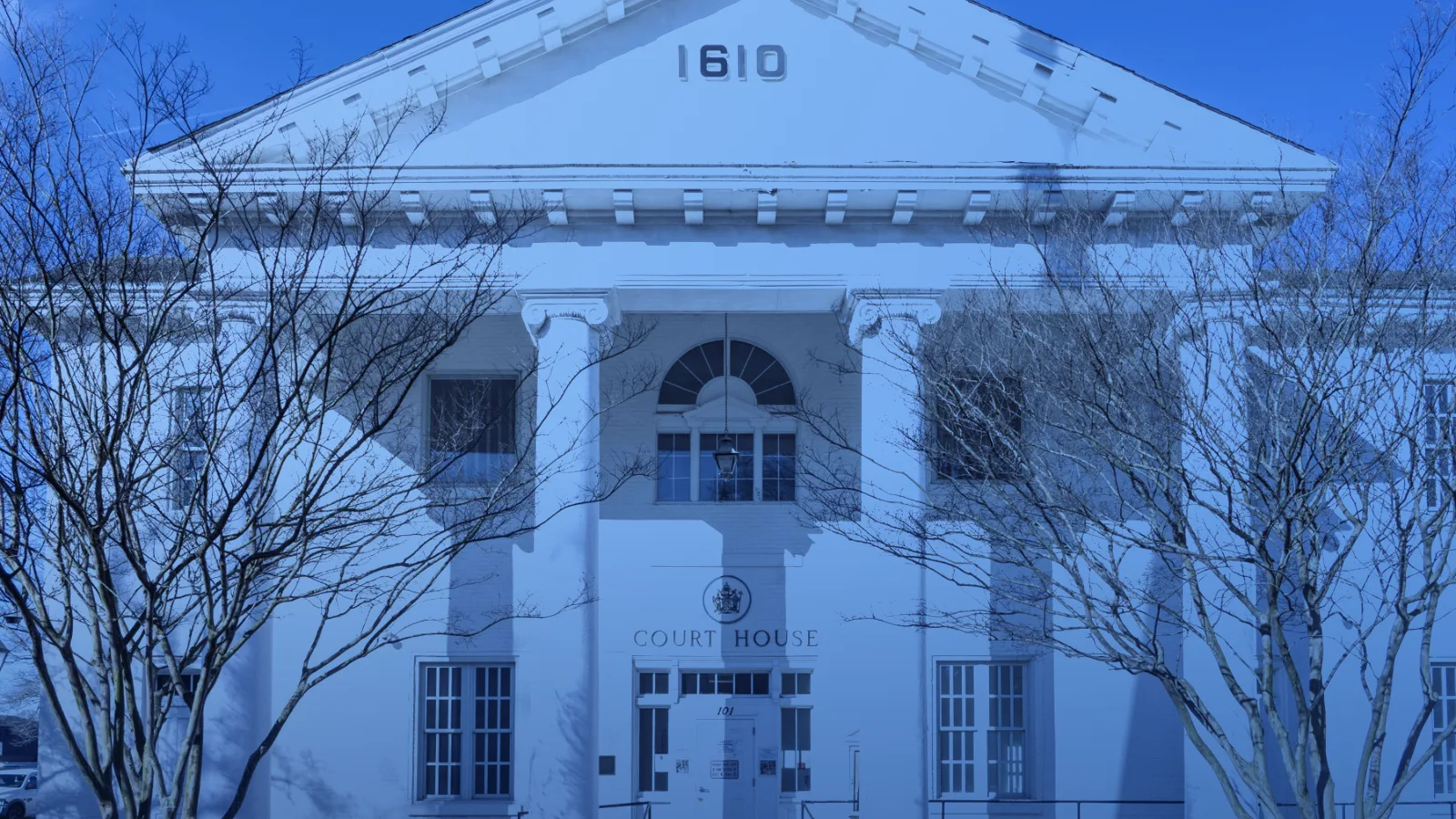
The ducts of hearing rooms and of a court archive can be checked without suspending anything when the work follows the calendar: free rooms are used block by block, the archive is surveyed with the camera from outside the shelving and no case file is touched. The clerk’s office first confirms which rooms have hearings, and each room receives its own report.
At eight in the morning the clerk’s office of a courthouse already knows which rooms will be used that day and which will stay empty. One has a hearing with an audience, another a short proceeding, and the archive receives lawyers’ requests from early on. If in the middle of that routine someone complains that the air does not reach the back of the big room or that the archive smells of damp paper, the administration’s question is always the same: how to check it without stopping anything.
The answer begins with understanding that a courthouse is not an ordinary office building. It has rooms that fill in minutes and empty just as fast, chambers with closed doors all day and an archive that holds paper under daily consultation. Each of those spaces loads the air differently, and the review plan is built around those differences and around the calendar.
How are the ducts of a hearing room checked without postponing a hearing?
They are checked in the gaps the calendar already contains. There are three: the room with no hearing on a day when other rooms are busy, the whole day on which a room stands free and the first hours before the public arrives. The clerk’s office knows them better than anyone, so the plan comes from its calendar for the week and not from an assumption by the provider.
Climatiza is the technical service behind this guide and works with camera inspection, an illustrated report and cleaning only when the condition justifies it, including in the case of courts.
A hearing room receives an audience that comes in street clothes, sits on benches that gather dust between sessions and opens and closes doors often. That is why the room’s return tends to load up sooner than the neighboring chamber’s. The camera goes in through the nearest access panel and shows whether the dust sits in the room’s section, in the chamber’s or in the shared one, and with that image the administration decides where to act.
What risk does the case file archive face?
The risk for the archive is moisture more than dust. The EPA guide on mold in commercial buildings asks for indoor relative humidity below 60%, with clean condensate pans that drain freely. In Panama the annual mean humidity is 75.7% according to ETESA, which is why a paper archive depends on the air conditioning running with no dripping, no overflowing pan and no wet insulation above the shelves.
In the archive one rule is not negotiable: no case file is touched or photographed. The camera works inside the duct, photos are taken upward, the shelves under the access panel are covered and a person from the archive accompanies the technician the whole time. What is sought is simple: damp deposit, darkened insulation, stains on the ceiling or a pan that does not drain. If any of them shows up, the archive moves to the top of the list.
Why does it matter if hearings carry on without complaints?
It matters because air problems in a courthouse almost never interrupt a hearing, but they do wear down the day of those who spend eight hours there. A room that feels heavy by late morning tires judges, clerks and the public. A unit with saturated filters works harder to deliver the same air and breaks down sooner. And an archive with moisture is a conservation problem that goes unnoticed until a shelf warps.
There is also a reason of order. The judicial administration answers to higher bodies and to auditors, and a report with a date, images and a list of what was not reviewed is worth more than a verbal explanation. It is fair to be frank about what cleaning does not do: neither the EPA nor the CDC has found evidence that duct cleaning prevents illness, so here it is justified by the condition of the system and not by a promise about people.
What does the visit look like, step by step?
- The week’s calendar. The clerk’s office provides the hearings and the gaps are marked per room. That list sets the order.
- Entry and security. Staff names and a description of the camera and tools are sent ahead for the access check.
- Confirmation the day before. A newly set hearing cancels a window. It is asked the previous afternoon and adjusted without fuss.
- Camera and tidy close. The duct is surveyed, the access panels are covered and the room is handed back as received, with clean benches and cables out.
An illustrative case, not a real client: a courthouse with three rooms, an archive and a block of chambers. The camera shows bonded paper dust in the archive return and a pan with standing water in the unit that serves it. The rooms and chambers look nearly clean. The sensible decision is to fix the archive’s drainage first, clean that section afterward and leave the rooms under watch until the next look. Cleaning everything would have taken more gaps in the calendar without improving anything.
Which mistakes repeat and what is worth asking for?
The first is asking for the whole week free, something no courthouse can grant. The second is taking the calendar for granted and arriving at a room taken by a last minute hearing. The third is mixing archive, rooms and chambers into a single report. The fourth is cleaning the archive without first correcting the source of the moisture. The coordination follows a logic similar to how work is scheduled in a courthouse and relies on the camera survey.
It is worth asking for one sheet per room, another for the archive and another for the chambers, each with the date, time in and out, the name of the escort and an image of each section classified as clean, monitor or no action. For the archive, the condition of the pan, the insulation and the filter of its unit is added. And at the end, the list of rooms not reviewed because of a last minute hearing, with a proposed new date.
With that report the administration can apply the criteria for deciding which section is cleaned and which is only watched and file the evidence of the maintenance. The overview of public workplaces is in the types of premises where ducts are reviewed.
Questions about a specific building can be sent to Climatiza, and the service description shows what a visit includes.
Sources
On this site
- CourtsHow the work is organized in this sector
- Public buildings and ministriesA neighboring sector
- Camera inspectionThe real condition before deciding
Climatiza and Radar Panamá
Why does inspecting and cleaning ducts matter?
These are the technical reasons, with their source, why the condition of the ducts is checked before deciding. Duct cleaning has not been shown to prevent health problems according to the EPA and the CDC, and it is proposed only when the observed condition justifies it.
| Advantage | Data with source | What it means in practice |
|---|---|---|
| Anticipate the tropical humidity | According to ETESA (Tocumen station, 1977 to 2010), mean annual relative humidity in Panama is 75.7 % and rises to between 78.2 and 82.4 % in the rainy months. | The condensate pan, the drain and the coil are checked first, because that is where moisture builds up. |
| Protect equipment performance | In a laboratory test with dust equivalent to one year of use, coil pressure drop rose between 6 and 30 % and efficiency (EER) fell between 1 and 9 % (Yang, Braun and Groll, ARTI, 2004). | It is a laboratory result and not a promise of savings: it points to the components worth checking. |
| Follow a technical inspection reference | The ANSI/ASHRAE/ACCA 180 standard is the standard practice for inspection and maintenance of commercial HVAC systems. | It is an industry reference, not a legal requirement in Panama, and helps organize the review plan. |
| A local figure that changes the decision | According to the Judicial Branch, the accusatory criminal justice system recorded 1,180,489 hearings between January 2, 2011 and the first half of 2025, of which 854,638 were before guarantee judges. (Judicial Branch, 14 years of the accusatory criminal justice system in Panama). | It is the sector context taken into account when planning the visit. |
Frequently asked questions
Do hearings have to be suspended to check the ducts?
No. The work is scheduled in the gaps of the calendar: rooms with no hearing, free days and the hours before the public arrives. The clerk’s office confirms the calendar and each room is checked while it is empty.
Are the case files in the archive touched during the review?
No. The shelves under the access panel are covered, photos are taken toward the duct and a person from the archive accompanies the technician. The report shows only the duct, the unit and its immediate surroundings.
What sign points to a moisture problem in the archive?
A smell of damp paper on opening, stains on the ceiling near the unit, folders with wavy edges or a pan that does not drain. The cause of the moisture is corrected first and then it is decided whether the section needs cleaning.
When can the camera go through a courtroom without interrupting a scheduled hearing?
In a free slot between hearings, on a day without hearings in that room, or before the first hearing of the day. The camera enters through the return and the diffuser and is withdrawn before the next scheduled hearing. Long runs over the ceiling are left for closure days.
Why does air conditioning matter for preserving a case-file archive?
Because in a humid climate the archive’s humidity depends on the system. The EPA recommends keeping indoor humidity under 60 percent, and ETESA records an outdoor annual mean of 75.7 percent. If the coil is loaded, the unit dries less, and the fine paper and cardboard dust the return collects keeps circulating.
Keep reading the guide

Request an inspection
Do you want to know the condition of your system?
A camera inspection lets you see the inside of the ducts before deciding what to do. Message us and we will confirm availability.
- +507 6388-2083
- info@climatizapanama.com
- Calle Gervasio García, 8, Panama City