
Free trade zones
Free zone: office and warehouse ducts under the same roof
An air conditioned office inside an open warehouse breathes the warehouse air, and that is what needs checking.
 By
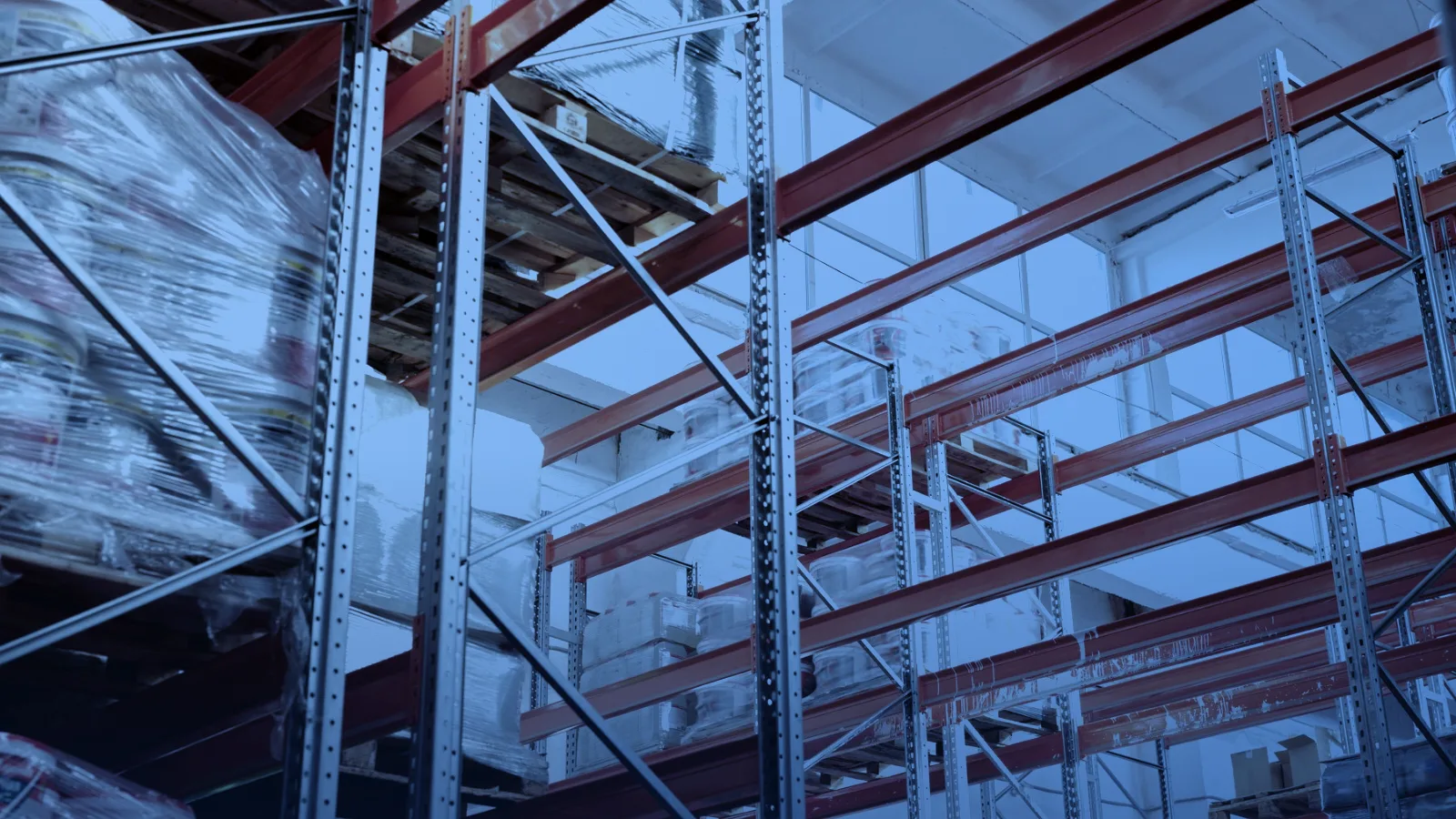
When the air conditioned office is inside the warehouse of a free zone, the review focuses on the return, because it pulls warehouse air carrying pallet and forklift dust. The filter, the office enclosure, the first return section and the air handler are checked. The camera shows whether the dust reached the branches or stayed at the filter.
In a free zone it is common to see a big warehouse with a raised office in a corner, a glass mezzanine where administration, customs and purchasing work. From inside one can see the forklifts moving, and air conditioning keeps the office cool. But the air that cools that office is born in the warehouse, and the warehouse is not air conditioned.
That condition changes the review. It is not only about cleaning office ducts, but about understanding how much of the warehouse enters the system and where.
Where does the dust that reaches the office come from?
It comes from the operation of the warehouse. Wooden pallets shed splinters and fine dust, cardboard loses fiber, forklifts stir up floor dust and the dock door brings outside air each time it opens. All of that gets in through any opening: the office door, the gaps in the mezzanine and, above all, the return grille if it takes air from the warehouse and not from the office.
Climatiza is the technical service behind this guide and works with camera inspection, an illustrated report and cleaning only when the condition justifies it, including in the case of free trade zones.
That last possibility is the most serious and the most common. If the unit return is on the warehouse side, the system works like a vacuum. The camera makes it possible to see the whole return section and check whether the dust is fine and superficial, which a good filter fixes, or bonded in layers, which calls for cleaning.
Why does it matter if the office is small?
It matters because in an office like this are the people who make decisions for the operation, and a unit strained by loaded air fails at the worst moment, with the warehouse full of cargo and inspectors waiting. It also matters for comfort and for moisture. With 75.7% annual mean humidity according to ETESA, a closed office inside a hot warehouse has big temperature differences with the outside, and the unit condenses easily.
And it matters for documentation, since free zones tend to receive security and process audits. A report with images of the system condition helps show that maintenance exists. Duct cleaning has not been shown to prevent health problems, according to the EPA and the CDC, so the report talks about equipment condition and does not promise effects on staff.
What is a visit to an office inside a warehouse like?
The visit has a first step that happens not in the office but in the warehouse. The technician asks permission to go up and see where the unit is and how it takes air. Then the office enclosure, doors, the mezzanine seal and the filter condition are checked. Only then are the access panels opened and the camera run through the return, the air handler and the branches.
- Look at the air intake. It is identified where the return takes air from and how far it is from the forklifts.
- Condition of the enclosure. Doors and gaps that let in unfiltered dust are checked.
- Camera from return to branches. The dust is followed from the grille to where it stops.
An illustrative case, not a real client: an office mezzanine with the return one meter from the warehouse floor. The camera shows fine dust in the first section and clean branches. The sensible move is to raise the return, fit a better capture filter and clean only the initial section. For a storage facility with no office, the logic is explained in how work is organized in a warehouse, and for the administrative side in what changes in an office.
Which mistakes repeat and what is worth asking for?
The first mistake is cleaning the ducts without moving the air intake, because the dust is back in weeks. The second is fitting a tighter filter without checking that the unit can take it, which drops the flow. The third is forgetting the office sealing. It is worth requiring images of the return, a note on the air intake and its distance from the dust, and a filter recommendation. The review is completed with the duct cleaning service only if the camera justifies it, and the general method is in the camera inspection.
Scheduling a review starts with a message to Climatiza, and the service page summarizes the process.
Sources
On this site
- Warehouses and storageHow the work is organized in this sector
- Offices and corporate towersA neighboring sector
- Camera inspectionThe real condition before deciding
Climatiza and Radar Panamá
Why does inspecting and cleaning ducts matter?
These are the technical reasons, with their source, why the condition of the ducts is checked before deciding. Duct cleaning has not been shown to prevent health problems according to the EPA and the CDC, and it is proposed only when the observed condition justifies it.
| Advantage | Data with source | What it means in practice |
|---|---|---|
| Follow a technical inspection reference | The ANSI/ASHRAE/ACCA 180 standard is the standard practice for inspection and maintenance of commercial HVAC systems. | It is an industry reference, not a legal requirement in Panama, and helps organize the review plan. |
| Require method and a report from the provider | NADCA published in 2025 the current edition of its ACR standard on assessment, cleaning and restoration of air systems. | It is an industry reference and not a seal: it helps ask for method, photographs and scope in writing. |
| Anticipate the tropical humidity | According to ETESA (Tocumen station, 1977 to 2010), mean annual relative humidity in Panama is 75.7 % and rises to between 78.2 and 82.4 % in the rainy months. | The condensate pan, the drain and the coil are checked first, because that is where moisture builds up. |
| Keep construction dust out of the system | The EPA and NIOSH Building Air Quality guide asks to block return grilles while construction work takes place in occupied buildings. | Before accepting a new or remodeled system it is worth checking whether construction dust got in. |
| A local figure that changes the decision | In the Panama and San Miguelito districts the climate is rainy from May to December, and the average daily maximum temperature is 33.9 °C over the year, reaching 35.3 °C in April (Tocumen station, 1977-2010 series). (ETESA, climate characterization of Panama and San Miguelito). | It is the sector context taken into account when planning the visit. |
Frequently asked questions
Is it worth air conditioning the warehouse to protect the office?
Rarely. It is more practical to seal the office well, place the return away from dust and use a suitable filter. Air conditioning a whole warehouse is a decision of another scale that depends on the stored cargo.
How often is the filter of an office in a warehouse changed?
More often than in a normal office, and the filter itself sets the frequency: if it darkens or gets heavy sooner than planned, it is changed. It helps to photograph it at each check to see the trend.
What if the return cannot be moved?
A prefilter or a filtered grille can be fitted and checked more often. The report should state which option is feasible in that office, according to the space and the flow of the unit.
How is forklift dust kept from reaching the mezzanine office?
Doors to the warehouse are kept closed, the office perimeter is sealed and the air handler intake is placed outside the volume where forklifts circulate. A suitable filter in the air handler helps, and wet sweeping of the floor avoids raising dust from below.
What effect does warehouse humidity have on the air-conditioned office?
A warehouse without air conditioning lets in hot, humid air, which can condense on the cold walls, ducts and grilles of the office. The camera inspection checks the insulation and joints of the stretch crossing the warehouse, and the report states whether condensation or stains are present.
Keep reading the guide

Request an inspection
Do you want to know the condition of your system?
A camera inspection lets you see the inside of the ducts before deciding what to do. Message us and we will confirm availability.
- +507 6388-2083
- info@climatizapanama.com
- Calle Gervasio García, 8, Panama City