
Restaurants
Grease in restaurant ducts: how to detect it before the smell
Kitchen grease does not stay in the hood. Part of it leaves as an aerosol, floats and ends up wherever the air conditioning pulls it in.
 By Limpieza de Ductos Panamá
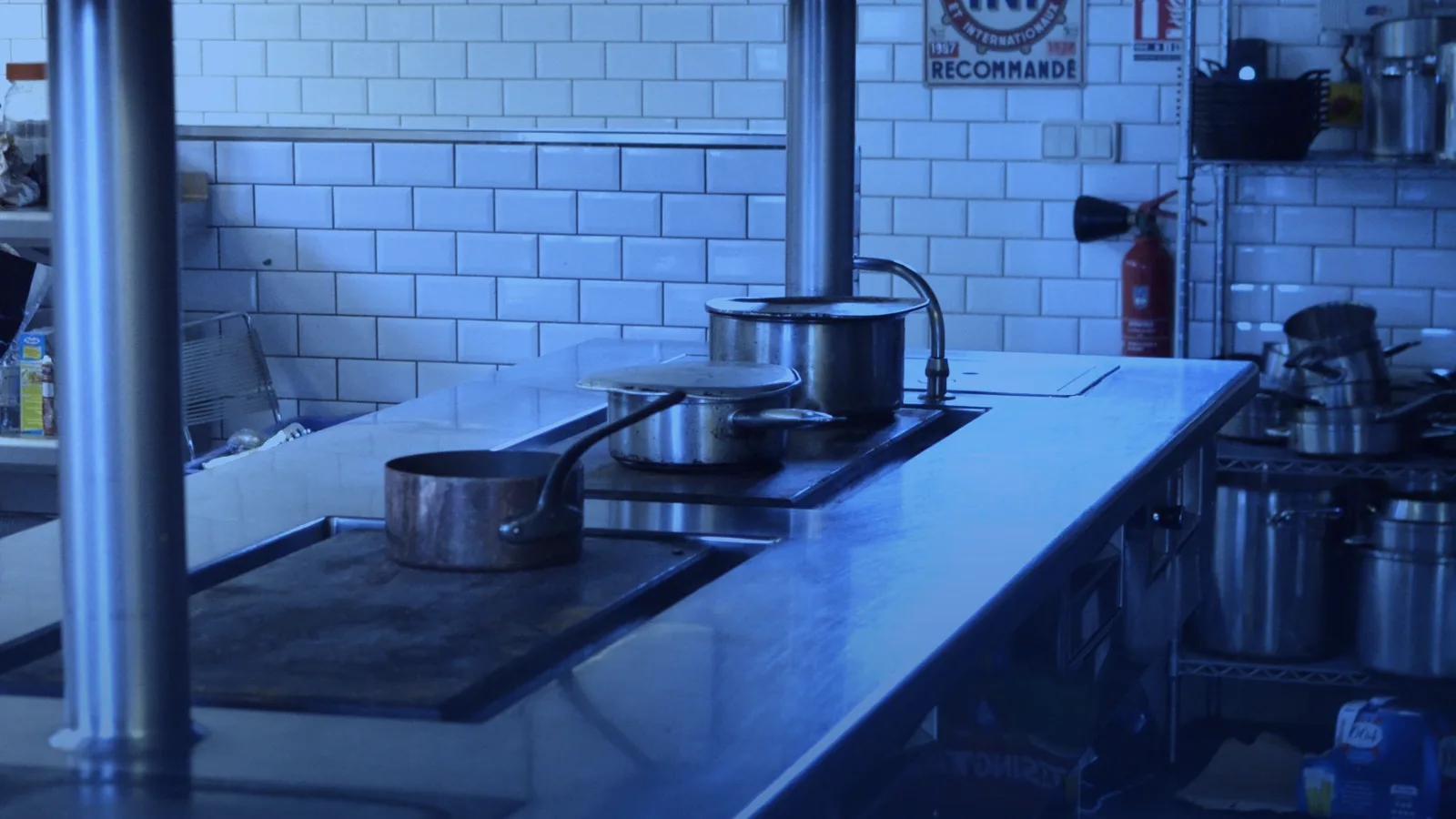
Grease reaches the dining room ducts when the kitchen exhaust does not capture all the aerosol and the air conditioning return pulls it in. Four signs give it away: a sticky film on the return grille closest to the kitchen, filters that get heavy and dark too soon, a brown halo on the dining room diffusers and a fried smell when opening in the morning. A camera confirms it before customers notice.
Why grease travels from the exhaust to the dining room
The hood works on a simple principle: it pulls out more air than the kitchen receives, so dining room air flows into the kitchen and not the other way round. That balance breaks with saturated hood filters, an exhaust fan losing strength or a pass window left open all the time. The aerosol from the griddle and the fryer then escapes above the hood and stays floating.
If the air conditioning return sits near the kitchen door, it draws that aerosol in and spreads it through the coil and the dining room ducts. Hood exhaust is a separate system, covered by NFPA 96 according to the United States Fire Administration, and it is serviced with a different procedure. This article is about the air conditioning, which is where grease goes unnoticed.
Four signs the manager notices before the customer does
None of these signs requires opening a duct. All of them can be observed on a five minute walk before service, and it helps to log them with a date to see whether they progress.
The fieldwork is carried out by the Climatiza team, who check branches, grilles and air handlers and record the result in an illustrated report, also in the case of restaurants.
| Sign | Where to look | What it means |
|---|---|---|
| Dust that does not fall when blown, it stays stuck | Return grille closest to the kitchen | Grease aerosol is already acting as glue in that section |
| Air conditioning filters dark and heavy before the scheduled change | Air handler or dining room unit | Grease load shortens filter life and part of it passes to the coil |
| Brown or yellowish halo around the diffuser | Dining room ceiling, above tables near the kitchen | The supply air already carries residue and drops it on the way out |
| Fried smell on opening, with the kitchen still off | Dining room, in the first hour of the day | The odor comes from the duct, not from the kitchen |
What the camera shows in a restaurant duct with grease
A duct with dry dust looks matte and the dust comes off when touched. A duct with grease looks glossy, dust forms bonded layers and droplets appear at joints and on the turning vanes of elbows. The heaviest section is usually between the kitchen return and the coil, because there the air still carries the warm aerosol. After the coil the residue is lighter but harder to see, which is why the dining room supply is also surveyed.
The EPA guide on duct cleaning states that cleaning makes sense when there is visible build up released through the registers or once the cause has been corrected. With grease, the cause is the hood or the air balance, and the camera documents the real condition before deciding. In how a camera inspection is carried out you can read which sections are surveyed and what gets photographed.
How to keep kitchen and dining room apart in the maintenance plan
- Two calendars, two providers. The hood and its exhaust duct go with the kitchen exhaust company. The dining room air conditioning and its return go with the duct team. Mixing them in one contract usually leaves the kitchen return unchecked.
- Locate the return that captures the kitchen. Find on the drawings or with test smoke which grille draws air from the kitchen door. That grille gets a monthly filter check and surface wipe, with a photo.
- Fix the balance before cleaning. If the hood does not capture, cleaning the dining room duct lasts weeks. The HVAC technician measures pressure between kitchen and dining room and adjusts the makeup air. That adjustment comes first.
- Set the comparison point. Pick one return section and one dining room diffuser as fixed points. Each check photographs them from the same angle, so it is clear whether residue returns and how fast.
In how the work is organized in a restaurant the split by sections and closing hours is explained. For restaurants inside a hotel the same logic applies, with the difference that hotel management sets the calendar and usually asks for the report by floors.
What to ask for in the report after cleaning
- Before and after photographs at the same points, with the date visible.
- List of sections surveyed and sections without access, with the reason.
- Location of the return grille that captures kitchen air.
- Condition of the filter and the coil when the air handler was opened.
- A note on air balance for the air conditioning technician to follow up.
- A suggestion of when to look again, based on what was seen and not on a general rule.
A report like this makes it possible to compare between checks and to discuss with data whether to move the grille, change the filter type or adjust the hood. The general criteria for deciding when cleaning is due are in the criteria for deciding whether cleaning is due, and the signs in this article can be entered in the inspection planner to estimate the level of attention the premises need.
Those who want to go from this reading to a real review can start at the Climatiza service page or write through the main Climatiza site.
Sources
On this site
- Restaurants and coffee shopsHow the work is organized in this sector
- Hotels and hostelsA neighboring sector
- Camera inspectionThe real condition before deciding
Climatiza and Radar Panamá
Frequently asked questions
Is grease in the dining room ducts a fire risk like in the hood?
The main fire risk sits in the hood and its exhaust duct, which is what NFPA 96 covers. In air conditioning ducts grease shows up as a thin film mixed with dust. It is not the same load, but it is worth removing because it traps more dust and holds the odor.
Can grease be detected without opening the duct?
Yes, with the four signs in the table: dust stuck to the kitchen return, filters loading up too soon, a halo on the diffusers and a smell on opening. Knowing how much there is and how far it goes requires the camera.
Does the dining room duct need cleaning every time the hood is cleaned?
No. The hood follows its own cycle. The dining room duct is cleaned when the camera shows bonded residue, and the air balance is corrected first. Without that correction grease comes back within weeks.
What if the kitchen return cannot be moved?
A higher efficiency filter can be fitted on that grille and checked more often. The hood can also be adjusted to capture better. The report should state which of the two options applies.
Keep reading

Request an inspection
Do you want to know the condition of your system?
A camera inspection lets you see the inside of the ducts before deciding what to do. Message us and we will confirm availability.
- +507 6388-2083
- info@climatizapanama.com
- Calle Gervasio García, 8, Panama City