
Coffee shops
Coffee shop with roasting or bar: what smoke does to the ducts
The aroma of freshly roasted coffee is the best advertisement a cafe has. The same smoke that produces it leaves a layer that, over time, dulls it.
 By Limpieza de Ductos Panamá
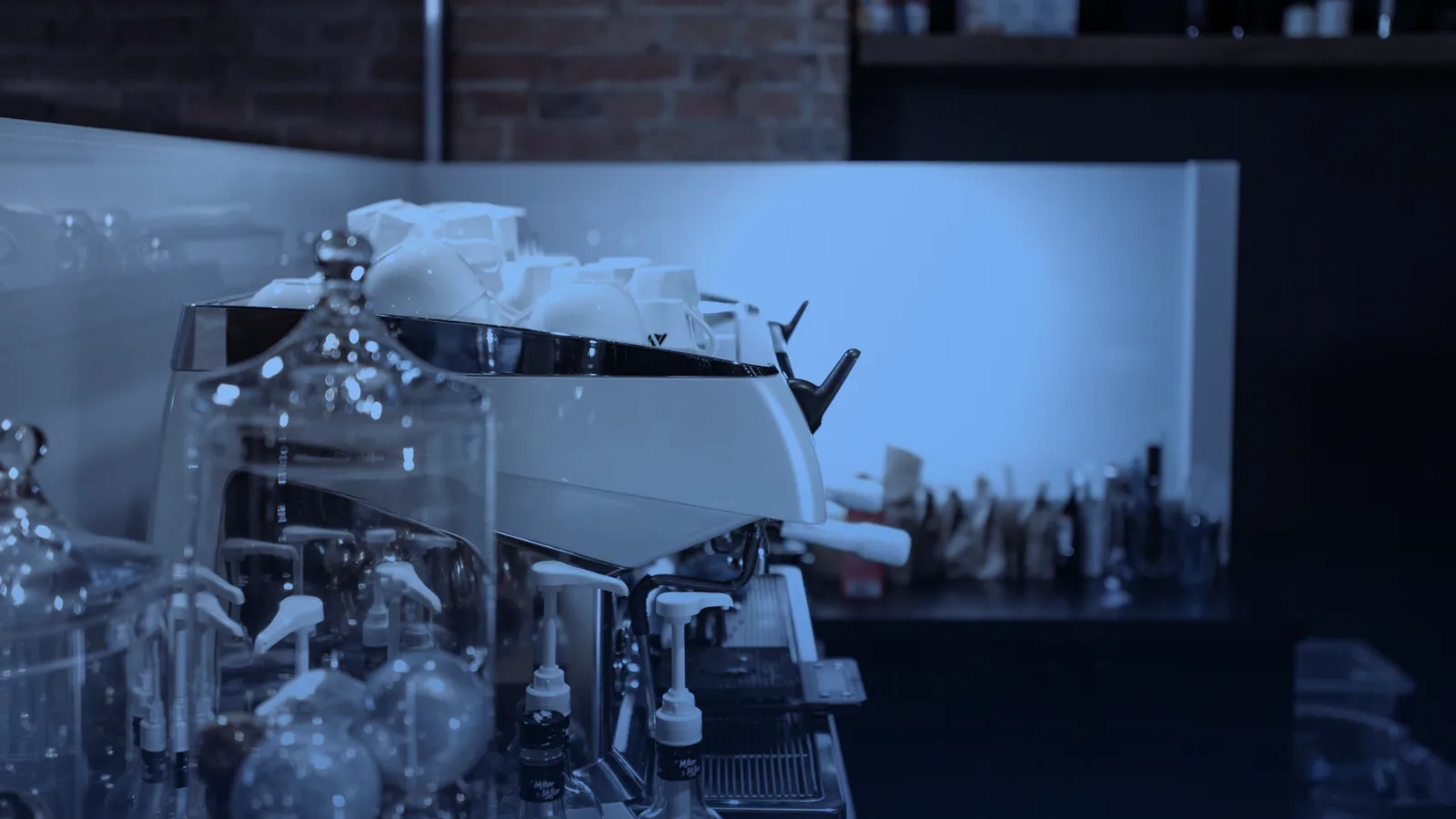
Yes, roasting smoke stays in the ducts. It contains fine particles, volatile organic compounds and organic acids, according to the EPA, and that mix bonds to the duct walls and the grilles. Steam from the espresso machine supplies the moisture that sets it. The result shows as a flat aroma in the shop and grilles that darken. It is checked with a camera section by section, in the quietest hours, without closing.
What roasting smoke contains and why it sticks
The EPA AP-42 document on coffee roasting describes the emissions of the process: particulate matter, volatile organic compounds, organic acids and combustion products from the burner. The roaster is the main source of gases, among them alcohols and aldehydes. At the scale of a cafe with a small roaster the amounts are modest, but the composition is the same.
What matters for the duct is that those particles are not dry dust. They come loaded with bean oils and with the compounds that give the aroma. As they cool inside the duct they condense into a brownish, slightly tacky film that traps ordinary dust and fixes it. A roaster running two hours a week is enough for that film to show in the first return section within a few months.
Steam from the machine and humidity in the duct
The espresso machine releases steam every time the group is purged or milk is textured. On a busy bar that is hundreds of purges a day, almost always under a return grille placed right above the bar. That steam raises the local humidity of the air entering the duct.
To coordinate a visit related to coffee shops, Climatiza answers inquiries and confirms availability according to the schedule of the place.
Ambient humidity in Panama is already high, 75.7 % on annual average according to ETESA. With the steam from the bar, the air reaching the coil is close to saturation and the smoke film stays damp. Dry smoke can be vacuumed. Damp smoke, mixed with dust and traces of aerosolized milk, forms a layer that only comes off with mechanical cleaning. That is why the grille above the bar is the first point checked.
Signs in the shop: flat aroma and dark grilles
- The aroma of freshly ground coffee is noticed at the bar but not at the back tables.
- On opening in the morning the shop smells of old coffee, not of coffee.
- The louvers of the grille above the bar went from gray to brown in a few months.
- The ceiling around the diffusers shows a darker halo than the rest.
- The unit filter comes out with an oily layer instead of loose dust.
- Customers coming in from the street comment on the smell before regulars do.
Two of these signs together justify looking inside the duct. The EPA guide on duct cleaning points out that cleaning makes sense when there is visible build up and that the cause should be corrected first. In a cafe the cause is a roaster without its own exhaust or a badly placed return grille, and that is solved with the HVAC technician. Which grilles are checked in a small shop is explained in the restaurants and coffee shops page.
How to inspect without closing the cafe
- Pick the dead hour of the shop. In most cafes in Panama that is between two and four in the afternoon. Roasting is moved to another day and the bar keeps serving.
- Start with the grille above the bar. It is removed, photographed and the camera goes in through the return. It is the section with the most residue and the one that decides whether cleaning is needed.
- Continue with the section above the roaster. If the roaster sits under a diffuser, that diffuser takes in smoke every time the air switches off and smoke rises. It is checked even if it is far from the bar.
- Leave the unit and the filter for last. Opening the unit shuts the air off for a few minutes. It is done when fewer tables are occupied and closed before the temperature rises.
The full survey is described in how the camera inspection is done. If the report shows bonded residue, cleaning is scheduled after closing and section by section, with the bar covered. How to decide between cleaning and waiting is in the criteria for deciding whether to clean or not.
Monthly routine for the owner
| Task | How |
|---|---|
| Photo of the grille above the bar | Same day of the month, same distance, with the date visible |
| Aroma test at the farthest table | Grind coffee at the bar and check how many seconds it takes to reach the back |
| Filter check | Lift it and see whether the residue is loose dust or an oily layer |
| Roasting hours log | Note the hours for the month to relate them to the state of the grille |
| Surface cleaning of louvers | Damp cloth, without scented products that alter the aroma of the shop |
This routine does not replace the camera, but it tracks the trend and keeps the owner from discovering the problem through a review. For bakeries with a coffee bar, where flour and smoke add up, it is also worth reading what is checked in a bakery. To estimate the level of attention with the routine data, the planner on the site helps.
Those who want to go from this reading to a real review can start at the Climatiza service page or write through the main Climatiza site.
Sources
On this site
- Restaurants and coffee shopsHow the work is organized in this sector
- Bakeries and pastry shopsA neighboring sector
- Camera inspectionThe real condition before deciding
Climatiza and Radar Panamá
Frequently asked questions
Does a small sample roaster also affect the ducts?
Yes, to a lesser degree. A one kilo roaster running a few hours a week produces the same type of smoke. If it has no exhaust of its own to the outside, that smoke ends up in the nearest air conditioning return.
Why does the shop smell of old coffee if it is cleaned every day?
Because the smoke film is inside the duct and not on the surfaces being cleaned. When the air starts in the morning, the first flow drags that stale smell into the shop. Cleaning tables and the bar does not change it.
Does an extractor fan above the roaster help?
It is the measure that most reduces the smoke reaching the duct, as long as it discharges outside and not into the ceiling space. It is best to solve this before cleaning the duct, otherwise the film forms again.
Does milk steam also leave residue?
Yes. Textured milk releases very fine droplets that rise with the steam and settle on the grille above the bar. Mixed with smoke they form a layer that, with the humidity of Panama, can give off a sour smell.
Keep reading

Request an inspection
Do you want to know the condition of your system?
A camera inspection lets you see the inside of the ducts before deciding what to do. Message us and we will confirm availability.
- +507 6388-2083
- info@climatizapanama.com
- Calle Gervasio García, 8, Panama City