
Marinas and yacht clubs
Marina and yacht club: clubhouse ducts facing salt air
In a marina the air entering the clubhouse passed over the dock first. It carries salt, moisture and, on windy days, droplets nobody sees. The duct receives all of it in order: first the grilles that face the water, then the rest.
 By Limpieza de Ductos Panamá
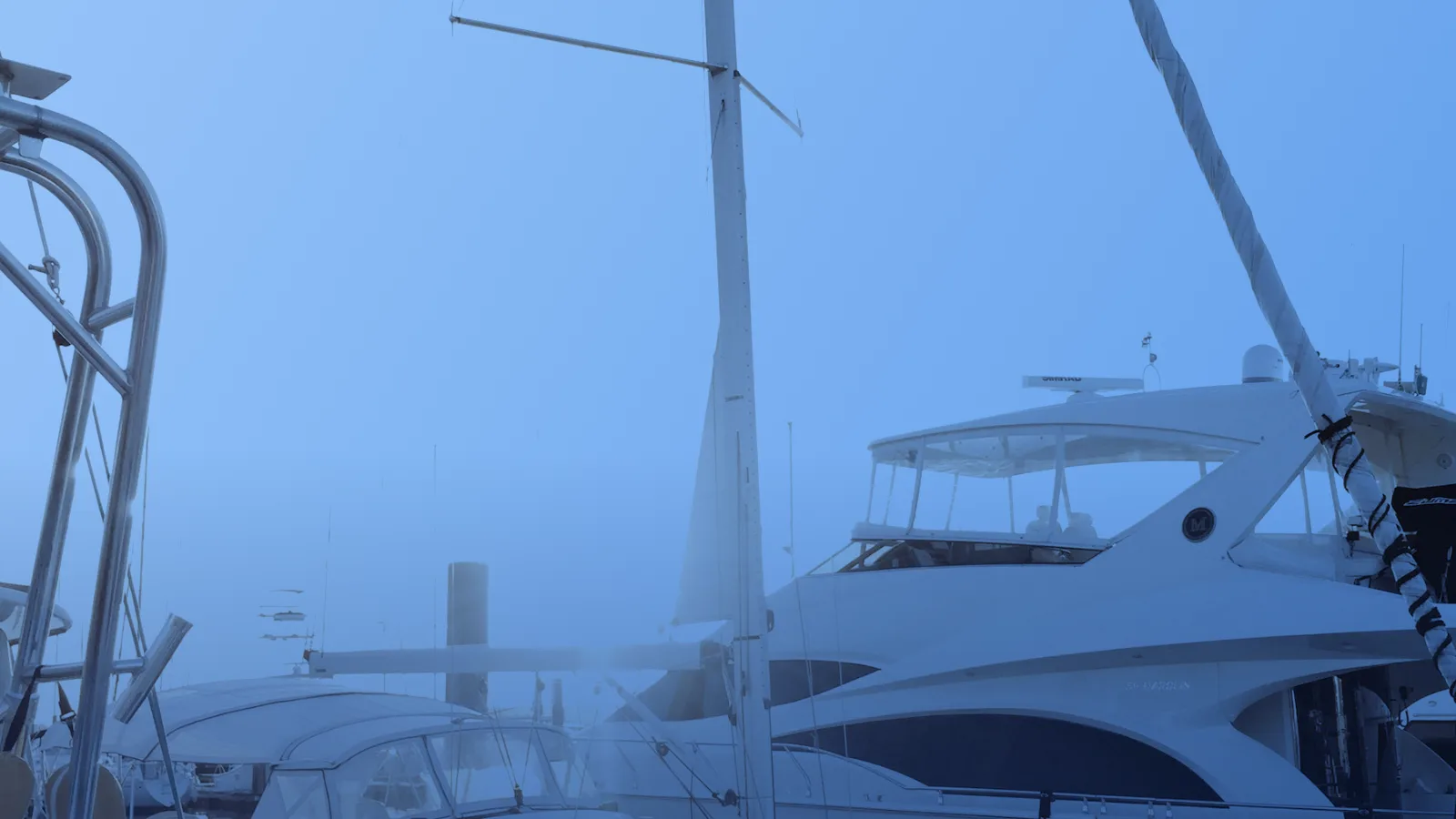
It is protected by reducing what comes in and checking the most exposed parts first. Outdoor air intakes and grilles facing the dock receive the salt air first, so that is where better filters, inspections and photos are concentrated. The clubhouse restaurant adds kitchen vapor, and the harbormaster offices add doors that open all the time. The camera inside the duct shows how far the salt reached and avoids cleaning sections that are still clean.
Salt air on the clubhouse grilles
Salt air is not spread evenly across the clubhouse. It enters with the wind through the air handler outdoor intake and through any grille or door facing the dock, and loses strength as it moves inward. So it helps to think of the building as a series of bands: the one facing the water, the middle one and the back. Each band is checked with a different priority.
What is looked for in the first band is simple: white spots on the grille slats, screws with orange rust, frames pulling away from the wall and a deposit that a dry cloth does not remove. Salt holds moisture, and with the average humidity in Panama, which ETESA and IMHPA put at 75.7 % as an annual mean, that salt almost never fully dries inside the duct.
| Clubhouse band | Salt air exposure | What is checked first |
|---|---|---|
| Terrace and lounge facing the dock | High: direct wind and open doors | Grilles, frames, first section with camera |
| Restaurant and bar | Medium, with kitchen vapor added | Return above the bar and the zone filter |
| Harbormaster and administration offices | Medium through doors to the outside | Diffusers over desks and the outdoor intake |
| Changing rooms and inner corridors | Low, but with its own moisture | Condensate tray and duct liner |
Marina restaurant and bar
The clubhouse restaurant mixes two loads that already take work on their own: the salt coming in from the terrace and the vapor from the kitchen and the bar. The hood extraction is a separate system, but the lounge air conditioning return picks up what the hood misses, and that greasy vapor sticks onto the salt. The result is a harder deposit than in a city dining room.
When the system allows it, the review of marinas and yacht clubs is done by camera through the existing access points, the way the Climatiza technical service performs it.
For this zone, the EPA and NIOSH Building Air Quality guide offers two useful criteria: standing water in the tray under the coil favors mold growth if it is not cleaned frequently, and a porous duct liner already showing microbial growth is replaced, not cleaned. In a marina restaurant, with high humidity all year, the tray and the liner are checked before anything else. The camera running through the section above the bar tells whether the deposit is salt, grease or both.
Harbormaster offices
Harbormaster and administration offices have one particularity: the door opens every time an owner comes in to pay, request a berth or sign a departure. That door usually opens straight onto the dock. Each opening lets in a gust of salty air that the office return draws in within seconds. Office equipment, documents and the diffusers over the desks end up with the same whitish deposit as the terrace grilles, only more slowly.
- A lobby or second door between the dock and the office, however small.
- Office return grille away from the entrance door, not above it.
- Office zone filter checked more often than the inner corridor filter.
- Aluminum or plastic diffusers where galvanized steel has already shown rust.
- Dated photo of each harbormaster grille to compare from one check to the next.
Frequency by boating season
A marina does not have flat occupancy. There are regatta weekends, months when owners come down more and rainy season weeks when the clubhouse sits almost empty but with the air on to control humidity. Inspection frequency is adjusted to that rhythm and to what the camera shows, not to a fixed calendar. A criterion that works is to look at the exposed band at the end of the busiest season and before the next, and leave the inner bands for when the previous image suggests they are starting to load.
The ASHRAE preventive maintenance checklist for indoor air quality includes, as a monthly task, reading the filter pressure drop at each air handler and replacing those that exceed the manufacturer maximum, as well as inspecting the coils. In a clubhouse that monthly reading is the early alarm: if the dock band filter loads well before the others, salt air is coming in faster than the system can handle and the camera check is best brought forward. The technical guide on duct materials and sections explains why the galvanized steel of the first few meters suffers most.
Report for the club board
A yacht club board approves budgets by vote and needs a document that makes sense in a meeting. A report by bands works better than one by duct: each band with its exposure, its grille photo, its camera image of the first section and one of three marks, clean, monitor or no action. The board sees on one page where the problem is and can compare with the previous report without technical help.
- Clubhouse plan with the three bands marked. The position of outdoor intakes, returns and doors to the dock is drawn over it.
- One sheet per band with date, photos and camera images. The dock band sheet also includes the condition of screws and frames.
- List of what was left alone and why. Clean inner sections are documented all the same: that way the board sees nothing was over-cleaned.
- Recommendation of parts to replace with salt-resistant material. Grilles and fasteners of the exposed band, with the inspection planner to set the next look.
A marina clubhouse is not a beach house that spends seasons closed nor a hotel with numbered rooms and floors, even though it shares the salt air with the first and the restaurant with the second. It is a members building, with irregular use and doors to the water, and the duct plan is written for that reality.
More about the inspection and cleaning service that applies these criteria is on the Climatiza duct cleaning page and on the Climatiza home page.
Sources
On this site
- Apartments and beach housesHow the work is organized in this sector
- Hotels and hostelsA neighboring sector
- Camera inspectionThe real condition before deciding
Climatiza and Radar Panamá
Frequently asked questions
Can salt air be kept out of the duct entirely?
No, as long as there is an outdoor air intake and doors to the dock, some salt gets in. What is controlled is how much and how far it reaches: better filters at the outdoor intake, returns away from doors, a lobby at the harbormaster office and a camera check of the first sections. The rest of the system usually stays clean.
Which material suits the grilles in the dock band?
Where galvanized steel already shows rust, replacing with aluminum or engineering plastic and using stainless fasteners makes sense. It does not change what enters the duct, but it stops the grille itself becoming a source of rust particles and lengthens the interval between replacements.
Does cleaning the clubhouse ducts improve member health?
That cannot be promised. The EPA and the CDC state that duct cleaning has not been shown to prevent health problems. What it does contribute in a marina is removing the salt and grease deposit from the first section, protecting the equipment and documenting the condition for the board.
Who from the marina accompanies the check?
The maintenance supervisor, who knows where the air handlers and outdoor intakes are, and a board member or the manager, so the report has a recipient to present it at the meeting. In the restaurant the chef is best informed, to coordinate the return above the bar.
Keep reading

Request an inspection
Do you want to know the condition of your system?
A camera inspection lets you see the inside of the ducts before deciding what to do. Message us and we will confirm availability.
- +507 6388-2083
- info@climatizapanama.com
- Calle Gervasio García, 8, Panama City