
Bakeries and pastry shops
Flour in bakery ducts: why it builds up and what to check
Flour that never touches a table travels too. It stays in the air for a while, the return pulls it in and, with Panama’s humidity, it stops being dust.
 By
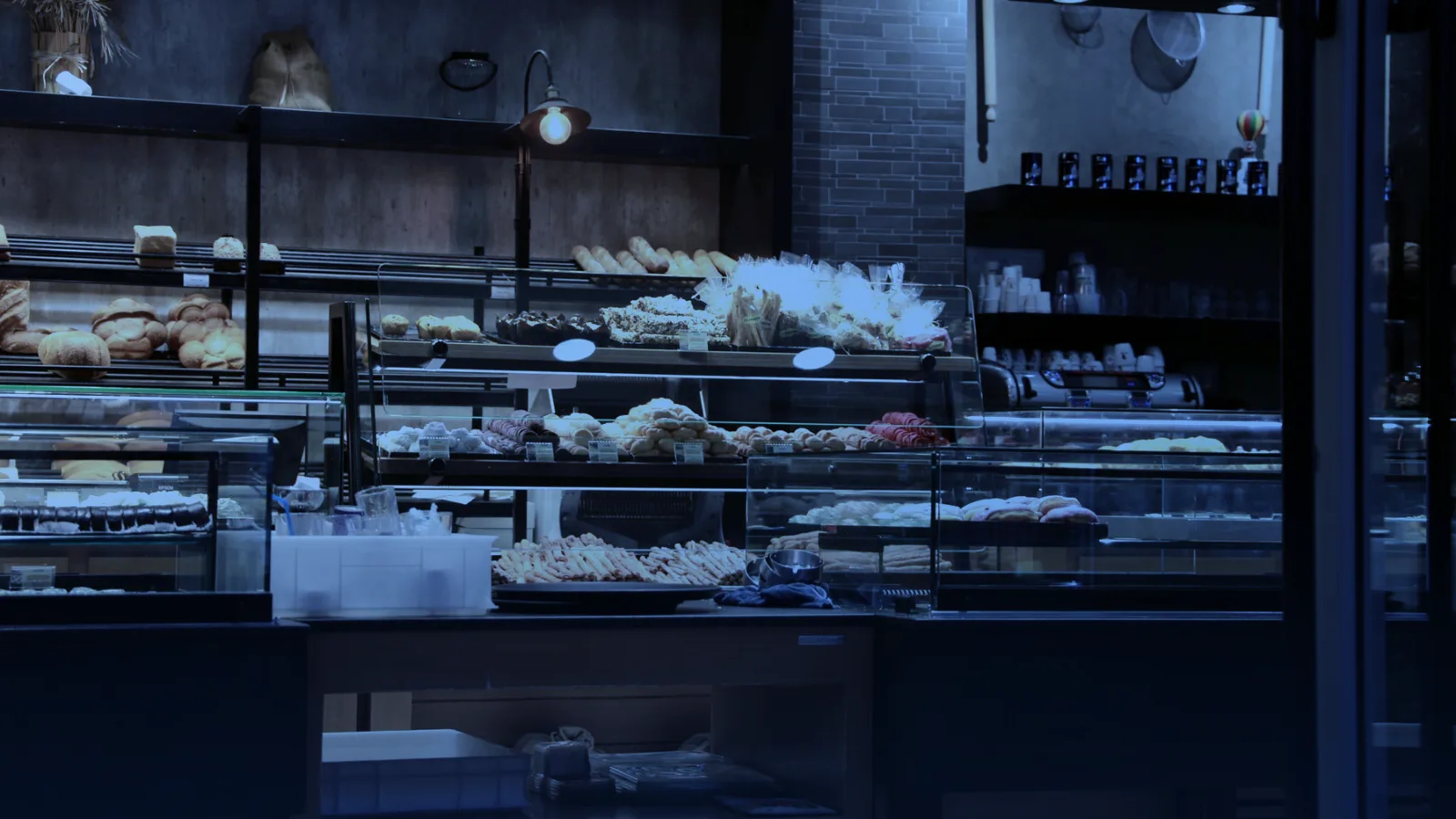
Flour accumulates in the ducts because the finest particles raised by the mixer and by emptying sacks stay suspended and the return pulls them in. Inside the duct, with high humidity, it absorbs water and forms a paste that sticks to the walls and grilles. The return nearest the mixer is checked first, then the filter and finally the shop diffusers.
Anyone who opens a bakery at five in the morning knows the scene. The first sack is emptied over the mixer and a white cloud rises and hangs in the light. A few minutes later the air conditioning is already on and the cloud has vanished from sight. What is not seen is where it went. Part settled on the tables, and another part, the finest, went through the return grille.
Weeks later the symptom appears: a whitish layer on the return slats, a filter that weighs twice as much and, at times, fine dust on the pastry display. The owner assumes the premises are not cleaned enough. It is really an air problem, and it is better understood by following the path of the flour.
How does flour get from the mixing area to the ducts?
Each time a sack is emptied or the mixer starts, a cloud rises. The coarse particles fall onto the table in seconds. The fine ones stay in the air for several minutes, and if the air conditioning is on during that time, the return pulls them toward the filter. The filter holds back a part. The rest gets through the edges of the frame, through a poorly seated filter or through one that is already saturated, and reaches the coil and the supply duct.
The fieldwork is carried out by the Climatiza team, who check branches, grilles and air handlers and record the result in an illustrated report, also in the case of bakeries and pastry shops.
In bakeries where production and shop share a single unit, the flour from the mixing ends up coming out of the diffusers above the display. That is why the position of the return weighs more than any cleaning routine: a return two meters from the mixer works as a flour vacuum around the clock.
What does humidity do to flour inside the duct?
Dry flour is dust and is easy to vacuum. The problem appears when it mixes with water. Panama’s annual mean humidity is 75.7% according to ETESA, and inside a duct, where the cooled air brushes the dew point, the flour takes in that moisture, swells and becomes a pasty layer that no longer comes off with pressurized air. It is the reason the condensate pan and the duct liner enter the review of a bakery.
The EPA recommends keeping indoor humidity below 60% and warns that porous duct liners are a place where mold thrives when they get wet. A layer of damp flour on a porous liner brings those two conditions together, and that is why in a bakery the duct material is looked at as well as the residue. A smooth sheet metal section with flour is cleaned. A saturated porous liner is replaced.
Why does it matter if the bakery keeps producing?
Because flour in the duct does not stop production, but it wears down everything it touches. It blocks the coil, forces the unit to work harder to cool the same space and leaves a shop that smells of stale dough instead of bread. The customer who walks in and notices dust on the display concludes what anyone would conclude, even if the bakery floor is spotless.
There is also a reason of order. Flour is a combustible dust, and OSHA includes it among food dusts capable of burning quickly when finely divided. That does not turn the air duct into an explosion risk, but it is one more reason not to let the layer grow unchecked, especially near the oven. And it is worth saying plainly that the EPA and the CDC have not shown that cleaning ducts prevents health problems, so here it is framed as equipment upkeep and residue control.
What is checked first, and how often?
| Where to look | What to look for | When |
|---|---|---|
| Return nearest the mixer | White or gray layer on the slats, hardened flour at the edges | Weekly, by eye |
| Unit filter | Weight when lifted, even color, frame without gaps | Every two weeks in the rains |
| Condensate pan | Whitish sludge or standing water | Monthly |
| Diffusers above the display | Fine dust on the edge, stains on the ceiling | Weekly |
| Inside the duct with a camera | Layer thickness, liner condition, damp sections | According to what the previous points show |
There is no single frequency. A bakery that mixes twice a day with large sacks loads the return much faster than a pastry shop that works with mixes in small bags. What can be set is a rule: note how many sacks are opened per week and photograph the return on the same day each week. When the slat stops looking metallic between two consecutive photos, the filter is going to saturate before its scheduled date.
What does the visit look like and what should the report show?
The visit starts in the production area, with the mixer off and the air stopped so the flour does not move. The technician photographs the return with a reference object to show the thickness of the layer, opens the filter, checks the frame and runs the camera through the first section and the branch toward the shop. What he looks for is telling dry dust from bonded paste, because it changes the cleaning method, and noting the material of each section. The working method is explained in how a camera inspection is carried out.
An illustrative case, not a real client: a bakery with the return two meters from the mixer and a single unit for the bakehouse and the shop. The camera shows bonded paste in the first section, damp porous liner on one elbow and the rest of the duct with light dust. The sensible decision is to relocate or partially cover the return, replace the damaged liner, clean only the first section and change the filter more often. Cleaning the whole system would have meant more work with no better result.
Which mistakes repeat and what is worth asking for?
Cleaning the duct without moving the return is repeated, and the flour comes back within weeks. Changing the filter by date and not by weight is also repeated, as is letting the rainy season go by without looking at the pan. It is worth asking for a report with the photo of the production return, the indication of whether the residue is dry dust or paste, the material of each section, damp sections marked on a sketch, the condition of the filter frame and the list of sections without access.
How the work is split between production and shop is told in how the work is organized in a bakery, and the other places served are in the sectors. If the bakery has a seating area or a café, the signs of the dining room and the kitchen are checked in the same visit. The general criteria for deciding whether cleaning is worthwhile are in when to clean the ducts and when to wait.
To ask about availability or request a camera inspection, the Climatiza website lists the ways to contact the team and the duct cleaning service page explains how the work is organized.
Sources
On this site
- Bakeries and pastry shopsHow the work is organized in this sector
- Restaurants and coffee shopsA neighboring sector
- Camera inspectionThe real condition before deciding
Climatiza and Radar Panamá
Why does inspecting and cleaning ducts matter?
These are the technical reasons, with their source, why the condition of the ducts is checked before deciding. Duct cleaning has not been shown to prevent health problems according to the EPA and the CDC, and it is proposed only when the observed condition justifies it.
| Advantage | Data with source | What it means in practice |
|---|---|---|
| Follow a technical inspection reference | The ANSI/ASHRAE/ACCA 180 standard is the standard practice for inspection and maintenance of commercial HVAC systems. | It is an industry reference, not a legal requirement in Panama, and helps organize the review plan. |
| Require method and a report from the provider | NADCA published in 2025 the current edition of its ACR standard on assessment, cleaning and restoration of air systems. | It is an industry reference and not a seal: it helps ask for method, photographs and scope in writing. |
| Anticipate the tropical humidity | According to ETESA (Tocumen station, 1977 to 2010), mean annual relative humidity in Panama is 75.7 % and rises to between 78.2 and 82.4 % in the rainy months. | The condensate pan, the drain and the coil are checked first, because that is where moisture builds up. |
| A local figure that changes the decision | The INEC Business and Establishment Directory (reference year 2022) records 691 companies making bakery products, with 6,712 people employed, among the 5,123 companies in manufacturing industries. (INEC, Business and Establishment Directory 2022, table 12). | It is the sector context taken into account when planning the visit. |
Frequently asked questions
Can flour in the ducts cause an explosion?
The combustible dust risk lies in the production area, where flour is suspended in quantity. In air ducts the load is much smaller, but it is best not to let the layer grow, especially near the oven.
How often should the filter be changed in a bakery?
There is no fixed date. It is changed by weight and color, roughly every two weeks in the rainy season if production is high. The weekly photo of the return warns when the filter is going to saturate sooner than expected.
Is a camera needed if dust is only visible on the grille?
If the dust reached the shop diffusers, it passed the filter and the coil, and it is no longer a grille matter. The camera shows how much layer there is inside and whether it is dry dust or paste, which changes the method.
What does flour look like inside a duct when humidity is present?
It looks like a white or grayish caked crust stuck to the return walls and the coil fins. Humidity turns dry dust into paste. Average annual relative humidity in Panama is 75.7 %, according to ETESA, so that change happens easily.
Which bakery habits reduce the flour that reaches the return?
Dumping sacks away from return grilles, covering open containers and mopping instead of blowing with compressed air help lower the load. The filter in that area also deserves more frequent checks than the one in the shop, because it fills up sooner.
Keep reading the guide

Request an inspection
Do you want to know the condition of your system?
A camera inspection lets you see the inside of the ducts before deciding what to do. Message us and we will confirm availability.
- +507 6388-2083
- info@climatizapanama.com
- Calle Gervasio García, 8, Panama City