
Gyms and sports centers
Gym: sweat, humidity and ducts, why it smells even when clean
Staff mop floors, wipe down machines and leave the gym spotless. And in the morning, on opening, the smell is back.
 By
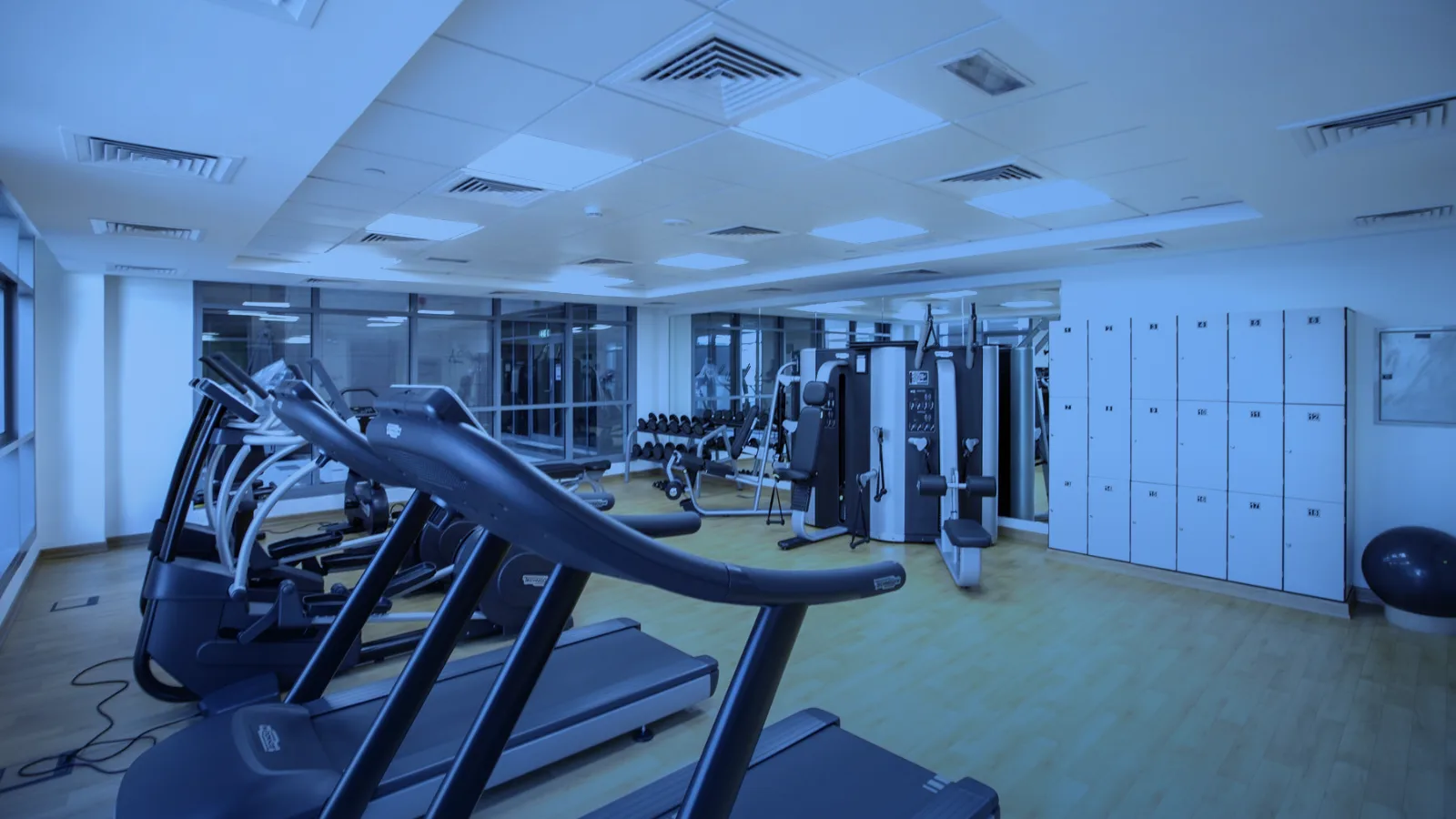
A gym keeps smelling even when cleaned daily because the smell does not come only from surfaces: moisture from breathing and sweat travels through the air, condenses in the pan or the insulation and feeds odors in the duct. The camera shows whether moisture is retained. If it is, drainage and airflow are corrected first, and then it is decided whether the section is cleaned.
There are spotless gyms that smell bad. Floors shine, machines are wiped after each use and the restroom is kept up. But on opening in the morning the room smells stuffy, and by mid afternoon, with the floor full, the smell becomes part of the environment. The owner changes cleaning products, and the smell is back in two days.
When that happens, it is worth looking up. The smell may not be on the surfaces but in the air around them, and the air passes through the ducts.
Why does it smell when everything is clean?
It smells because a gym produces moisture in quantities few premises match. Every person training exhales vapor and sweats, and that moisture goes into the air. The air conditioning system collects it, and if the coil, pan or insulation hold water, conditions form for the smell to stay in the unit and be spread by the air.
To coordinate a visit related to gyms and sports centers, Climatiza answers inquiries and confirms availability according to the schedule of the place.
Panama makes it worse. Annual mean humidity is 75.7% according to ETESA, so the outdoor air that comes in already carries a lot of water. Wu et al., 2020, point out that keeping relative humidity in range in tropical zones is equivalent to running air conditioning almost all day. In a gym, with the extra load of people, that demand multiplies.
What is checked when the smell will not go away?
The check goes in order from most to least likely. First the condensate pan and its drain, because a slow drain is the commonest cause of a persistent smell. Then the coil and the filter. Next the insulation of the branches near the sweatiest area, such as the cardio zone. And last the inside of the duct, to see whether there is dust with moisture.
The duct comes last, not first, and that matters. If the problem is a slow drain, cleaning the duct solves nothing and the smell returns. The camera helps avoid picking the wrong target.
Why does it matter if members do not complain?
It matters because members almost never complain, they stop coming. Odor is among the things a gym customer associates with neglect, even when the gym is clean. It matters for comfort, because a room with heavy air makes training harder. And for equipment condition, which works under high moisture load and wears out sooner if drainage fails. The EPA points out that mold can appear in pans and porous liners, so checking them is basic maintenance.
It is worth making clear what is not promised. Duct cleaning has not been shown to prevent health problems, according to the EPA and the CDC. What is offered is a look at the condition of the system and a decision based on evidence, not the cure of a nuisance.
What is a visit to a gym like?
The visit is done with the gym closed or at a low use time. The technician starts by asking where the smell is strongest and at what time, and looks first at the air handler and its pan. Then the camera goes through the returns of the busiest zones, such as cardio and group classes, and through the locker room branches if they share a system.
An illustrative case, not a real client: a gym with a cardio room and group classes sharing an air handler. The camera shows the pan with standing water and branches with dry dust. The sensible move is to unclog the drain, clean the pan, correct the slope and look again in two weeks. Cleaning the branches without that correction would have repeated the problem. The general logic of this kind of premises is in how work is done in a gym, and the neighboring case of steam and oils in how a beauty salon or spa is approached. The camera method is explained in the camera inspection.
Which mistakes repeat and what is worth asking for?
- Images of the pan, the coil and the first return sections, with date.
- A note on the slope and condition of the drain.
- Result by zone: cardio, group classes and locker rooms.
- A follow up suggestion at two weeks, with the same photos.
The first mistake is fighting the smell with air fresheners, which cover it for a few days. The second is turning the air conditioning to very low temperatures, which only increases condensation. The third is cleaning the ducts without looking at the drain. The fourth is measuring nothing: without a humidity reference or photos, nobody knows if it improved. It is worth requiring images of the pan, coil and first sections, a note on drainage and a follow up suggestion. The criteria are in when cleaning makes sense and when it does not.
More about the inspection and cleaning service that applies these criteria is on the Climatiza duct cleaning page and on the Climatiza home page.
Sources
On this site
- Gyms and sports centersHow the work is organized in this sector
- Beauty salons and spasA neighboring sector
- Camera inspectionThe real condition before deciding
Climatiza and Radar Panamá
Why does inspecting and cleaning ducts matter?
These are the technical reasons, with their source, why the condition of the ducts is checked before deciding. Duct cleaning has not been shown to prevent health problems according to the EPA and the CDC, and it is proposed only when the observed condition justifies it.
| Advantage | Data with source | What it means in practice |
|---|---|---|
| Protect equipment performance | In a laboratory test with dust equivalent to one year of use, coil pressure drop rose between 6 and 30 % and efficiency (EER) fell between 1 and 9 % (Yang, Braun and Groll, ARTI, 2004). | It is a laboratory result and not a promise of savings: it points to the components worth checking. |
| Keep humidity under control | The EPA recommends in its guide to mold and moisture keeping indoor relative humidity below 60 % and drain pans clean and draining freely. | A humidity reading and a clean pan limit the conditions in which mold grows. |
| Require method and a report from the provider | NADCA published in 2025 the current edition of its ACR standard on assessment, cleaning and restoration of air systems. | It is an industry reference and not a seal: it helps ask for method, photographs and scope in writing. |
| A local figure that changes the decision | In the Panama district, the Tocumen station records an average daily maximum temperature of 33.9 °C over the year and 35.3 °C in April, the warmest month (1977-2010 series). The annual mean is 27.3 °C. (ETESA, climate characterization of Panama and San Miguelito). | It is the sector context taken into account when planning the visit. |
Frequently asked questions
Why is the smell worse when opening in the morning?
Because overnight the unit is off and the moisture held in the pan, coil and insulation stays without air movement. When it starts up, the first air carries that concentrated smell into the room.
Is changing the filter enough?
It helps, but it does not solve it if the cause is a slow drain or damp insulation. The filter retains dust, not moisture. That is why the pan is checked before thinking about cleaning ducts.
Should locker rooms have a separate system?
It is ideal, because moisture from the showers should not mix with the air in the main room. If they share a system, it helps to check the nearby branches with the camera and improve the locker room extraction.
What humidity should a gym weight room have?
A room full of people adds moisture with every breath, and the EPA (2008) suggests not exceeding 60 % relative humidity. Outside, air averages 75.7 % over the year according to ETESA, so the unit removes a lot of water every day.
What is checked on the coil of a busy gym?
The check covers whether a dust layer or damp film coats the fins, whether water drains well and whether air passes with force. With a full room the coil works at its limit, and a deposit on the fins reduces airflow and leaves more moisture in the room.
Keep reading the guide

Request an inspection
Do you want to know the condition of your system?
A camera inspection lets you see the inside of the ducts before deciding what to do. Message us and we will confirm availability.
- +507 6388-2083
- info@climatizapanama.com
- Calle Gervasio García, 8, Panama City