
Spas
Spa with sauna and steam: how to keep humidity out of the ducts
In a spa, the border between wet and dry is a door, and the duct almost always crosses it.
 By
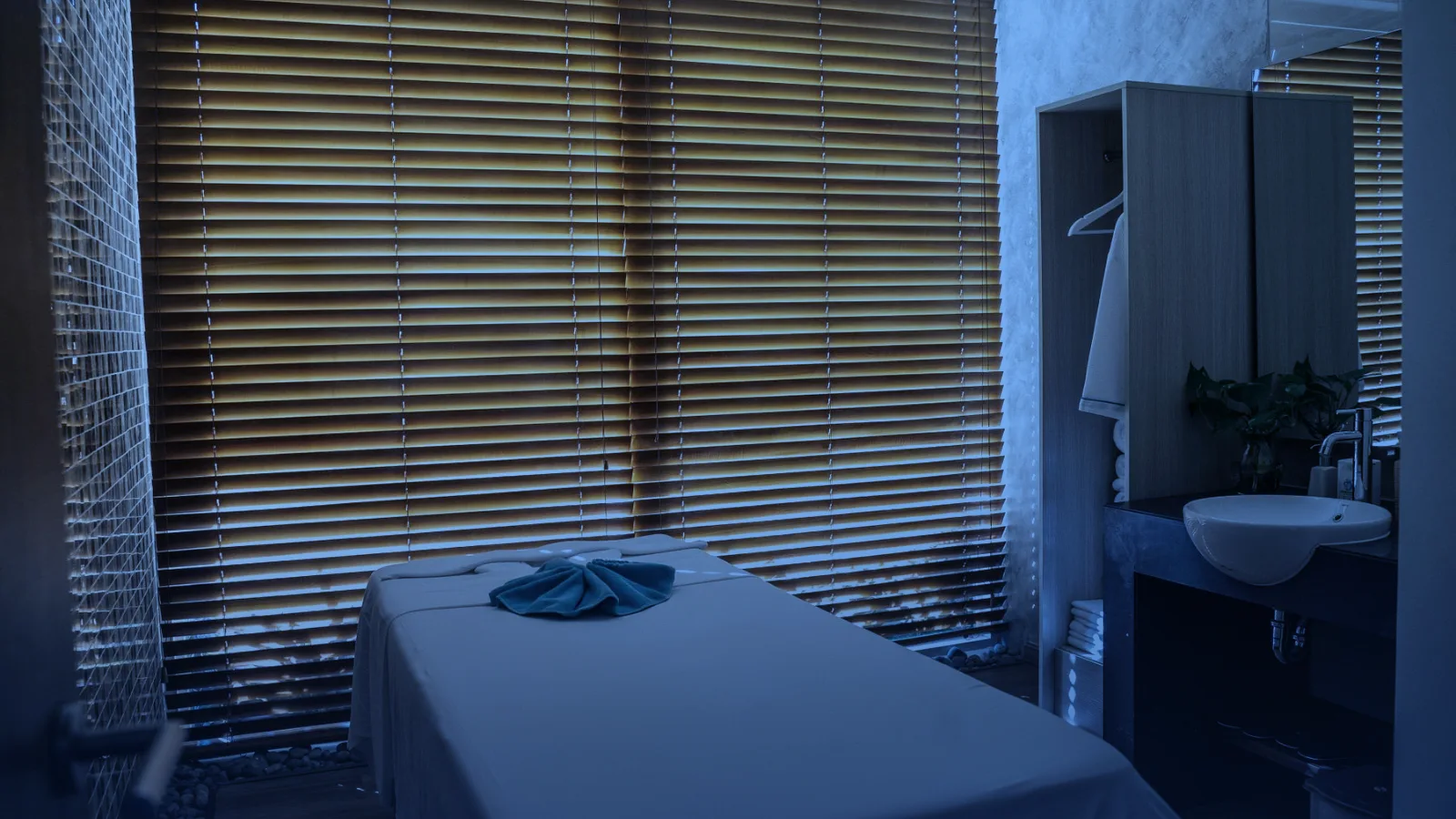
Humidity from the sauna and steam enters a spa's ducts by three routes: returns open toward wet areas, branches that cross the border unsealed and doors that let steam into the corridor. It is avoided with dedicated extraction in the wet area, sealing of duct crossings and pressure balance. The camera shows whether there is already condensation or wet insulation.
A spa sells calm, and calm includes the air. Reception smells of eucalyptus, the massage rooms are warm and the corridor has low light. In the middle of that is a sauna and steam area that by definition produces humidity in abundance. The question is what that humidity does when the door opens.
In most cases it goes where the air conditioning carries it. If the system is not well separated, the ducts become a path the humidity uses without anyone seeing.
How does steam humidity get into the ducts?
It enters by three routes. The first is a return located in the steam room corridor, which draws in the loaded air each time the door opens. The second is a supply branch that crosses the wall between the dry and wet zones and is not sealed at the crossing. The third is pressure: if the corridor has more pressure than the wet area, steam stays inside, but if it has less, it escapes toward wherever pressure is lower, which is usually the hallway.
Behind this guide is Climatiza, an inspection and duct cleaning service, which always starts from the real condition of the system before proposing any work in spas.
With an annual mean humidity of 75.7% according to ETESA, Panama starts from a high base. Wu et al., 2020, note that keeping humidity in range in tropical zones requires running air conditioning nearly all day. In a spa, with an additional source of steam, the margin is smaller still, and that is why separation matters more than in other premises.
How is humidity kept out of the system?
It is kept out with three complementary measures. The first is dedicated extraction for the wet area, which takes the steam outside without passing through the general air conditioning. The second is sealing the duct crossings through the walls of the wet zone with moisture resistant material. The third is balancing pressure, so the wet area sits slightly below the pressure of the rest and air flows toward it, not out of it.
These measures are not carried out by whoever cleans ducts but by the air conditioning technician and whoever designed the premises. What the inspection does contribute is evidence of whether any fails: darkened insulation near the border, droplets at joints, stains on the ceiling or a damp smell that appears in the hallway.
Why does it matter in a wellness business?
It matters because moisture retained in a duct or its insulation is the setting where mold appears. The EPA warns that hidden mold can form in pans and porous liners, and that controlling it means correcting the source of moisture before cleaning. In a spa, a damp smell in the hallway contradicts everything the premises want to convey.
It also matters for the equipment and the building. A duct that condenses drips onto ceilings and damages finishes. And for operational order, because a periodic review with photos avoids surprises in the worst week of the year. As on other topics, it must be said plainly that duct cleaning has not been shown to prevent health problems, according to the EPA and the CDC. The reason to act is the condition of the system.
What does the camera check in a spa?
- The border. The branches crossing the wall of the wet zone and the sealing of the crossing are checked.
- The corridor returns. The returns closest to the sauna and steam doors are looked at.
- Insulation and joints. Dark or wet insulation and joints with peeling tape are looked for.
An illustrative case, not a real client: a spa with steam rooms at the end of a corridor and a return three meters from the door. The camera shows damp insulation in the first section and dry branches in the rest. The sensible move is to relocate or seal that return, improve steam extraction, correct the insulation and look again in a season. Cleaning without that would have left everything ready to repeat. The general view of this kind of premises is in how work is done in a spa or salon, and the hotel with a spa case in what changes in a hotel. The route technique is described in the camera inspection.
Which mistakes repeat and what is worth asking for?
The first mistake is sharing a single return between the hallway and the wet area. The second is leaving the steam room door open to cool. The third is cleaning the duct without correcting the humidity that wet it. The fourth is not checking the insulation near the border. It is worth requiring a report with images of the border and the corridor returns, a note on pressure and a recommendation on extraction. The decision criteria are in when cleaning makes sense and when it does not.
Scheduling a review starts with a message to Climatiza, and the service page summarizes the process.
Sources
On this site
- Beauty salons and spasHow the work is organized in this sector
- Hotels and hostelsA neighboring sector
- Camera inspectionThe real condition before deciding
Climatiza and Radar Panamá
Why does inspecting and cleaning ducts matter?
These are the technical reasons, with their source, why the condition of the ducts is checked before deciding. Duct cleaning has not been shown to prevent health problems according to the EPA and the CDC, and it is proposed only when the observed condition justifies it.
| Advantage | Data with source | What it means in practice |
|---|---|---|
| Protect equipment performance | In a laboratory test with dust equivalent to one year of use, coil pressure drop rose between 6 and 30 % and efficiency (EER) fell between 1 and 9 % (Yang, Braun and Groll, ARTI, 2004). | It is a laboratory result and not a promise of savings: it points to the components worth checking. |
| Keep humidity under control | The EPA recommends in its guide to mold and moisture keeping indoor relative humidity below 60 % and drain pans clean and draining freely. | A humidity reading and a clean pan limit the conditions in which mold grows. |
| Require method and a report from the provider | NADCA published in 2025 the current edition of its ACR standard on assessment, cleaning and restoration of air systems. | It is an industry reference and not a seal: it helps ask for method, photographs and scope in writing. |
| A local figure that changes the decision | The Ministry of Health guide for beauty salons and barbershops (August 2020) asked that workplaces be kept ventilated, without sudden drafts, and that air conditioning receive proper maintenance, with more frequent filter cleaning. It was written for post COVID-19 operations. (MINSA, Guide of health measures for beauty salons and barbershops (2020)). | It is the sector context taken into account when planning the visit. |
Frequently asked questions
How can one tell if steam has already entered the ducts?
By dark or wet insulation, droplets at joints, ceiling stains or a damp smell in the hallway. The camera confirms it and shows how far it goes.
Does the duct need cleaning if humidity got in?
First the source of humidity is corrected and the system is dried. Afterward the camera indicates whether there is residue or damaged insulation. A wet porous liner is usually replaced rather than cleaned.
Can a spa use the same air conditioning as reception?
It is possible, but ideally the wet area has dedicated extraction and the branches are sealed. If they share a system, the border points are worth checking frequently.
What happens to a spa's duct lining if it gets damp?
A porous lining that gets damp can develop growth and, once affected, does not recover through cleaning alone. The EPA and NIOSH (1991) call for replacing it when microbial contamination is present. That is why, in a spa, the border between wet and dry zones is watched, and the camera checks those stretches first.
How can it be checked that spa air flows from the dry area toward the wet one?
An air balancing technician measures the direction and volume of airflow at doors and grilles with proper instruments. The camera does not measure pressure, it only shows the duct condition. If the flow runs the wrong way, the unit is adjusted before cleaning is even considered.
Keep reading the guide

Request an inspection
Do you want to know the condition of your system?
A camera inspection lets you see the inside of the ducts before deciding what to do. Message us and we will confirm availability.
- +507 6388-2083
- info@climatizapanama.com
- Calle Gervasio García, 8, Panama City