
Laundries
Laundry: lint in the air ducts and what to check
In a laundry there are two duct systems that are easily confused, and each calls for a different provider and a different check.
 By
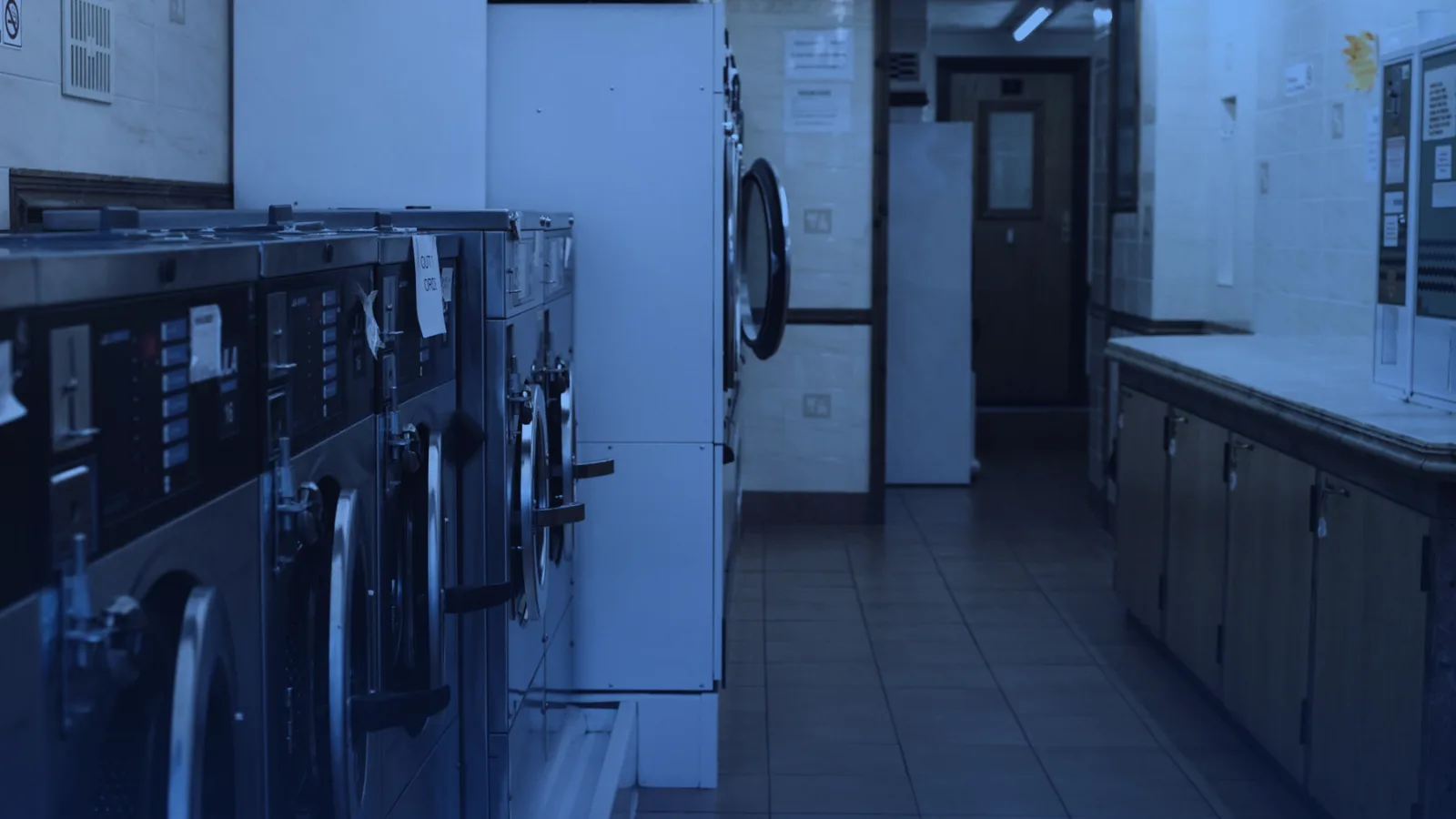
Lint reaches the air conditioning ducts of a laundry through gaps in the drying room, through returns close to the dryers and through the negative pressure created by exhaust. The dryer exhaust ducts are a separate system, with their own upkeep. The camera shows whether lint has advanced through the return, and the filter sets the frequency of checks.
Whoever manages a laundry knows lint better than anyone. It builds up in the filter of each dryer, on the room grilles, on the edge of the folding tables and in a thin layer on any flat surface. It is part of the business. What is sometimes discovered late is that lint also travels in the air and part of it reaches the air conditioning system of the premises.
It is best to begin with a clarification. There are two duct systems and they must not be confused.
Is the dryer duct the same as the air conditioning duct?
It is not. The exhaust duct of each dryer takes the humid, lint laden air straight outside, and it is a fire safety topic: the United States Fire Administration has published statistics on laundry fires linked to lint build up. That duct has its own upkeep and is handled by a company specialized in dryer exhausts.
The fieldwork is carried out by the Climatiza team, who check branches, grilles and air handlers and record the result in an illustrated report, also in the case of laundries.
The air conditioning duct, by contrast, moves fresh and return air around the premises. If lint gets in there, it is not an equivalent fire risk, but it is a load that accumulates, clogs filters and soils coils. This article deals with that second system and does not replace the upkeep of the first.
How does lint reach the air conditioning?
It arrives by three paths. The first is the gaps of the drying room: even if the extraction removes most of it, lint always escapes each time a machine is opened or a filter emptied. The second is the return closest to the dryers, which draws in the loaded air of the room. The third is pressure: powerful extraction creates negative pressure in the room and pulls air, and lint, from neighboring zones.
With the 75.7% annual mean humidity ETESA measures for Panama, lint that reaches the duct gets damp easily and stops being loose dust. It becomes a felted layer that hooks into the joints, onto the vanes of the grilles and the edge of the filter. A layer like that is hard to detach with simple blowing and calls for cleaning done with method.
Why does it matter if the laundry is already cleaning all day?
It matters because lint in the air conditioning cannot be seen and works silently. It saturates the filter faster, makes the unit work harder and, if it reaches the coil, cuts its cooling capacity. For a laundry with hot rooms this is felt in the comfort of staff and in running costs. It also matters for order: two duct systems with no clear owners end up neglected, and the laundry is left with a gap in its maintenance.
And it is worth specifying the scope. According to the EPA and the CDC, duct cleaning has not been shown to prevent health problems, so it is not presented as protection. It is proposed when the camera shows build up that justifies acting.
What is the review like in a laundry?
The review starts in the drying room: the technician sees where the dryers are, how the exhaust leaves and where the nearest return is. Then the air handler is opened to see the filter condition, which is usually the best clue to how much lint arrives. Finally the camera surveys the return section from the grille to the unit and the first meters of the branches.
- Map of the drying room. Dryers, exhausts, returns and grilles are located, and where there is negative pressure is noted.
- Filter and air handler. The condition of the filter says how much has accumulated and at what pace.
- Camera through the return. The lint is followed to where it stops.
An illustrative case, not a real client: a laundry with six dryers and a return two meters from the room. The camera shows a felted layer in the first section and clean branches. The sensible move is to clean that section, fit a prefilter and move the return if the building allows. The dryer exhaust is handled separately. The logic of this kind of premises is in how work is done in a laundry, and that of hotels, which have their own laundry, in what changes in a hotel. The technique is explained in the camera inspection.
Which mistakes repeat and what is worth asking for?
The first mistake is to hire once for both systems and not know which was checked. The second is cleaning the air conditioning duct and forgetting the return that feeds it lint. The third is leaving the filter unchanged between reviews. The fourth is ignoring the pressure of the drying room. It is worth requiring a report that says clearly which system was checked, images of the return and the filter, and a note on the location of the grilles. The decision to clean rests on when cleaning makes sense and when it does not.
Those who want to go from this reading to a real review can start at the Climatiza service page or write through the main Climatiza site.
Sources
On this site
- LaundriesHow the work is organized in this sector
- Hotels and hostelsA neighboring sector
- Camera inspectionThe real condition before deciding
Climatiza and Radar Panamá
Why does inspecting and cleaning ducts matter?
These are the technical reasons, with their source, why the condition of the ducts is checked before deciding. Duct cleaning has not been shown to prevent health problems according to the EPA and the CDC, and it is proposed only when the observed condition justifies it.
| Advantage | Data with source | What it means in practice |
|---|---|---|
| Follow a technical inspection reference | The ANSI/ASHRAE/ACCA 180 standard is the standard practice for inspection and maintenance of commercial HVAC systems. | It is an industry reference, not a legal requirement in Panama, and helps organize the review plan. |
| Require method and a report from the provider | NADCA published in 2025 the current edition of its ACR standard on assessment, cleaning and restoration of air systems. | It is an industry reference and not a seal: it helps ask for method, photographs and scope in writing. |
| Anticipate the tropical humidity | According to ETESA (Tocumen station, 1977 to 2010), mean annual relative humidity in Panama is 75.7 % and rises to between 78.2 and 82.4 % in the rainy months. | The condensate pan, the drain and the coil are checked first, because that is where moisture builds up. |
| A local figure that changes the decision | In the Panama district the mean monthly relative humidity runs from 79.6% to 82.4% between June and November, and the maximum recorded in October reached 88.5% (Tocumen station, 1977-2010 series). (ETESA, climate characterization of Panama and San Miguelito). | It is the sector context taken into account when planning the visit. |
Frequently asked questions
Does air conditioning duct cleaning include the dryer exhaust?
No. They are different systems with different upkeep. Dryer exhaust is a fire safety topic handled by a specialized company, and the report should say which of the two was checked.
How do I know if lint has reached the air conditioning?
By a filter that loads up too soon, a felted layer on the return grille near the drying room or a coil with residue. The camera confirms how far it advanced.
Does a prefilter help in a laundry?
It usually helps if the return is close to the drying room, because it catches the coarse fiber before the main filter. It is checked more often and its condition guides when to inspect again.
How is lint recognized on an air conditioning coil?
It shows as a felt-like gray layer on the fins, sometimes with long threads, and grilles near the dryers show loose lint. If there is moisture, it turns into a sticky mass. The camera in the air handler makes it visible without taking the unit apart.
What to do if the laundromat filter fills with lint sooner than expected?
Changing the filter is not enough. The dryer duct joints and the lint trap deserve a check, because the cause is often a leak releasing lint into the room. Fixing the leak lowers the load on the filter and the lint reaching the air conditioning return.
Keep reading the guide

Request an inspection
Do you want to know the condition of your system?
A camera inspection lets you see the inside of the ducts before deciding what to do. Message us and we will confirm availability.
- +507 6388-2083
- info@climatizapanama.com
- Calle Gervasio García, 8, Panama City