
Hotels
Duct cleaning in hotels in Panama: protocol, containment and measurement
A hotel does not stop to have its ducts cleaned. That is why the work is split into small phases, with the guest in mind.
Looking for the service for hotels?
- The camera inspection comes first and the quote follows, with the photos in view.
- Work is done by sections and at an agreed time, so operations are not slowed down.
- At the end you receive a report with before and after photos.
 By
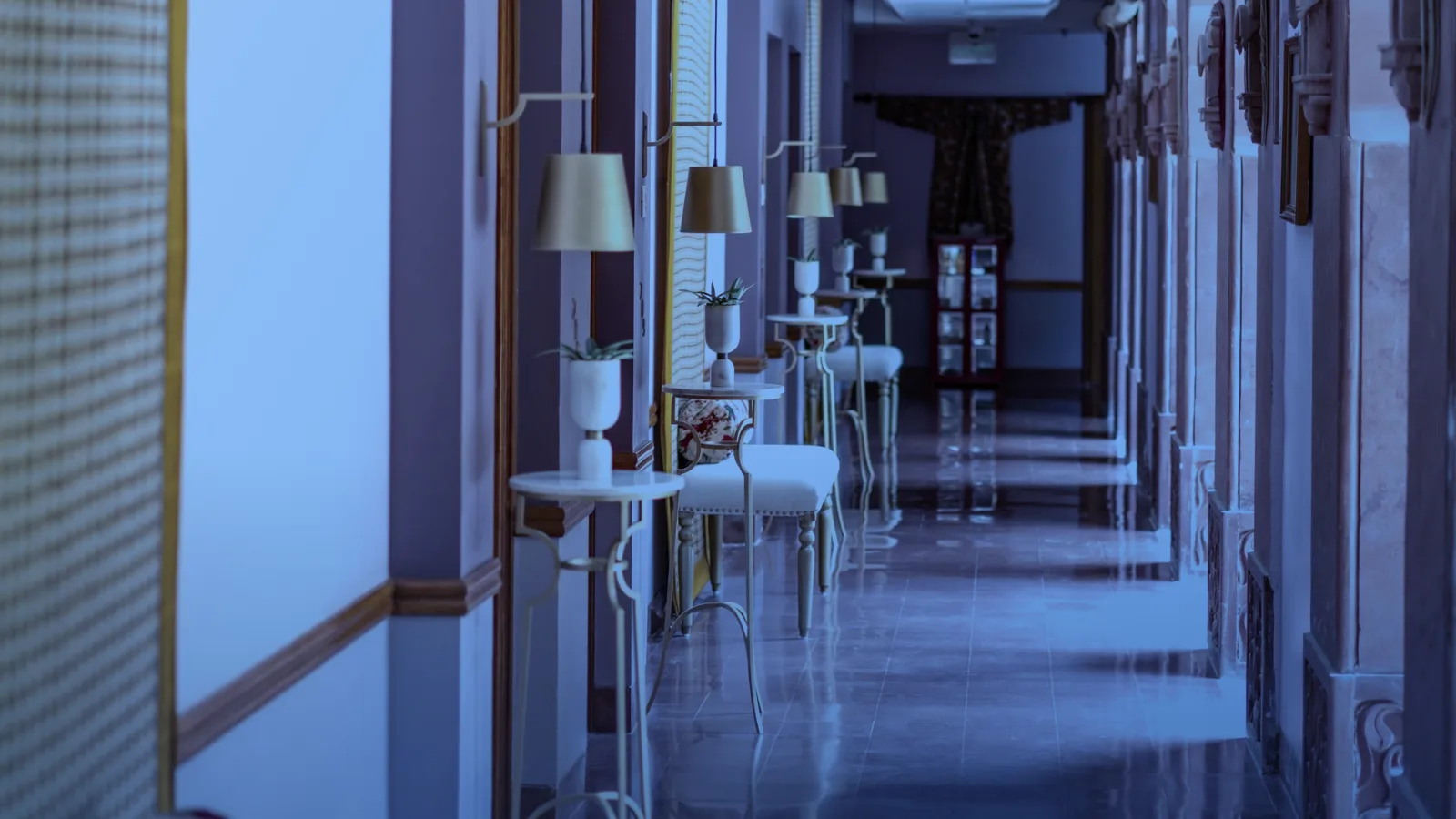
Hotel ducts are cleaned in phases: camera inspection, containment of the work area, intervention by floor or wing, measurement of the result and a report. Rooms or corridors are blocked on a rotating basis so the rest of the operation stays in service. Each phase leaves photographs and a record that management can review.
A hotel operations manager knows that guests do not tell a duct problem from a housekeeping problem. If room 412 smells damp when the door opens, the review arrives all the same. And if the fix means taking half a floor out of service in high season, the impact is immediate and visible.
The answer is not to avoid the work but to organize it well. A hotel has repeated rooms, corridors with a technical ceiling and a machine room per floor or per wing, which allows working in small blocks and repeating the same method. That is, in essence, a protocol.
Why does a hotel need a protocol and not a general cleaning?
Because operations rule. A hotel runs around the clock, with variable occupancy, and every room out of service is space that is not sold. A phased protocol makes it possible to decide which block is worked on according to expected occupancy and what is left for later, without improvising along the way.
To coordinate a visit related to hotels, Climatiza answers inquiries and confirms availability according to the schedule of the place.
In addition, humidity weighs more in a hotel than in an office. A review published in Letters in Applied Microbiology, by Wu and colleagues in 2020, notes that keeping indoor humidity within recommended ranges in tropical climates amounts to running air conditioning almost all day. In Panama, with average humidity of 75.7 percent according to ETESA, that explains why empty rooms also build up odor if the unit is switched off.
It is worth saying plainly that the EPA and the CDC note duct cleaning has not been shown to prevent health problems. In a hotel the argument is a different one: the condition of the equipment, the smell in the room and tidy evidence for management.
How is duct cleaning organized in phases?
The order matters as much as the technique. First comes looking, then protecting, then working and finally measuring. Each phase ends with a deliverable, so management knows where the work stands and can pause it if occupancy changes.
- Camera inspection. The returns and branches of a sample of rooms and corridors in each wing are surveyed, and air handlers, filters, pans and drains are checked. That decides where work is needed and where it is not.
- Containment. Before opening a section the area is sealed with plastic, work is done under negative pressure at the cleaning point and furniture is protected. The guest in the next room should notice nothing.
- Work in blocks. Cleaning goes by floor or wing, following airflow from the air handler to the diffusers. Each block closes before the next one opens, and management confirms which rooms are released.
- Measurement and report. The photographs are repeated at the same points, sections without access are noted and a report by floor is delivered with what was done and what is pending.
What is found most often in a hotel?
What is found most often is not dust but moisture. Air handler pans with standing water, wet insulation in branches that run through unventilated corridors and return grilles with a dark film in rooms that stayed vacant for long stretches. Near kitchens and laundry, greasy residue or lint also climbs through the return when it is close.
An illustrative case, not a real client: a wing of a beach hotel gets odor complaints only in the rooms at the far end. The camera shows a long branch with wet insulation and condensation at a badly sealed joint. The work consists of correcting the seal, replacing the insulation section and cleaning the affected branch. The rest of the wing, dry, is left as it was and that is stated in the report.
What should management require in the measurement and the report?
Measuring does not mean filling a sheet with numbers. It means comparing before and after at the same points and recording what could not be checked. A report that is useful to a hotel separates by floor or wing, indicates which rooms were worked and which remain for the next phase, and recommends a follow-up review based on what was found and not on a fixed calendar.
Among the most repeated mistakes are working without containment, mixing photographs from different floors without labels, overlooking the return in service areas and failing to coordinate the order of rooms with housekeeping and maintenance. Each of them is avoided with a short prior meeting and a marked floor plan.
How is it coordinated with the hotel areas that never stop?
Coordination decides whether the work goes unnoticed or becomes a problem. The front desk needs to know which rooms are blocked each day, the head of housekeeping must have the list before the shift and maintenance has to open the technical ceiling at the agreed hour. A floor plan with rooms marked by phase prevents confusion and allows guests to be reassigned in good time if needed.
Common areas follow another logic. The lobby, the event hall and the restaurant are worked on during low activity hours, with visible barriers and discreet signage. Machine rooms and laundries, by contrast, allow more margin, but it is worth noting which return draws air from them, because that is where lint or steam reaches the branches feeding guest rooms more easily.
Then comes the question of when to repeat the review. In a hotel there is no single date valid for everyone, because it depends on the climate of each wing, on occupancy and on what the last camera visit showed. A wing with oceanfront rooms and low occupancy in certain months calls for closer attention to pans and insulation. An interior wing, in constant use, tends to stay stable. The report for each phase should propose its own next review, reasoned from the images, and that recommendation is what management files.
A final note for management: it helps to keep the photographs of each phase in a folder by wing and date. When a new engineer or a new provider arrives, that file tells the story of the system better than any verbal explanation.
To see how work is organized across the rest of the operation, the page on hotels explains coordination by rooms and common areas. The first review rests on the camera inspection, the general scope is in the duct cleaning service and the criteria for deciding when to act, in the guide on when to clean and how. The hotel’s restaurants have their own particulars, described in work with restaurants and kitchens, and the other places appear in the list of sectors.
The next step after this guide is usually a visit to check the system, which is arranged with the team at Climatiza using the details in their duct cleaning page.
Sources
On this site
- Hotels and hostelsHow the work is organized in this sector
- Restaurants and coffee shopsA neighboring sector
- Camera inspectionThe real condition before deciding
Climatiza and Radar Panamá
Why does inspecting and cleaning ducts matter?
These are the technical reasons, with their source, why the condition of the ducts is checked before deciding. Duct cleaning has not been shown to prevent health problems according to the EPA and the CDC, and it is proposed only when the observed condition justifies it.
| Advantage | Data with source | What it means in practice |
|---|---|---|
| Anticipate the tropical humidity | According to ETESA (Tocumen station, 1977 to 2010), mean annual relative humidity in Panama is 75.7 % and rises to between 78.2 and 82.4 % in the rainy months. | The condensate pan, the drain and the coil are checked first, because that is where moisture builds up. |
| Protect equipment performance | In a laboratory test with dust equivalent to one year of use, coil pressure drop rose between 6 and 30 % and efficiency (EER) fell between 1 and 9 % (Yang, Braun and Groll, ARTI, 2004). | It is a laboratory result and not a promise of savings: it points to the components worth checking. |
| Follow a technical inspection reference | The ANSI/ASHRAE/ACCA 180 standard is the standard practice for inspection and maintenance of commercial HVAC systems. | It is an industry reference, not a legal requirement in Panama, and helps organize the review plan. |
| A local figure that changes the decision | The Panama Tourism Authority has 1,419 registered lodging establishments with 39,276 rooms. Hotels account for 354 with 27,112 rooms, and hostels for 513 with 2,798. Panamá province holds 20,818 rooms, or 53.0%. (ATP, Lodging supply 2015-2025). | It is the sector context taken into account when planning the visit. |
How to hire the service for hotels
- Message us on WhatsApp with the type of place and the area.
- The camera inspection is arranged at a time that does not affect your operation.
- The quote is prepared from what was observed, never blind.
- If cleaning is justified, it is done by sections and the final report is delivered. If it is not, we tell you.
Frequently asked questions
Can hotel ducts be cleaned with guests in house?
Yes, by working in blocks and with containment. Rooms or corridors are blocked on a rotating basis and the work is coordinated with the front desk and housekeeping, so the rest of the hotel keeps operating normally and the guest does not notice the work.
What is containment and why does it matter in a hotel?
It means sealing the work area with plastic and keeping negative pressure at the cleaning point so dust does not pass into rooms or corridors. It matters because in a hotel the adjacent space is usually occupied.
Do all the hotel's ducts need cleaning?
No. The camera inspection decides which wings or floors need work and which do not. In many hotels the cause of the odor is a pan or a damp section, and fixing that point is enough.
What report should the provider deliver?
A report by floor or wing, with dated before and after photographs, a list of rooms worked, sections without access and a follow-up recommendation based on what was found.
Keep reading the guide
Request an inspection
Do you want to know the condition of your system?
A camera inspection lets you see the inside of the ducts before deciding what to do. Message us and we will confirm availability.
- +507 6388-2083
- info@climatizapanama.com
- Calle Gervasio García, 8, Panama City