
Air terminals
Air terminal: public hall and counter ducts with open doors
On the public side of a terminal nobody controls the air: taxis at the curb, suitcases coming in with dust and doors opening hundreds of times an hour.
 By Limpieza de Ductos Panamá
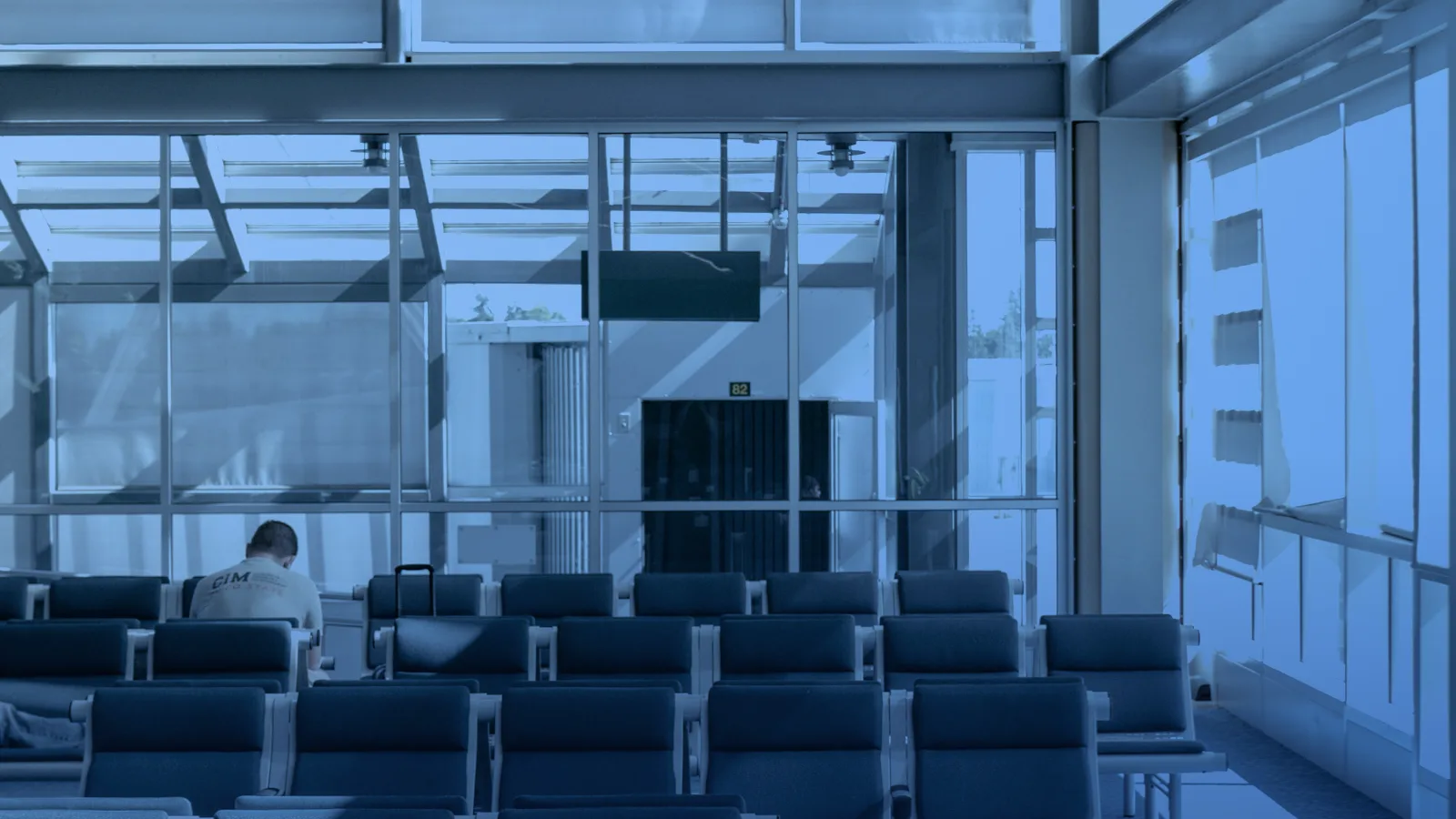
The returns nearest the doors and the counters are checked first, because that is where outdoor air enters with humidity, dust and exhaust from vehicles at the curb. The hall grilles reveal the load before any measurement does. The camera inspection is scheduled in the hours of lowest traffic and the report is organized by hall sectors so the operator can decide what to clean and when.
Open doors: a constant stream of outdoor air
A terminal hall is, in practice, a semi open space cooled as if it were closed. Every door opening lets in a gust of air at outdoor temperature, with the 75.7 % mean annual humidity ETESA records for the district of Panama and, in the rainy months, values above 80 %. The air conditioning system receives that air, cools it and dries it, and along the way leaves the humidity on the coil and the particles in the filter and in the first meters of duct.
The EPA and NIOSH Building Air Quality guide lists vehicle exhaust from nearby roads and parking areas, dust and spores among the outdoor sources of contamination, and notes that there is always some point of a building under negative pressure relative to the outdoors, the outdoor air intake for instance. In a terminal that negative point is often the door itself: when the hall is under negative pressure, curbside air enters with every opening and the nearest return draws it in.
Counters and queues: where people stay longest
The passenger crosses the hall in minutes, but in front of the counter the passenger stays. Queues concentrate people, luggage and heat in a narrow strip, right under diffusers that were designed for an empty hall. Counter staff spend the whole shift in that same strip. That is why the counter zone deserves a different criterion from the rest of the hall: it is not the dirtiest, it is where people stay longest.
Climatiza is the technical service behind this guide and works with camera inspection, an illustrated report and cleaning only when the condition justifies it, including in the case of air terminals.
| Hall sector | What loads the duct | Inspection priority |
|---|---|---|
| Door strip and curb | Humidity, dust, vehicle exhaust | High: returns and filters first |
| Counters and queues | Continuous occupancy, luggage lint | High: diffusers over staff |
| Waiting area and seating | Variable occupancy, medium load | Medium: by sampling |
| Food outlets in the hall | Steam and odor if they share the system | Confirm first whether they share a duct |
Warning signs on hall grilles
Hall grilles are in view of thousands of people a day, so it makes sense to read them the way a passenger would. The useful signs are few and concrete, and they are noted by sector to compare with the next visit.
- Dark edge on the diffusers that point toward the doors, more marked than on those at the back.
- Drops or water stains on the ceiling next to the returns near the curb.
- Filters with a uniformly grey inlet face and an overdue change date.
- Fuel odor inside the hall when there is a line of taxis outside.
- Complaints from counter staff about heavy air at the end of the shift.
None of those signs says on its own that the duct is dirty. What they say is where to point the camera that travels inside the duct to see the real condition of the section, and from there the criteria for deciding whether to clean or just monitor are applied.
Hours of lowest traffic
A terminal never closes, but it does have lulls. The operator knows the flight banks and the gaps between them, and that information is worth more than any generic calendar. The inspection fits into those gaps and is done by sectors, with a single stretch of hall cordoned off at a time, so no queue is diverted. The units serving counters are worked on when the airline in that block has no scheduled departures.
- Ask the operator for the flight bank map. With it, the two or three weekly gaps of lowest hall traffic are marked.
- Assign one sector to each gap. Doors in one gap, counters in another, waiting area in the third. Never the whole hall on the same day.
- Filters and pans in the same visit. The ASHRAE preventive maintenance checklist calls for reading filter pressure drop monthly and inspecting coils. The gap is used for it.
- Close each sector with photo and date. That way the report builds itself and the next gap starts where the previous one ended.
What report to hand the operator
A terminal operator answers to the authority and to the airlines, so the report is written to be forwarded. One page per hall sector: the unit serving it, camera photos of the return and the first section, filter and pan condition, what was cleaned and what was left under observation. Zones not inspected are recorded as such, with no padding.
It is worth restating in the report what the EPA and the CDC say: duct cleaning has not been shown to prevent health problems. The value for the operator lies in knowing the condition of each sector and scheduling with data. The access and record keeping logic resembles that of a public building with vendor control, and working by sectors without closing to the public resembles a shopping center inspected corridor by corridor. To spread attention across sectors, the planner that ranks priority by use and signs helps.
To ask about availability or request a camera inspection, the Climatiza website lists the ways to contact the team and the duct cleaning service page explains how the work is organized.
Sources
On this site
- Public buildings and ministriesHow the work is organized in this sector
- Shopping centers and mallsA neighboring sector
- Camera inspectionThe real condition before deciding
Climatiza and Radar Panamá
Frequently asked questions
Do revolving doors or air curtains solve the problem?
They reduce the entry of outdoor air but do not eliminate it, and they do not change what is already inside the duct. They are treated as an improvement at the source, and afterwards the camera checks how much is deposited in the returns near the doors.
Can the hall be inspected with passengers inside?
Yes, by sectors and in off peak hours. A short stretch is cordoned off, one access panel is opened at a time and closed before moving on. What does not fit in the gap is left for the next one, and no panel is ever left open.
Which hall sector goes first if time is short?
The counter strip, because staff spend the whole shift there, and then the returns of the door strip, which take in the outdoor air. The waiting area is checked by sampling.
What should the operator keep between visits?
The dated camera photos per sector, the filter pressure drop readings and the complaints from counter staff. With those three series it becomes visible whether one sector is deteriorating faster than the others.
Keep reading

Request an inspection
Do you want to know the condition of your system?
A camera inspection lets you see the inside of the ducts before deciding what to do. Message us and we will confirm availability.
- +507 6388-2083
- info@climatizapanama.com
- Calle Gervasio García, 8, Panama City