
Duty free shops
Airport duty free: ducts on a schedule set by flights
In a duty free store nobody picks the working hours: the departure wave and the terminal access control do. The duct plan is built around that.
 By Limpieza de Ductos Panamá
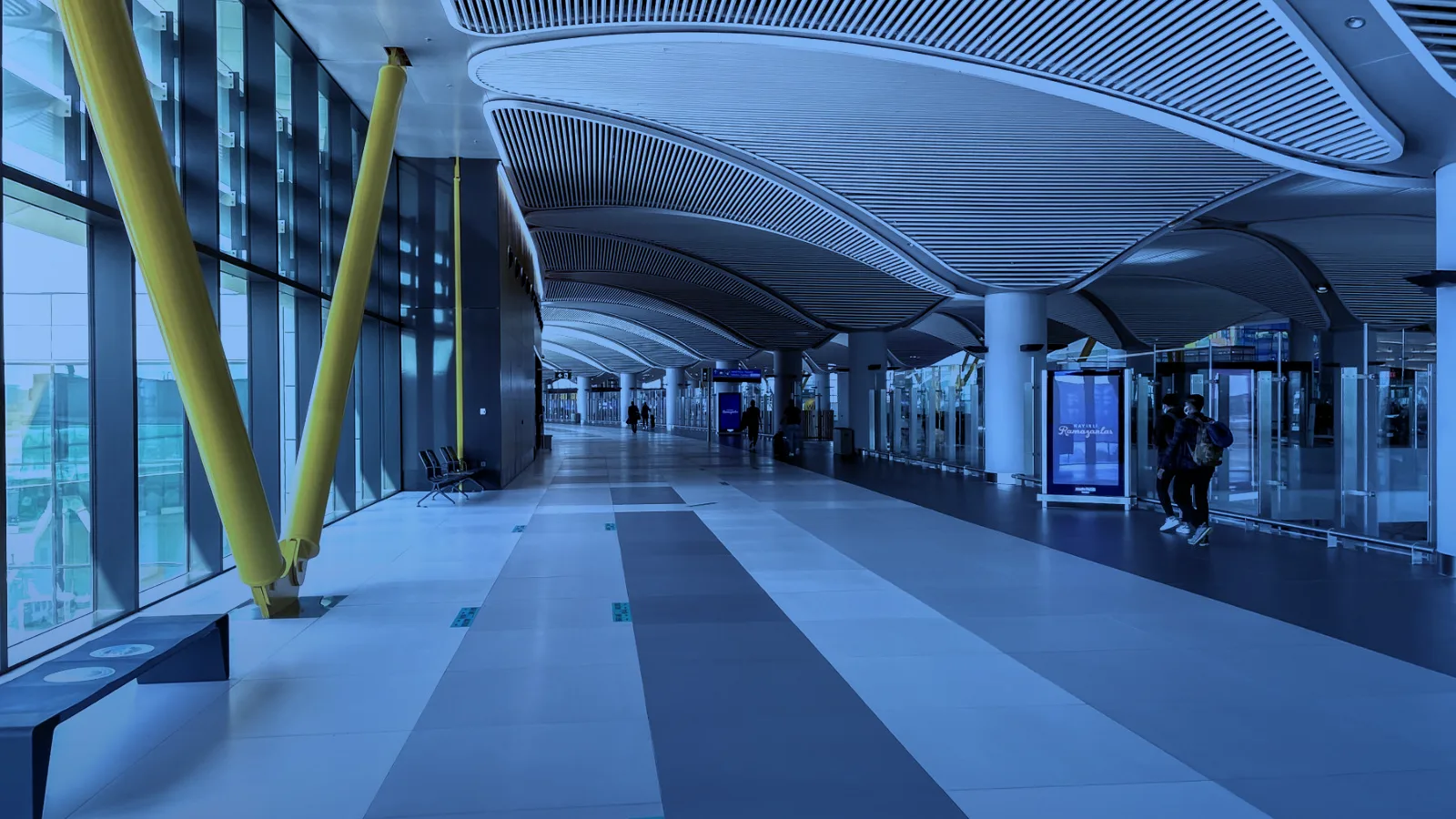
The duct review of a duty free store is scheduled in three steps: first the temporary pass and the escort for the restricted area are obtained, with equipment and tools declared in advance. Then the windows between flight banks are chosen, almost always in the early morning hours, when the store has few passengers. Finally the store is divided into sections and one is worked per window, without closing the shop.
Restricted area: permits and escorts
A duty free store sits inside the security area of the terminal, past passenger screening. No technician walks in with a work order in hand: a temporary pass processed by the store operator with the airport administration is needed, with name, identity document and dates, and in many cases an escort holding a permanent credential for the whole stay. The paperwork usually takes days, so it is requested before the visit date is set, not after.
Tools and equipment go through X-ray screening just like luggage. It helps to hand in a list in advance with every vacuum, camera, brush and product, and to avoid any liquid that is not essential. What comes in is counted on entry and on exit, and a tool missing from the count stops the work until it turns up.
Low-traffic windows during the day
Hub airports work in flight banks: waves of departures separated by quieter hours. The store fills up when several flights board at nearby gates and empties between one bank and the next. Those pauses, especially the early morning ones, are the windows for opening grilles and running the camera. The store operator knows them better than anyone, because they are the same hours used for restocking.
To coordinate a visit related to duty free shops, Climatiza answers inquiries and confirms availability according to the schedule of the place.
| Time slot | Usual store traffic | Recommended use |
|---|---|---|
| Between the last night bank and the first morning bank | Minimum | Open ducts, camera and cleaning of stretches |
| Mid-morning, after the first bank | Low | Grille and filter check without opening ducts |
| Afternoon, main departure bank | High | No work on the sales floor |
| Days with accumulated delays | Unpredictable | Reschedule: the window closes without notice |
Perfumes and display cases: what the duct breathes
The load specific to a duty free store is not street dust but fragrance aerosol. Every perfume tester releases a cloud of alcohol and aromatic oils that settles as a thin film on the fins of the return grilles and on the first meters of duct. OSHA lists perfumes and colognes among indoor pollution sources generated by the occupants themselves. That film holds cardboard dust from restocking and, with the humidity of Panama, turns sticky.
Liquor and chocolate display cases add something else: enclosed lighting that heats up and demands more hours of air. Returns are almost always at low level, behind the gondolas, which is why they are checked with the camera at the return behind the fragrance section before any ceiling diffuser.
How to work the store section by section
- Section map. The store is divided into fragrances, liquor and tobacco, confectionery and electronics, and the grilles serving each section and the air handler they hang from are identified.
- One section per window. Each early morning window covers a single section. It is cordoned off with the shift supervisor, the display cases are covered and the work stays out of the rest of the shop.
- Closing before the first boarding. Grilles are put back, everything is cleared from the floor and tools are counted before the first flight bank fills the store. Whatever does not fit in the window is left for the next one, not rushed.
- Record per section. Each section closes with photos, start and end time, and the name of the escort. That record is what the terminal operator later asks for.
The ANSI/ASHRAE/ACCA 180 standard sets inspection and maintenance practice for commercial systems, and the NADCA ACR standard describes how to assess and clean ducts by stretches. Both references fit a store that can only be opened in parts. The way a store is organized by zones is the starting point, and what applies to a shopping center with many tenants helps when the duty free shares an air handler with the terminal.
What to hand over to the terminal operator
- List of people who entered, with temporary pass number and assigned escort, for each window used.
- Store sections reviewed and sections pending, with the reason (no access, window closed by delays, stretch shared with the terminal).
- Dated photos of the duct interior by section, before and after, and a photo of the removed filter if the air handler belongs to the store.
- Points where the store duct joins the terminal system, so the operator can decide who reviews that stretch.
- Incidents: tools recounted, alarms, grilles that could not be opened.
- Suggested date of the next review, tied to the level of attention the system needs according to its use rather than a fixed date.
Questions about a specific building can be sent to Climatiza, and the service description shows what a visit includes.
Sources
On this site
- Stores and supermarketsHow the work is organized in this sector
- Shopping centers and mallsA neighboring sector
- Camera inspectionThe real condition before deciding
Climatiza and Radar Panamá
Frequently asked questions
Can the work be done with the store open?
Yes, by sections and in low-traffic windows. The section being worked on is cordoned off and the rest keeps selling. What is never done with passengers around is opening ducts above the floor during a flight bank, because a delay closes the window without warning.
Who processes the passes: the store or the duct contractor?
The store, as the concession holder, files the request with the airport administration using the data the contractor provides. The contractor supplies names, identity documents and the equipment list. The paperwork should start before a date is set.
What about the duct stretches that belong to the terminal?
They are marked in the report as outside the store scope. The terminal operator decides whether to review them with its own contractor or to authorize their inclusion in the next window, with an extended pass.
Keep reading

Request an inspection
Do you want to know the condition of your system?
A camera inspection lets you see the inside of the ducts before deciding what to do. Message us and we will confirm availability.
- +507 6388-2083
- info@climatizapanama.com
- Calle Gervasio García, 8, Panama City