
Dialysis centers
Dialysis center: treatment room ducts and how to work around shifts
Three shifts a day, six days a week, patients who cannot skip a session. A dialysis center does not close so someone can open the ceiling. The work happens between one shift and the next, or it does not happen.
 By Limpieza de Ductos Panamá
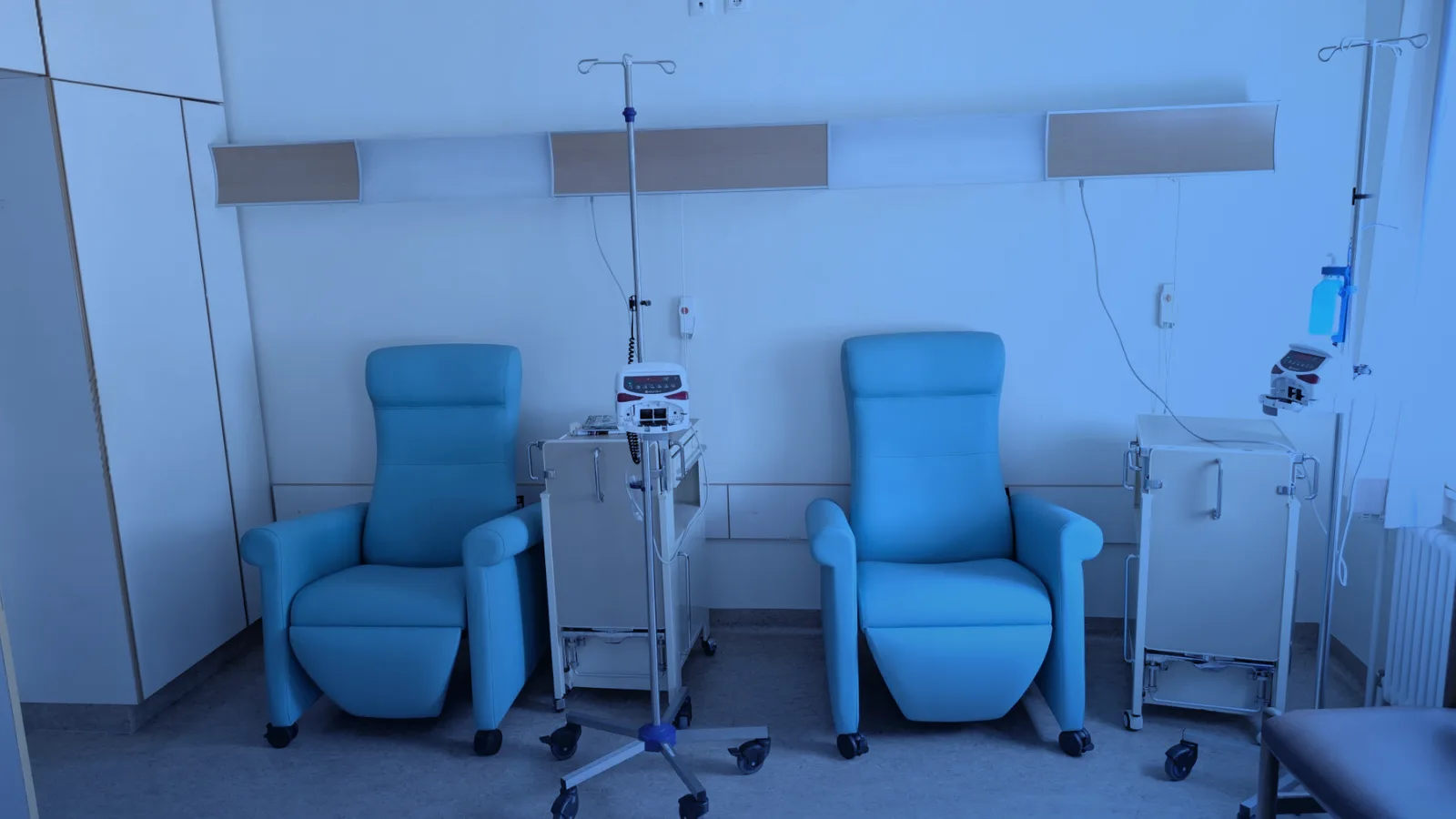
Dialysis room ducts are inspected without interrupting shifts by using the windows that already exist: the hour between the last patient of one shift and the first of the next, the Sunday or the day without sessions, and the night. The camera first covers the diffusers above the chairs and the return in the water area. Cleaning, if needed, goes in short sections with the chairs covered.
Why the center cannot close for a day
Every patient has a chair, a day and a time, and skipping a session is not a medical option. That makes the center a continuous operation much like an emergency room, with one advantage: the calendar is fixed and known weeks ahead. It is known when the morning shift ends and when the afternoon one starts, and which day of the week the room is empty. Those windows are the plan.
The CDC guideline on environmental control in health care facilities states that air systems require routine maintenance and monitoring, without setting a frequency for ducts. The frequency is defined by the center’s protocol and the camera supplies the real condition. How that work is organized by area in a health facility is on the page dedicated to hospitals and clinics.
Treatment room: the point of longest stay
A patient spends three to four hours in the same chair, under the same supply grille, three times a week. No other commercial space has that length of stay under a single diffuser. That is why the camera survey starts with the treatment room diffusers and not the reception, even if the reception has more traffic.
Anyone who needs to see the real condition of the ducts in the case of dialysis centers can request a camera inspection from the team at Climatiza, a technical duct cleaning service in Panama, which documents every section with images.
- Rim of every diffuser above the chairs: dust build up that could fall on the patient or the dialysis machine.
- Duct section right above the row of chairs: loose residue, moisture or deteriorated porous liner.
- Room return: load of fiber from blankets and bedding, which is high in dialysis.
- Diffusers blowing straight onto a chair: cold patients ask for blankets and blankets shed more fiber.
- Ceiling around the grilles: moisture stains that reveal condensation in the duct.
Water treatment area and humidity
The reverse osmosis and tank room is the dampest space in the center. It has moving water, cold pipes and often little ventilation. If its return grille is connected to the same system as the treatment room, that damp air goes through the coil and the shared duct. The EPA guide on mold in commercial buildings recommends keeping indoor relative humidity below 60 % and warns that porous duct liners, once wet, are where mold thrives.
With the city’s outdoor humidity, which according to ETESA goes above 80 % in October, the water room rarely drops below that threshold on its own. What gets checked is whether the duct leaving it shows condensation, whether the liner is damp and whether there is an air path toward the treatment room. If there is, the technical recommendation is usually to separate that return, not to clean it more often.
Windows between shifts for the work
| Window | Usual length | What fits in it |
|---|---|---|
| Between the last patient of one shift and the first of the next | 45 to 90 minutes | Camera on one row of chairs, diffuser photos, filter change on the unit |
| Night, after the last shift | 6 to 8 hours | Cleaning a full section of the room with chairs covered |
| Day without sessions (Sunday or whichever the center sets) | A full day | Coil, water area return and hard to reach sections |
| While a shift is in the room | Never for opening ducts | Only visual observation of grilles from the corridor |
The rule is never to open a duct with patients connected in that section. If the room has three rows of chairs, one row is worked each night and the other two keep operating the next day with no trace of the work. Which sections are covered in a camera inspection explains how long each section takes, and that allows fitting it into the right window.
What report the medical director asks for
- A sketch of the room with every chair numbered. Every diffuser photo is tied to a chair number. That way the director knows which patients sat under which section.
- Before and after photos per section, with the date and the window used. Writing down that the work was done at night or on the day without sessions shows no patients were in the room while ducts were open.
- Condition of the water area return and whether it shares the system with the room. It is the finding of most interest to the director, because a construction decision depends on it.
- List of sections not surveyed and why. A section above the isolation room or the reprocessing room may be left out by protocol. It is stated, not omitted.
That report is filed next to the water system log, because the health authority usually asks for both on the same visit. The criteria for deciding which section is cleaned and which is only watched are in how to decide whether cleaning is due or watching is enough. If the center has an in house pharmacy or a concentrate store, air care near medicines applies to that room.
Scheduling a review starts with a message to Climatiza, and the service page summarizes the process.
Sources
On this site
- Hospitals and clinicsHow the work is organized in this sector
- Pharmacies and laboratoriesA neighboring sector
- Camera inspectionThe real condition before deciding
Climatiza and Radar Panamá
Frequently asked questions
Can the camera be run with patients in the room?
The camera goes in through a duct access panel, not through the diffuser above the patient, and releases nothing into the room. Even so, the center’s practice is to do it between shifts so no point is opened while patients are connected.
How long does it take to inspect a twelve chair room?
With a camera, a row of four chairs fits in a one hour window between shifts. The three rows are completed in three windows or in one night. Cleaning, if needed, is scheduled separately per section.
Should the water area have its own air system?
It is the most advisable option when the camera shows condensation in the duct leaving that room and an air path toward the treatment room. It is a construction decision taken by the director with the report in hand, not by the duct team.
What about patients who feel cold under the diffuser?
It is a useful sign. A diffuser blowing straight onto a chair is usually badly aimed or on an unbalanced branch. The chair is noted, the diffuser face adjusted and the next visit checks whether the complaint went away.
Keep reading
Request an inspection
Do you want to know the condition of your system?
A camera inspection lets you see the inside of the ducts before deciding what to do. Message us and we will confirm availability.
- +507 6388-2083
- info@climatizapanama.com
- Calle Gervasio García, 8, Panama City