
Industry and plants
Air conditioning maintenance in industrial plants in Panama: comfort, process and dust
In a plant there are two systems maintained with different criteria: comfort and process. Separating them is the first step, and the dust in the environment decides how fast each one gets fouled.
 By Limpieza de Ductos Panamá
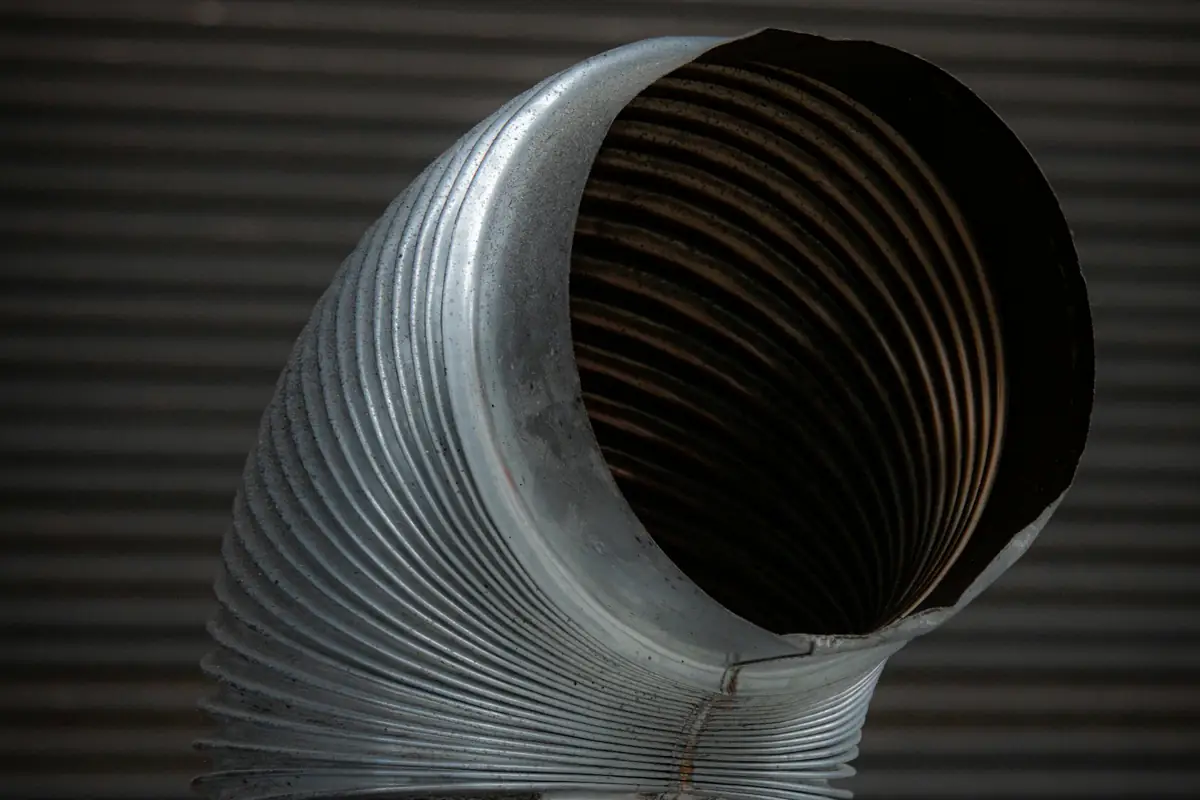
In a plant, two systems must be separated: the one that gives comfort to offices and staff areas, and the one that serves the process. The ANSI/ASHRAE/ACCA 180 standard covers commercial buildings and, according to the U.S. Department of Energy description, does not apply to equipment that primarily serves industrial or manufacturing processes, so those systems need their own plan. In both cases, filter efficiency and the amount of particles in the air are the factors that most accelerate coil fouling.
Two systems, two criteria
| System | What it serves | Maintenance criterion | Source |
|---|---|---|---|
| Comfort | Offices, canteens and staff areas | Minimum inspection and tasks by component, as in any commercial building | D-03 |
| Process | Equipment and spaces whose environment is required by the production process | Its own plan, defined with the process owner; the 180 standard does not cover it | D-03 |
The scope of the 180 standard is taken from the description published by the U.S. Department of Energy (Better Buildings Solution Center); the text of the standard itself should be consulted directly.
Ambient dust rules
The Berkeley Lab study on coil fouling identified filter efficiency and the concentration of particles in the air as the factors that most accelerate fouling; filter bypass and the design of ducts and coil also matter. A model by Waring and Siegel estimates that particle loading on commercial filters is almost 44 times that on residential filters (130 versus 2.97 g/m²·month); it is a model, not a field measurement, but it illustrates why a home criterion does not work in an environment with more particles. In a plant with process dust, that logic is amplified. D-04 E-17
What changes because of Panama’s climate
A minimum plan for a plant
- Separate in writing which units are comfort and which are process.
- Technical inventory and operating conditions of each unit.
- Filter review according to actual dust load, not a generic calendar.
- Inspection of coils, pans and drains.
- Camera inspection of ducts when there are signs or before a cleaning.
- Report with photographs and readings, and comparison with the previous visit.
Commercial kitchen exhaust ducts and other process ducts follow different standards from air conditioning ducts and are not covered on this page.
On this site
- Air conditioning duct cleaningScope, symptoms and causes
- Camera inspectionThe real condition before deciding
- Tools and calculatorsCFM, ACH, air velocity and planner
Climatiza and Radar Panamá
Frequently asked questions
Does the ASHRAE 180 standard apply to an industrial plant?
It applies to comfort systems in commercial buildings. According to the U.S. Department of Energy description, it does not apply to equipment that primarily serves industrial or manufacturing processes, which require their own plan.
How often should a plant’s air conditioning be checked?
There is no universal frequency. It depends on operating hours, dust load and system type, and it is defined in writing in each unit’s plan.
Do a plant’s air conditioning ducts need cleaning?
Only if an inspection justifies it using the EPA criteria: substantial visible mold, vermin, obstruction by dust or particles from the registers. The criteria are in when to clean ducts and how it should be done.
Keep reading

Request an inspection
Do you want to know the condition of your system?
A camera inspection shows the inside of the ducts before anything is decided. Message us and we will confirm availability.
- +507 6388-2083
- info@climatizapanama.com
- Calle Gervasio García, 8, Panama City