
Oficinas corporativas
Air conditioning duct cleaning in corporate offices in Panama: when, how and what to require
A floor that smells on Monday and another that does not cool do not automatically call for a cleaning. They call for a look inside the system first.
Looking for the service for oficinas corporativas?
- The camera inspection comes first and the quote follows, with the photos in view.
- Work is done by sections and at an agreed time, so operations are not slowed down.
- At the end you receive a report with before and after photos.
 By

Duct cleaning in a corporate office is indicated when a camera inspection shows bonded residue, moisture or construction debris, and not because of a calendar. The provider should be required to deliver dated photographs, a list of sections without access, the state of the coil and drain pan, and a report the manager can forward to a tenant.
On Monday morning three messages reach the building manager. The seventh floor smells like a closed room, the boardroom on nine never quite cools down and a tenant asks whether it is time to “clean everything”. At the same moment a provider offers to clean every duct in the tower. The temptation is to approve it and close the matter.
That decision deserves a few more minutes of judgment. A corporate office has many sections, many tenants and little access, so cleaning without looking means spending effort and causing disruption on something that may not have been needed. And the other way round, ignoring a duct with bonded moisture leaves a problem that comes back as a complaint every few months.
When is duct cleaning indicated in an office?
It is indicated when the camera shows something that justifies acting. The situations that repeat most are five: an odor that comes back soon after the filters are changed, visible sticky residue on the diffusers, moisture in the insulation or the ceiling near a unit, construction dust inside the branches after a remodel and repeated complaints that always come from the same floor.
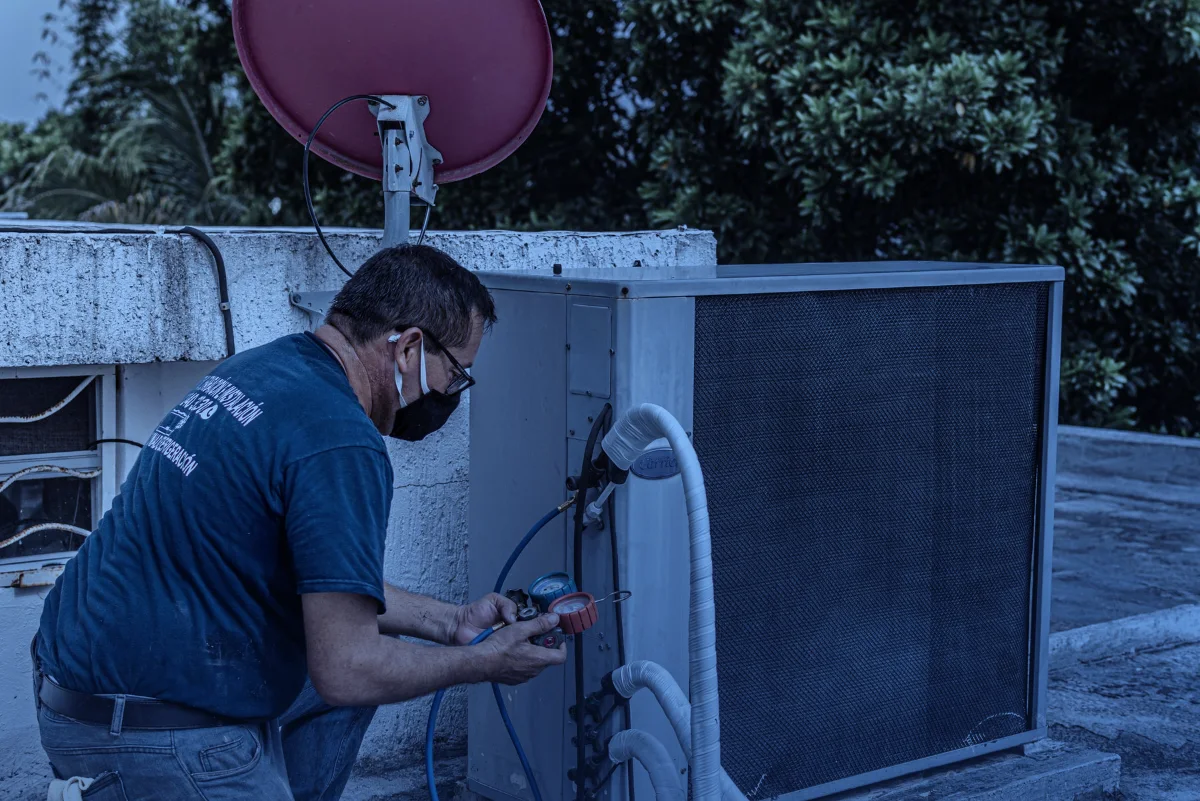
The fieldwork is carried out by the Climatiza team, who check branches, grilles and air handlers and record the result in an illustrated report, also in the case of oficinas corporativas.
The opposite counts too. If the camera shows dry ducts, with loose dust and nothing bonded, the sensible move is to leave them alone, change filters and fix what actually fails, which is usually the coil, the condensate pan or the airflow on one floor. A good provider knows how to say “not needed here” and puts it in writing, and that sentence is worth as much as a well done cleaning.
Why does it matter to decide with evidence and not out of habit?
It matters for comfort, for the equipment and for order. Average relative humidity in Panama sits around 75.7 percent according to ETESA records, so any cold spot in the system condenses water easily. A duct or a pan that stays damp produces odor, gets dirty faster and ends in complaints, which is why moisture is the first thing checked before thinking about dust.
It also matters for what can be demonstrated. The EPA BASE study, covering 97 office buildings, found that infrequent cleaning of coils and drain pans was associated with more headaches and eye symptoms among occupants. It is an association and not a cause, but it points at where to look first: the components that get wet, before the long dry duct.
Honesty with the tenant is part of the job. The EPA and the CDC note that duct cleaning has not been shown to prevent health problems, so it is not sold as protection. It is proposed as maintenance when the condition justifies it, and the administration then reaches the board or the client with photographs and not with an impression.
What does a visit to an office look like, from start to finish?
The visit is coordinated beforehand with the administration: which floors, at what hours, who opens the ceiling and where the access panels are. In an office building the usual approach is to work outside tenant hours and to give notice in advance. The technician opens only the planned access points, runs the camera through returns and branches and checks the floor air handler, with the filter, the coil and the drain in view.
An illustrative case, not a real client: a tower receives odor complaints on a single floor. The camera finds no dirt in the branches, but the air handler pan has a partly blocked drain and standing water. The recommendation is to unblock it, clean the pan and check again, without touching a single meter of duct. The complaint was resolved at its origin and a large intervention was avoided.
When there is residue, the report places it by floor and by section, shows it in images and proposes what to clean and what not to. The final decision is made by the administration with that information, and the work is documented again at the end with photographs at the same points.
Which mistakes repeat when hiring, and what should be required?
The most common mistake is approving a general cleaning without a prior inspection. Next come accepting a report with photographs that carry no date or location, not asking about the sections that were left unchecked and calling the job finished without fixing the cause of the moisture. The odor then returns and the administration is left without arguments in front of the tenant.
The short list of what is worth asking for is brief and verifiable:
- A camera inspection before any cleaning, with dated photographs located by floor.
- A list of the sections surveyed and of those without access, with the reason for each.
- The state of filters, coil and pan for each air handler checked.
- A written recommendation on what to clean, what to fix and what to leave as it is.
- Before and after photographs at the same points once the work is done.
- A document the administration can forward to a tenant without editing it.
How does this fit into managing a building?
The ideal is for the review to be part of ordinary maintenance and not a reaction to the latest complaint. An administration that keeps every report can compare from one year to the next, spot the floor that always gives trouble and decide with data whether to act or wait. It is the same approach ASHRAE 180 follows for commercial systems: inspect regularly and act on what is found.
There is also a matter of tenant relations that tends to be overlooked. A complaint answered with a photograph and a plain explanation takes less effort than one answered with promises. When the manager can say “the ninth floor was reviewed, the duct was dry and the problem was the pan”, the conversation changes and the tenant understands that judgment was applied. That trust is built with repeated, consistent reports, year after year, more than with a spectacular cleaning.
Anyone managing a tower or an office complex will find in the page on corporate offices how work is organized by floor, and in the camera inspection what each image shows. To understand what the full service includes there is the duct cleaning service, and to decide when to act, the guide on when to clean and how. If the building is mixed and has common areas with an owners board, work with horizontal property administrators describes how it is coordinated with them. The remaining places served appear in the list of sectors.
Those who want to go from this reading to a real review can start at the Climatiza service page or write through the main Climatiza site.
Sources
On this site
- Offices and corporate towersHow the work is organized in this sector
- Residential towers and PH buildingsA neighboring sector
- Camera inspectionThe real condition before deciding
Climatiza and Radar Panamá
Why does inspecting and cleaning ducts matter?
These are the technical reasons, with their source, why the condition of the ducts is checked before deciding. Duct cleaning has not been shown to prevent health problems according to the EPA and the CDC, and it is proposed only when the observed condition justifies it.
| Advantage | Data with source | What it means in practice |
|---|---|---|
| Know whether cleaning is needed before deciding | The EPA states in its duct cleaning guide that cleaning is justified for visible mold, pests or a notable buildup of dust and debris. | A camera inspection documents the condition and allows a decision based on evidence, without unnecessary work. |
| Anticipate the tropical humidity | According to ETESA (Tocumen station, 1977 to 2010), mean annual relative humidity in Panama is 75.7 % and rises to between 78.2 and 82.4 % in the rainy months. | The condensate pan, the drain and the coil are checked first, because that is where moisture builds up. |
| Keep humidity under control | The EPA recommends in its guide to mold and moisture keeping indoor relative humidity below 60 % and drain pans clean and draining freely. | A humidity reading and a clean pan limit the conditions in which mold grows. |
| Keep construction dust out of the system | The EPA and NIOSH Building Air Quality guide asks to block return grilles while construction work takes place in occupied buildings. | Before accepting a new or remodeled system it is worth checking whether construction dust got in. |
| A local figure that changes the decision | OSHA’s guide for commercial buildings says that buildings with several tenants may need an evaluation to make sure one tenant’s emissions do not adversely affect another. It is advisory guidance, not a standard. (OSHA 3430-04, Indoor Air Quality in Commercial and Institutional Buildings). | It is the sector context taken into account when planning the visit. |
How to hire the service for oficinas corporativas
- Message us on WhatsApp with the type of place and the area.
- The camera inspection is arranged at a time that does not affect your operation.
- The quote is prepared from what was observed, never blind.
- If cleaning is justified, it is done by sections and the final report is delivered. If it is not, we tell you.
Frequently asked questions
Do office ducts need cleaning at set intervals?
There is no universal calendar. Ducts are reviewed regularly and cleaned when the camera shows bonded residue, moisture or construction debris. If the ducts are dry and filters are changed on time, the sensible choice is not to intervene and to document the condition.
Can cleaning be done without disrupting tenants?
In general yes, because work is scheduled outside office hours or floor by floor and notice is given in advance. The administration sets the order and the access, and the report states which floor was worked on in each visit so zones are neither repeated nor skipped.
What should an office inspection report say?
It should show dated photographs located by floor, list the sections reviewed and those without access, describe the state of filters, coil and pan and give a clear recommendation: clean, fix a cause or leave as it is.
Does duct cleaning improve occupant health?
This has not been shown. The EPA and the CDC state there is no solid evidence that cleaning ducts prevents health problems. It is proposed for the condition of the equipment, odor or moisture, and not as a protective measure.
Keep reading the guide
Request an inspection
Do you want to know the condition of your system?
A camera inspection lets you see the inside of the ducts before deciding what to do. Message us and we will confirm availability.
- +507 6388-2083
- info@climatizapanama.com
- Calle Gervasio García, 8, Panama City