
Ice cream shops
Ice cream shop with dripping grilles: causes inside the ducts
A drop landing on the ice cream is an immediate complaint. It almost always has a source that can be traced.
 By
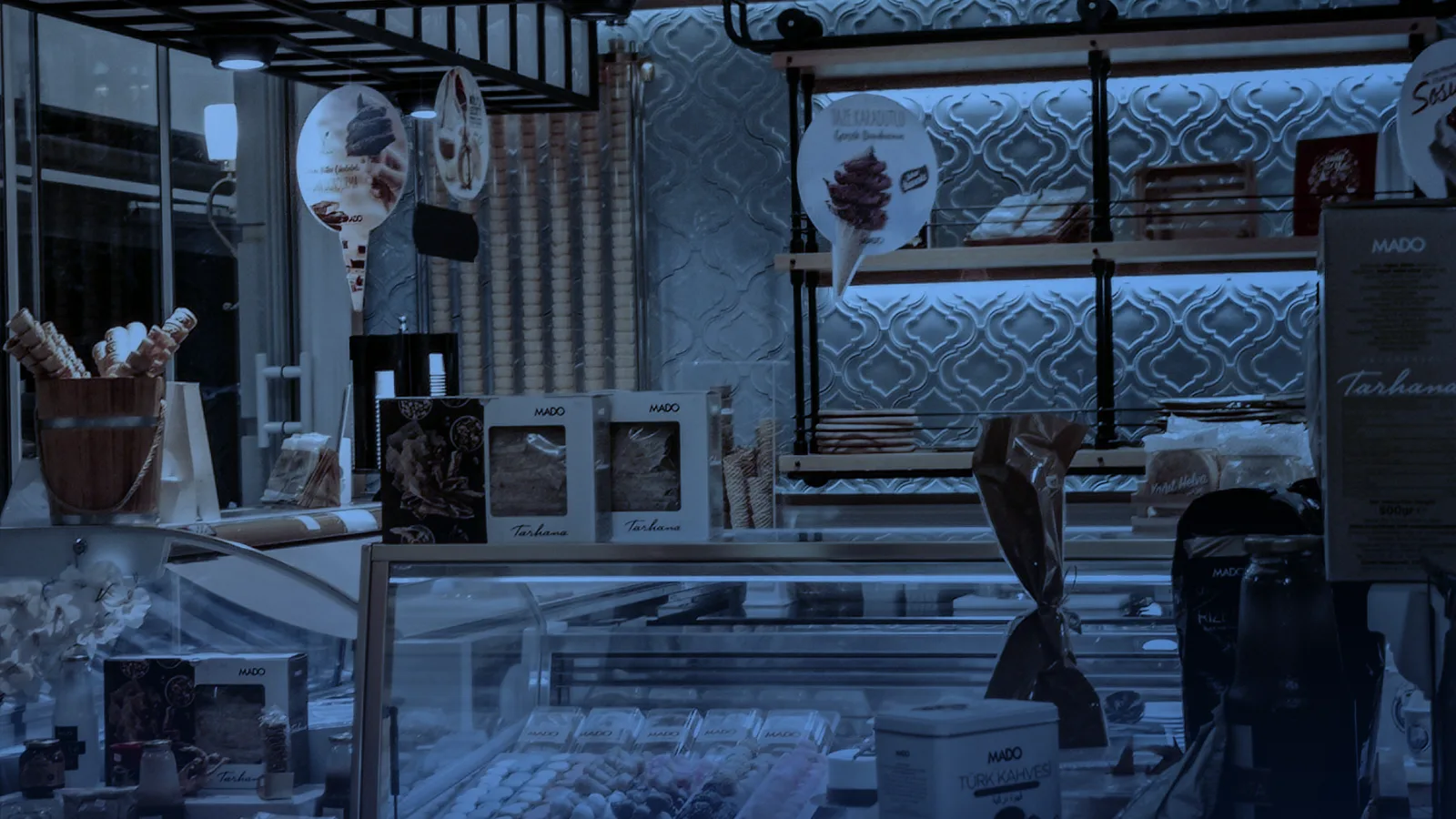
The grilles in an ice cream shop drip because the cold metal of the supply sits below the dew point of the humid air coming in through an open door. It gets worse with uninsulated duct, a dirty diffuser or unbalanced airflow. The door, the insulation and the diffuser are checked first, and the camera confirms whether there is dust or water inside the duct.
In an ice cream shop the drop arrives at the worst moment. It lands on the flavor display, on the counter or, worse, on the cone someone is serving. The owner wipes it with a cloth, the drop returns half an hour later, and by the weekend there is tape under the grille.
What shows is water, but the cause is not a leak. It is condensation: vapor from street air turning into drops when it touches a cold surface. Understanding where that vapor comes from and why the surface is so cold is what makes it possible to fix the problem instead of wiping it every day.
Why does a grille drip if the air conditioning works fine?
Because a unit that works well is exactly what chills the metal. The air leaves the air handler at 12 to 14 degrees, and the grille or the duct carrying it sits almost at that temperature. If the surrounding air holds enough moisture, water condenses on that surface just as it does on a cold glass, and falls.
Behind this guide is Climatiza, an inspection and duct cleaning service, which always starts from the real condition of the system before proposing any work in ice cream shops.
In Panama that vapor is plentiful. ETESA records a mean relative humidity of 75.7% at the Tocumen station, with peaks above 82% in the rainy season. With a mean temperature of 27.3 degrees and that humidity, the dew point of outdoor air comes out around 22 degrees by calculation, well above the temperature of the supply metal. That is why a shop that did not drip in March starts to in October without anyone touching the unit.
What role do the open door and the cold display cases play?
The ice cream shop piles three sources of cold and moisture into a small space. The display cases push cold air out of their own grilles, the open door lets in warm humid air each time a customer walks in, and the air conditioning tries to compensate. The result is a room with very uneven zones: a cold meter next to the case and a warm meter next to the door, with humidity moving between them.
The grilles that drip most are usually between the door and the case, right where both streams cross. An air curtain, a door that closes by itself or a couple of grilles moved elsewhere change the problem more than any cleaning. So the first question on the visit is how long the door stays open and where the nearest diffuser points.
What happens when the duct is dirty or uninsulated?
A duct with no insulation or damaged insulation leaves bare metal facing the warm air of the ceiling space, and condensation forms there too. The water runs along the duct surface to the lowest point, which is almost always a joint or the mouth of the grille, and drips from there. Sometimes the drop seen at the grille formed three meters away.
Dust makes the picture worse in two ways. A diffuser with a layer of dirt holds moisture and lets the drop form at a specific point, and a saturated filter cuts the airflow, so the air leaves even colder. The EPA guidance on mold in commercial buildings asks to keep indoor humidity below 60% and to check that drip pans are clean and drain freely. That list is a starting point, and it does not promise that cleaning alone will fix a drip caused by insulation or the door.
Why does it matter to fix it and what does the evidence say?
It matters for the product, the image and the daily work. A drop on a display case forces the contents to be swapped or thrown out, and a customer who sees it in a place that handles food draws quick conclusions. It also matters because water on the counter leaves a slippery surface and a damp smell that settles into the shop.
On health it is better to speak plainly. The EPA and the CDC state that duct cleaning has not been shown to prevent health problems, and it is not framed that way here. The argument is a different one: a drip that keeps coming back signals a mismatch in temperature, humidity or insulation, and correcting it protects the product, the fittings and the equipment. Cleaning is proposed only if the camera finds dust or standing water that justifies it.
What is checked before calling the technician and what is the visit like?
Before the visit, the owner can make a short round and note three things: which grilles drip and at what hour, whether the door is habitually left open and whether the visible duct has complete insulation or gaps. With that note the visit saves time, because the camera goes straight to the suspect sections instead of covering everything.
An illustrative case, not a real client: an ice cream shop with a single grille dripping, right between the door and the main case. The camera shows clean duct and intact insulation, but the diffuser points toward the door and takes outdoor air head on. The sensible fix is to reorient the diffuser and add an air curtain, not to clean the duct. If instead the camera shows caked dust and water at a joint, the order changes: the insulation is corrected and that section is cleaned. The camera documents which of the two cases is the real one, as explained in how a camera inspection is carried out.
Which mistakes recur and what is worth asking the provider for?
The most frequent mistake is placing a container or tape under the grille and treating the matter as closed. Next comes cleaning the whole system when the source is the door, and lowering the unit setpoint so it “cools more”, which chills the metal further and drips more. Another is insulating with ordinary tape, which peels off with the humidity within weeks.
- Photos of the dripping grille, the nearby duct and its insulation, with the date.
- Direction of airflow from each diffuser relative to the door and the case.
- Condition of the condensate pan and the air handler drain.
- One recommendation per cause: door, insulation, diffuser or cleaning of the section.
An ice cream shop shares with a restaurant the concern for exposed product, and how the work is organized in a food premises helps coordinate the schedule without closing. To decide whether the condition found justifies acting, the criteria for knowing when to clean apply.
More about the inspection and cleaning service that applies these criteria is on the Climatiza duct cleaning page and on the Climatiza home page.
Sources
On this site
- Restaurants and coffee shopsHow the work is organized in this sector
- Stores and supermarketsA neighboring sector
- Camera inspectionThe real condition before deciding
Climatiza and Radar Panamá
Why does inspecting and cleaning ducts matter?
These are the technical reasons, with their source, why the condition of the ducts is checked before deciding. Duct cleaning has not been shown to prevent health problems according to the EPA and the CDC, and it is proposed only when the observed condition justifies it.
| Advantage | Data with source | What it means in practice |
|---|---|---|
| Require method and a report from the provider | NADCA published in 2025 the current edition of its ACR standard on assessment, cleaning and restoration of air systems. | It is an industry reference and not a seal: it helps ask for method, photographs and scope in writing. |
| Know whether cleaning is needed before deciding | The EPA states in its duct cleaning guide that cleaning is justified for visible mold, pests or a notable buildup of dust and debris. | A camera inspection documents the condition and allows a decision based on evidence, without unnecessary work. |
| Protect equipment performance | In a laboratory test with dust equivalent to one year of use, coil pressure drop rose between 6 and 30 % and efficiency (EER) fell between 1 and 9 % (Yang, Braun and Groll, ARTI, 2004). | It is a laboratory result and not a promise of savings: it points to the components worth checking. |
| A local figure that changes the decision | INEC’s Business and Establishment Directory (reference year 2022) records 13,586 establishments in the "Hotels and restaurants" category, the second largest sector by establishments after commerce (39,937), out of 96,397. The category groups lodging and food service, so it is not restaurants alone. (INEC, Business and Establishment Directory 2022). | It is the sector context taken into account when planning the visit. |
Frequently asked questions
Does the grille drip because the air conditioning is broken?
Normally not. It drips because cold metal sits below the dew point of the nearby humid air. A unit that cools well can cause it, especially with the door open, and it is corrected by moving the airflow or the insulation.
Does cleaning the duct stop the dripping?
Only if the cause is dust or standing water inside the section. If the source is the door, a badly aimed diffuser or damaged insulation, cleaning does not solve it. The camera shows which case applies before anything is decided.
Why does the dripping show up more in the rainy season?
Because outdoor air carries more moisture and its dew point rises. The same duct that stayed below that point in the dry season now exceeds it and starts to condense. That is why the date of each observation is noted.
Why does the grille drip when the ice cream shop's air conditioner is new?
A new unit does not fix poorly placed insulation, an unsealed duct or the humidity entering through the open door. Dripping appears when humid air touches a surface below its dew point. The camera checks the lining and joints of the stretch that is dripping.
What insulation does the camera check in an ice cream shop duct?
The check covers missing insulation outside the duct, wet or crushed insulation and unsealed joints. A wet interior liner with growth is replaced rather than cleaned, according to the EPA and NIOSH (1991). Dry, complete insulation often solves the dripping without cleaning anything.
Keep reading the guide

Request an inspection
Do you want to know the condition of your system?
A camera inspection lets you see the inside of the ducts before deciding what to do. Message us and we will confirm availability.
- +507 6388-2083
- info@climatizapanama.com
- Calle Gervasio García, 8, Panama City