
Contratos de mantenimiento
HVAC maintenance contracts in Panama: what they cover and how the return is calculated
Three proposals on the table, three different formats and none saying the same thing. Comparing maintenance contracts is like comparing maps drawn at different scales.
Looking for the service for contratos de mantenimiento?
- The camera inspection comes first and the quote follows, with the photos in view.
- Work is done by sections and at an agreed time, so operations are not slowed down.
- At the end you receive a report with before and after photos.
 By
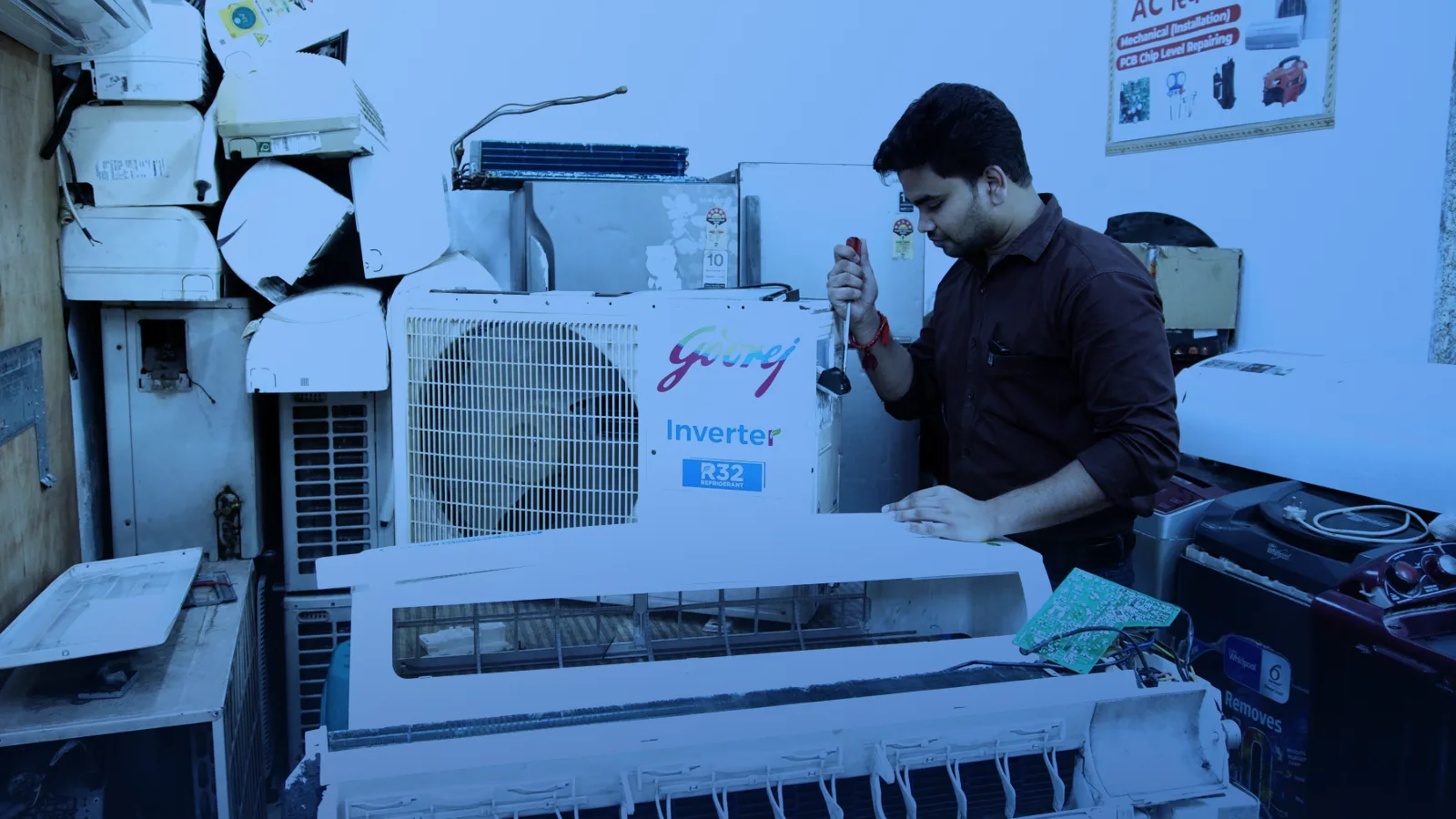
A climate control maintenance contract must define which units it includes, which tasks it performs per component, how often it visits, what report it delivers and how spare parts and out-of-scope work are authorized. Its return is measured with the building’s own indicators, such as avoided breakdowns and consumption before and after, and not with a percentage promised in advance.
A building manager receives three proposals for air conditioning maintenance. One talks about monthly visits, another about “comprehensive service” and the third about “full coverage”, and none explains what is done in each visit or what happens if a compressor fails on a Saturday. Choosing the one that sounds best is the most common thing and also the one that brings the most surprises mid-year.
A good contract looks more like a work map than a promise. This article explains what it should say, how to measure whether it was worth it with the sources that do exist and which signs reveal a proposal that cannot be verified. It includes no cost figures, because they depend on each building’s inventory and are known only after a diagnosis.
What should a maintenance contract cover?
It must cover six things, and each has a practical reason. The first is scope: which units are in and which are out, with the inventory as an annex. Without that annex, the discussion about whether a unit was included always comes after the breakdown. The second is tasks per component, because the ANSI/ASHRAE/ACCA 180 standard for inspection and maintenance of commercial systems is organized exactly that way, by component and not by complete unit.
To coordinate a visit related to contratos de mantenimiento, Climatiza answers inquiries and confirms availability according to the schedule of the place.
| Contract element | What it must say |
|---|---|
| Scope | Units included and excluded, with an attached inventory |
| Tasks | Filters, coils, pan and drain, fans, operating parameters |
| Visits | How many per system, defined in writing, with no universal frequency |
| Reports | One per visit, with photos, readings and recommendations by priority |
| Failures and spare parts | Who authorizes what and how out-of-scope work is handled |
| Review | A date to adjust the scope with the first period’s data |
Why does the report of each visit matter so much?
Because it is the only thing that makes it possible to measure anything. Without a report, the contract is an act of faith: it is paid, the air keeps working and nobody knows whether it was thanks to maintenance or luck. With a report, each visit leaves photos of the filter, the pressure drop reading, the state of the pan and the drain, and the list of pending items. After a few months, that series shows which units degrade fastest and which can be left alone.
It also matters for peace of mind with the board or the building owner. A management that can show each unit’s history does not have to defend a decision from memory when someone asks why a compressor was replaced. And it is worth being honest about what maintenance does not do: the EPA and the CDC note that duct cleaning has not been shown to prevent health problems, so duct cleaning enters the contract only as a task conditioned on what the camera inspection shows.
What do the sources say about the return?
Two US sources give a reference, not a promise. The Department of Energy’s operations and maintenance guide (PNNL) estimates that a preventive maintenance program can reduce maintenance cost by 12% to 18% on average compared with working only when something fails. And an analysis from Lawrence Berkeley National Laboratory (Mills) measured, in 643 existing buildings, a median energy saving of 16% after correcting deficiencies, with a median payback of 1.1 years.
The two figures measure different things and do not add up: the first speaks of the cost of maintaining, the second of the energy of the whole building. They are data from another country and another climate. In Panama, with an average humidity of 75.7% according to ETESA and equipment that operates almost without pause, it is reasonable to think the possible gain is not smaller, but that is an inference and not a measurement. No proposal should promise a fixed percentage without knowing the building.
How is the return of a specific contract calculated?
With three variables that come from the building itself. The first is the annual cost of the contract, which the quotation sets after the diagnosis. The second is the corrective cost avoided per year, read in the history of breakdowns and repairs. The third is the energy saving, measured with readings from before and after correcting deficiencies, not with a generic percentage.
Simple return is the initial investment, which includes the diagnosis and the corrections, divided by what is avoided and saved each year minus what the contract costs. It is a calculation structure and not a figure. For it to work something is needed that many buildings lack: a baseline. That is why the first period of the contract serves mostly to measure how the system was, and the scope review mentioned in the table rests on those data.
Common mistakes when comparing proposals
The first mistake is comparing proposals without matching the scope, because two documents covering different units are not comparable even if they look alike. The second is accepting a saving percentage with no source or measurement method. The third is signing without reports per visit, which leaves the return with nothing to measure. And the fourth is not asking for a review date, so the contract ages while the building changes.
A simple test helps separate a solid proposal from a flashy one. The provider is asked to describe, unit by unit, what will be done in the first visit and what document will be left behind. If the answer is a list of tasks with their evidence, the contract can be audited. If the answer is a general phrase about permanent attention, there is nothing to check afterward. That difference weighs more than any formatting detail.
It is also worth writing down who keeps the reports. If they remain only in the email of the technician who visited the building, the history is lost when that person changes company. A shared folder with each visit’s report, ordered by unit, turns the contract into a living archive that the next management can consult without starting from scratch.
Before signing, the management can lean on the way work is done in an office building and on the logic of a horizontal property administrator to order the inventory by floors and common areas. The camera inspection works as the initial diagnosis when the contract includes ducts, the scope of the duct service is written as a conditioned task, and the criteria for when cleaning is advisable prevent it from appearing as a fixed visit. Anyone needing to place their case among other spaces can browse the types of place served.
Those who want to go from this reading to a real review can start at the Climatiza service page or write through the main Climatiza site.
Sources
On this site
- Offices and corporate towersHow the work is organized in this sector
- Residential towers and PH buildingsA neighboring sector
- Camera inspectionThe real condition before deciding
Climatiza and Radar Panamá
Why does inspecting and cleaning ducts matter?
These are the technical reasons, with their source, why the condition of the ducts is checked before deciding. Duct cleaning has not been shown to prevent health problems according to the EPA and the CDC, and it is proposed only when the observed condition justifies it.
| Advantage | Data with source | What it means in practice |
|---|---|---|
| Anticipate the tropical humidity | According to ETESA (Tocumen station, 1977 to 2010), mean annual relative humidity in Panama is 75.7 % and rises to between 78.2 and 82.4 % in the rainy months. | The condensate pan, the drain and the coil are checked first, because that is where moisture builds up. |
| Protect equipment performance | In a laboratory test with dust equivalent to one year of use, coil pressure drop rose between 6 and 30 % and efficiency (EER) fell between 1 and 9 % (Yang, Braun and Groll, ARTI, 2004). | It is a laboratory result and not a promise of savings: it points to the components worth checking. |
| Follow a technical inspection reference | The ANSI/ASHRAE/ACCA 180 standard is the standard practice for inspection and maintenance of commercial HVAC systems. | It is an industry reference, not a legal requirement in Panama, and helps organize the review plan. |
| Keep construction dust out of the system | The EPA and NIOSH Building Air Quality guide asks to block return grilles while construction work takes place in occupied buildings. | Before accepting a new or remodeled system it is worth checking whether construction dust got in. |
| A local figure that changes the decision | OSHA’s guide for commercial buildings says that buildings with several tenants may need an evaluation to make sure one tenant’s emissions do not adversely affect another. It is advisory guidance, not a standard. (OSHA 3430-04, Indoor Air Quality in Commercial and Institutional Buildings). | It is the sector context taken into account when planning the visit. |
How to hire the service for contratos de mantenimiento
- Message us on WhatsApp with the type of place and the area.
- The camera inspection is arranged at a time that does not affect your operation.
- The quote is prepared from what was observed, never blind.
- If cleaning is justified, it is done by sections and the final report is delivered. If it is not, we tell you.
Frequently asked questions
What should an air conditioning maintenance contract say?
It must define included and excluded units, tasks per component, visits per system, a report with photos and readings, how to authorize spare parts and out-of-scope work, and a date to review the scope with the first period’s data.
How can one tell whether the contract was worth it?
It is compared against the building’s baseline: breakdowns before and after, measured energy consumption and the condition of the units in the reports. Without that baseline and without reports per visit, there is no honest way to calculate the return.
What saving do the reference sources document?
The US Department of Energy cites 12% to 18% lower maintenance cost compared with corrective mode, and Berkeley Lab measured a 16% median energy saving in 643 buildings. They are data from another country and not a promise for a specific case.
Does duct cleaning go inside the contract?
Only as a task conditioned on what the camera inspection shows, not as a fixed visit. The EPA and the CDC note that duct cleaning has not been shown to prevent health problems, so it is justified by the real condition of the system.
Keep reading the guide
Request an inspection
Do you want to know the condition of your system?
A camera inspection lets you see the inside of the ducts before deciding what to do. Message us and we will confirm availability.
- +507 6388-2083
- info@climatizapanama.com
- Calle Gervasio García, 8, Panama City