
Preschools and daycare centers
Daycare: ducts and air in the infant rooms, what to check
Parents do not ask about ducts. They ask whether the room smells fine, whether it is cold and whether anyone checks it. Behind those three questions sits the air conditioning.
 By
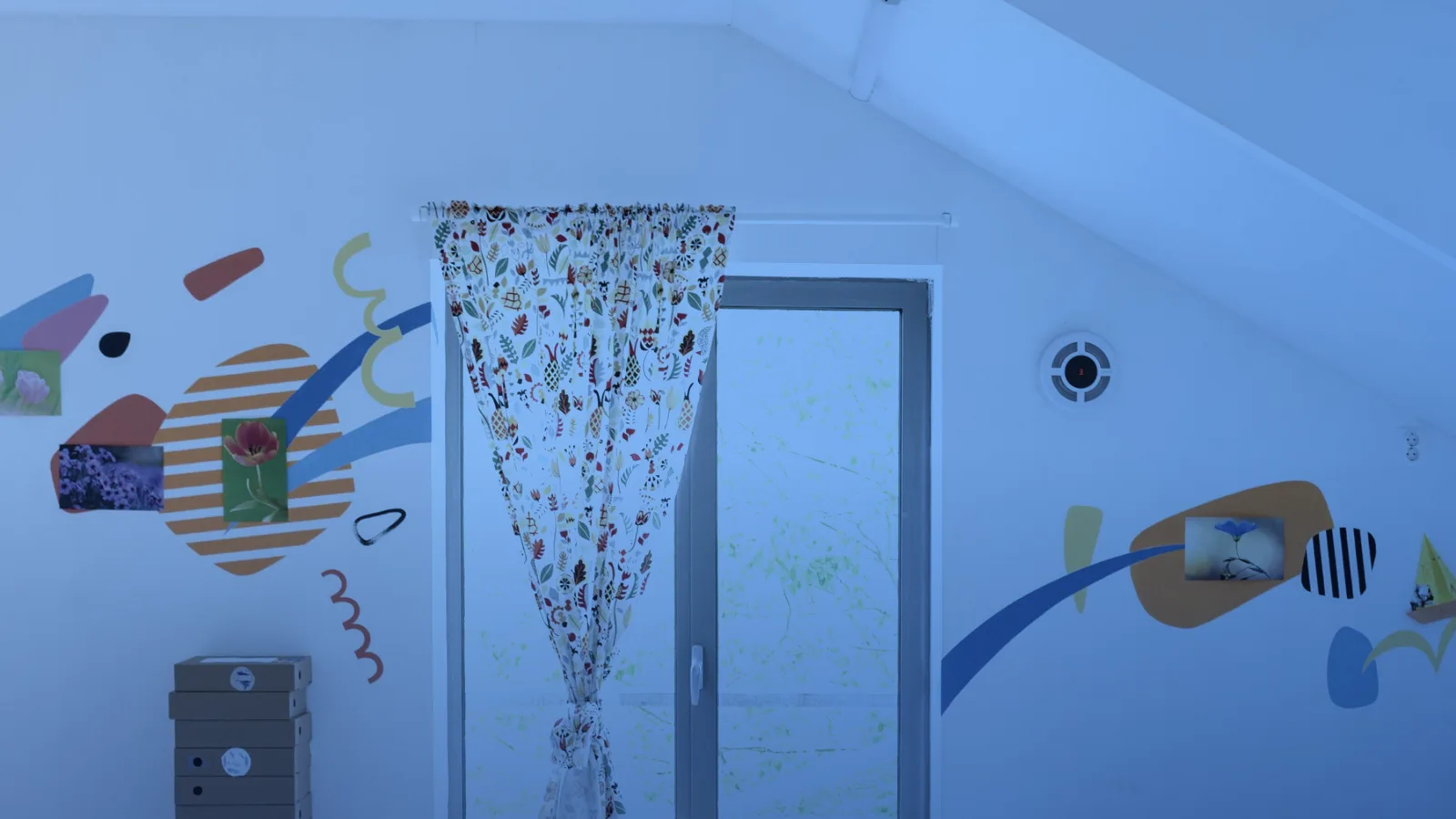
In a daycare infant room the check covers the smell at the grilles, the filter, dust at the diffuser edges, the condensate pan and the path of the diaper area exhaust. It is done with no children present, with a camera inspection when there is a sign or when the season changes, and cleaning happens only where the camera justifies it.
A daycare has toddler, walker and preschool rooms, and all are air conditioned. The infant room is different for three reasons. It stays closed almost all day. Its temperature is controlled more carefully, so the unit runs continuously. And its occupants spend hours in cribs and floor mats, where the air leaving the diffuser ends its journey.
So if a duct has dust, that room is where it shows first. The director perceives it as a smell that returns midmorning, a grille with a gray edge or a filter that fills up sooner than expected. What follows matters more than what is done with those signs: checking with judgment and without promising what cannot be promised.
Why is the infant room the priority?
Because it concentrates the highest demand for comfort and the lowest tolerance for a neglected system. A closed room with air running all day builds up dust on filters and grilles faster than a classroom used only a few hours. A study of air conditioned classrooms in Taiwan observed that fans scatter dust and must be kept clean, and that carbon dioxide levels dropped sharply when fresh air was introduced.
The fieldwork is carried out by the Climatiza team, who check branches, grilles and air handlers and record the result in an illustrated report, also in the case of preschools and daycare centers.
The EPA recommends considering duct cleaning when there is visible mold on hard surfaces, pests or ducts releasing particles through the registers, and warns that cleaning has never been shown to prevent health problems. That warning weighs more in a daycare than anywhere else. Here the system is checked and maintained, and nothing is promised about the children.
What about the lingering smell of the diaper area?
The changing area is usually inside the infant room or attached to it, with a sink and a closed bin. The smell the staff describes as lingering, the one that remains even when the bin is empty and the surface clean, almost always has one of two causes. One is an extractor that discharges not outdoors but into the ceiling space. The other is an air conditioning return placed right over the area, carrying the smell to the rest of the room.
| Sign in the room | What it usually suggests | What is looked at with the camera |
|---|---|---|
| Smell that returns when the air starts | Deposit in the duct or pan with standing water | Pan, coil and first stretch |
| Drops or stains on the grille | Condensation from damaged insulation or very cold air | Insulation of the stretch |
| Gray dust at the diffuser edge | Saturated filter or duct with loose dust | Filter and supply stretch |
| Smell in the diaper area with everything clean | Extractor that does not discharge outdoors | Path of the extractor to its outlet |
How is the check done with no children in the room?
The check is done when the room is empty, which in a daycare means before opening in the morning, after the last pickup or on a Saturday. Cot linens are removed, surfaces are covered, the grille comes off and the starting state is photographed. Then the camera runs the duct from the access point as far as it reaches, and the technician notes the filter, the pan and the extractor.
An illustrative case, not a real client: a daycare with an infant room and a walkers room. The infant room filter is gray and the pan drains slowly. The camera shows no mold, just a thin layer of loose dust near the diffuser, and the changing table extractor discharges into the ceiling space. The report recommends changing the filter, cleaning the pan and routing the extractor outdoors. The ducts are not cleaned. The photos stay in the room’s folder to compare at the next check.
How often is it checked, and what is shown to families?
Parents ask how often the infant room air is cleaned and expect a number. The honest answer is that no Panamanian standard fixing that frequency was found. MIDES Executive Decree 64 of 2021, which regulates early childhood care centers, mentions ventilation, hygiene and order as criteria the supervisor verifies on site, without technical values. So frequency is defined by evidence: the filter is checked as part of staff routine, and the camera is run when a sign appears or at least when the season changes.
Families want to see, not read. Two camera photos of the infant room, one before and one after, say more than any text, and are worth keeping in the folder for the parents’ meeting. For a MIDES supervision the same material, in order, works: date of the visit, rooms checked, photos, filters changed and what is pending, with no claims about effects on the children’s health.
Which mistakes repeat and what is worth asking for?
Three repeat. Checking with children in the room, which exposes everyone to dust and puts a technician among the cribs. Cleaning the ducts of every room alike, when the infant room is the one asking for attention. And relying on smell alone: a duct can be loaded and not smell, and another can smell because of a pan that only needed cleaning.
- Visit outside care hours, with the room covered and empty.
- Before and after photos of grille, filter, pan and extractor.
- One clear recommendation per room, with no health claims.
- List of what is pending and who corrects it.
The care room by room resembles that of an educational center where each room is checked in its pause. The other ways of organizing the work by kind of place are in the places where the team works, and when the director wants the flagged sections cleaned, the service with prior inspection is scheduled outside care hours.
Questions about a specific building can be sent to Climatiza, and the service description shows what a visit includes.
Sources
On this site
- Universities and schoolsHow the work is organized in this sector
- Hospitals and clinicsA neighboring sector
- Camera inspectionThe real condition before deciding
Climatiza and Radar Panamá
Why does inspecting and cleaning ducts matter?
These are the technical reasons, with their source, why the condition of the ducts is checked before deciding. Duct cleaning has not been shown to prevent health problems according to the EPA and the CDC, and it is proposed only when the observed condition justifies it.
| Advantage | Data with source | What it means in practice |
|---|---|---|
| Follow a technical inspection reference | The ANSI/ASHRAE/ACCA 180 standard is the standard practice for inspection and maintenance of commercial HVAC systems. | It is an industry reference, not a legal requirement in Panama, and helps organize the review plan. |
| Require method and a report from the provider | NADCA published in 2025 the current edition of its ACR standard on assessment, cleaning and restoration of air systems. | It is an industry reference and not a seal: it helps ask for method, photographs and scope in writing. |
| Anticipate the tropical humidity | According to ETESA (Tocumen station, 1977 to 2010), mean annual relative humidity in Panama is 75.7 % and rises to between 78.2 and 82.4 % in the rainy months. | The condensate pan, the drain and the coil are checked first, because that is where moisture builds up. |
| Check classroom and hall ventilation | A peer reviewed study of 104 classrooms (Chan et al., 2020) found problems in 51 % of them. | The camera and readings show whether air reaches where it should before each school term. |
| A local figure that changes the decision | In 2024 total enrollment in the country was 1,213,119 students, 82.6% in the public sector. University education reached 193,773 students (preliminary figure) and the University of Panama had 88,094, or 45.6% of university enrollment. (INEC, Education 2024). | It is the sector context taken into account when planning the visit. |
Frequently asked questions
How often are the ducts in a daycare infant room checked?
No Panamanian standard fixes the frequency. The filter is checked as part of staff routine and the camera is run when a sign appears, such as smell, dust at the diffuser or drops, or at least when the season changes.
Can the infant room air be checked with children present?
It is not advisable. The check is done before opening, after the last pickup or on a Saturday, with the room covered. That avoids exposing children to dust and allows the work to be done calmly.
What can be shown to families from the check?
Camera photos before and after, the visit date, filters changed and what is pending. Talking about effects on the children’s health is avoided, because duct cleaning has not been shown to prevent problems, according to the EPA.
What does Panamanian regulation say about air in daycare centers?
Executive Decree 64 of 2021 from MIDES, on comprehensive early childhood care centers, names ventilation, hygiene, and order as criteria the inspector checks on site. It sets no deadlines or technical values, so how often the ducts are reviewed is decided by the evidence.
What does it mean when the smell returns every time the air in a baby room is switched on?
It usually points to a deposit in the duct or a drain pan with standing water. The pan, the coil, and the first section are checked with a camera. The EPA asks for clean pans with free drainage, and the finding is documented without promising any effect on the children.
Keep reading the guide

Request an inspection
Do you want to know the condition of your system?
A camera inspection lets you see the inside of the ducts before deciding what to do. Message us and we will confirm availability.
- +507 6388-2083
- info@climatizapanama.com
- Calle Gervasio García, 8, Panama City