
Restaurant franchises
Franchise manual and ducts: what the brand demands and what you decide
The manual says the outlet must smell of product and not of stuffiness. It does not say how that is achieved, and that part, which almost nobody reads, falls to the franchisee.
 By
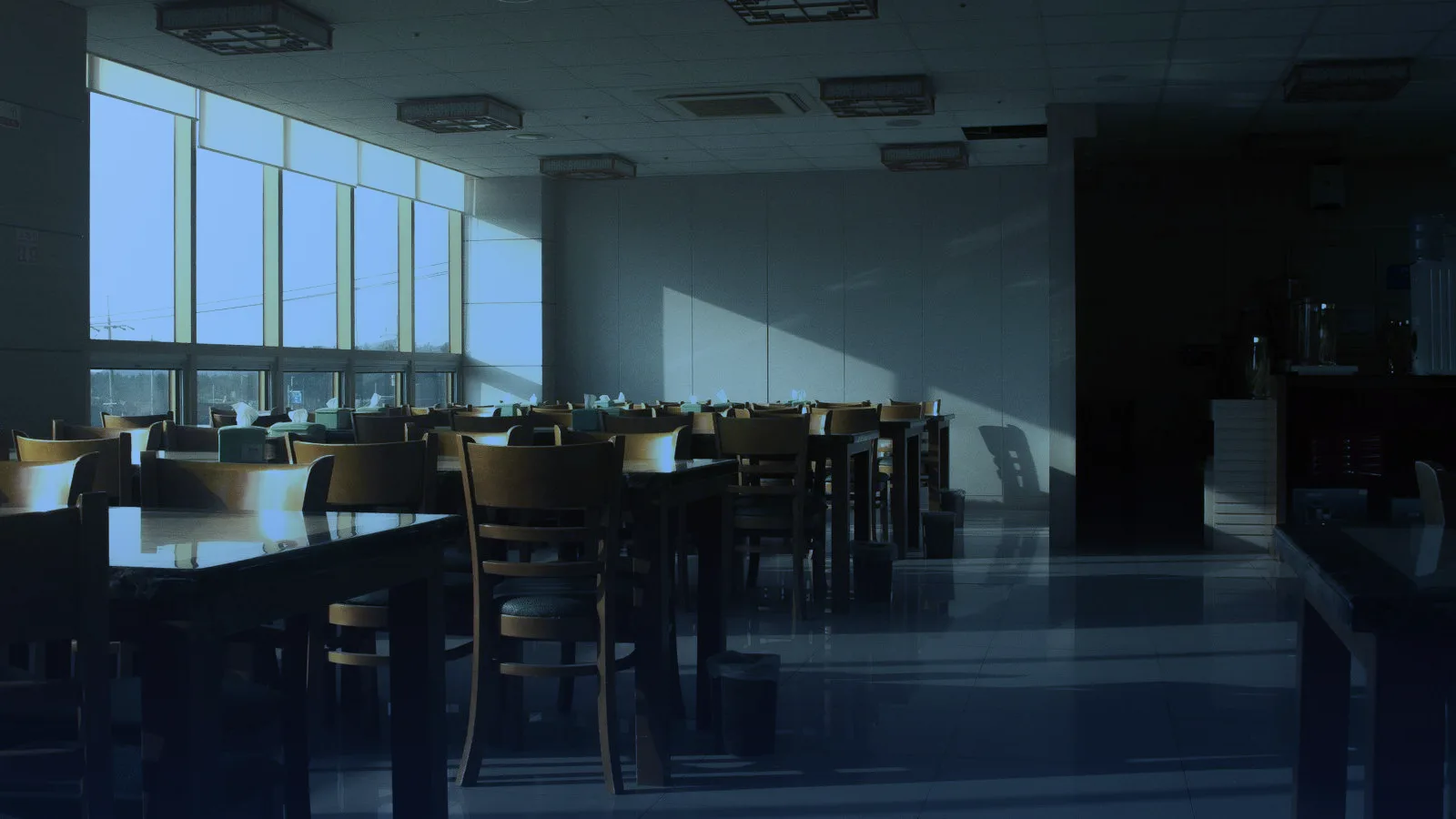
The franchise manual usually sets the result: a dining room without odors foreign to the product, working equipment and maintenance records available for the audit. It rarely sets the method, the frequency or the provider for duct cleaning. That part is decided by the franchisee according to the building and the climate. What is demanded is showing, with dates and photos, that the outlet’s air is checked and looked after.
The franchisee of a food outlet in Panama receives, the day of opening, an operations manual of several hundred pages. There are chapters on the product, the uniform, service and facilities. In the facilities chapter one line appears about air conditioning, with a target temperature and the phrase “keep free of odors foreign to the product”. Months later the brand audit arrives and that phrase becomes a concrete question: what has the outlet done about its ducts?
The confusion is understandable. Manuals are written from the head office, often in another climate, and speak about air in terms of results. Understanding what is the brand’s requirement, what is a local decision and what gets documented saves an uncomfortable audit and, above all, avoids spending on what nobody will check.
What does the manual usually demand about the outlet’s air?
It almost always demands results and not procedures: dining room temperature within a range, absence of odors foreign to the product, equipment without drips or noises and evidence of preventive maintenance. What almost never appears is an instruction about the inside of the ducts. When the manual mentions them, it usually does so with a general phrase, such as cleaning as needed or according to local regulations.
Behind this guide is Climatiza, an inspection and duct cleaning service, which always starts from the real condition of the system before proposing any work in restaurant franchises.
That phrase returns the decision to the franchisee, because no Panamanian standard was found that sets a duct cleaning frequency for restaurants. What does exist as a technical reference is the ASHRAE 180 standard, which establishes minimum inspection and maintenance tasks for commercial systems without imposing a fixed calendar by age. It is a good basis for justifying to the brand why the outlet checks and decides on what it observes.
What does the brand auditor actually look at?
He looks at what he can see and what he can read. On the walk he checks grilles and diffusers without stains or visible dust, and notes the smell on entering. In the folder he looks for the air maintenance record, the filter change dates and some evidence of the last duct inspection or cleaning. The detail matters: what he looks for is a report with photos and a date, not a receipt.
The pattern is clear: the auditor does not go into the duct. He checks symptoms in the dining room and documents in the folder. A report of a camera inspection of the inside of the ducts, with dated images, answers in a single document the two questions that weigh most. And if the camera shows a system in good condition, that report also works: it shows that it was looked at and that no intervention was needed.
What does the franchisee decide and why does it matter?
He decides almost everything that touches the duct: the frequency, which comes from the real condition and use of the outlet and not from the manual, the provider, unless the brand has a national agreement, the method, which is best started with a camera and cleaning only the sections that call for it, and the schedule, agreed with the outlet and, if applicable, with the shopping center. The record format is also free, as long as it contains date, photos and sections reviewed.
That margin has a limit. When the manual demands an odor free dining room, the franchisee answers for that result even if the method is his own. It matters for customer comfort, since the customer does not distinguish between the brand and the outlet, and for the relationship with the franchisor, who prefers an orderly file to an explanation after the fact. It also matters for the equipment, which performs better with up to date filters and a pan that drains. The EPA guide recommends cleaning when there is visible build up and correcting the cause first, which is a sounder criterion than a calendar followed without looking. It should be clear that the EPA and the CDC have not found that cleaning ducts prevents health problems, so the justification to the brand is condition and order, not health.
How is compliance documented without bureaucracy?
With one folder per outlet and one tab per system. Air conditioning and kitchen exhaust go in separate tabs, because the auditor looks for the dining room air in one and the hood in the other. Each technical visit leaves three things: the date, the photo of the point checked and the name of whoever did it. That is enough, and a dated photo is worth more than a long report without images.
An illustrative case, not a real client: a ground floor outlet in a tower, with central air controlled by the building. The franchisee cannot clean what is not his, but can document what is his, which are his grilles and the return of his outlet, and ask the administration for the record of the rest. When the auditor asks, the folder shows what was checked, what was left out for not belonging to the outlet and who was notified. That clarity is what is evaluated, not the cleanliness of someone else’s duct.
What is worth asking the brand before hiring?
- Whether there is a national agreement with a duct provider or each franchisee chooses.
- Which document the audit accepts as evidence: report with photos, certificate or invoice.
- Whether the brand requires a frequency or accepts the one resulting from the inspection.
- Whether kitchen exhaust and dining room air are audited together or separately.
- Who answers if the outlet is in a building with central air that the franchisee does not control.
What is not written down gets interpreted in the audit, so it is worth closing those five points by email. How the work is organized in each type of outlet is in how the work is done in restaurants and cafeterias, the rest of the places served in the sectors and the criteria for deciding whether cleaning is due in when cleaning makes sense and when it does not. For ground floor outlets in towers, working with office building administrations serves as a reference, because there the air depends on the building and the franchisee controls only his grilles.
For a first conversation about the system, the contact details are on the Climatiza site and the method is described on its duct cleaning service page.
Sources
On this site
- Restaurants and coffee shopsHow the work is organized in this sector
- Offices and corporate towersA neighboring sector
- Camera inspectionThe real condition before deciding
Climatiza and Radar Panamá
Why does inspecting and cleaning ducts matter?
These are the technical reasons, with their source, why the condition of the ducts is checked before deciding. Duct cleaning has not been shown to prevent health problems according to the EPA and the CDC, and it is proposed only when the observed condition justifies it.
| Advantage | Data with source | What it means in practice |
|---|---|---|
| Protect equipment performance | In a laboratory test with dust equivalent to one year of use, coil pressure drop rose between 6 and 30 % and efficiency (EER) fell between 1 and 9 % (Yang, Braun and Groll, ARTI, 2004). | It is a laboratory result and not a promise of savings: it points to the components worth checking. |
| Keep humidity under control | The EPA recommends in its guide to mold and moisture keeping indoor relative humidity below 60 % and drain pans clean and draining freely. | A humidity reading and a clean pan limit the conditions in which mold grows. |
| Require method and a report from the provider | NADCA published in 2025 the current edition of its ACR standard on assessment, cleaning and restoration of air systems. | It is an industry reference and not a seal: it helps ask for method, photographs and scope in writing. |
| Keep construction dust out of the system | The EPA and NIOSH Building Air Quality guide asks to block return grilles while construction work takes place in occupied buildings. | Before accepting a new or remodeled system it is worth checking whether construction dust got in. |
| A local figure that changes the decision | INEC’s Business and Establishment Directory (reference year 2022) records 13,586 establishments in the "Hotels and restaurants" category, the second largest sector by establishments after commerce (39,937), out of 96,397. The category groups lodging and food service, so it is not restaurants alone. (INEC, Business and Establishment Directory 2022). | It is the sector context taken into account when planning the visit. |
Frequently asked questions
Does the franchise manual force duct cleaning at a fixed frequency?
Almost never. Manuals usually set results, such as a dining room without odors foreign to the product, and leave frequency and method to the franchisee. What is required is being able to show with dates and photos that the air is checked.
Which document does an auditor prefer as evidence for the ducts?
A report with dated photos and the sections reviewed. An invoice proves it was paid, but not what was found. If the camera shows a system in good condition, the report also counts as evidence.
What does the franchisee do if the building controls the outlet’s air?
He documents what is his, which is his grilles and the outlet return, and asks the administration for the record of the rest. The folder states what was checked, what was left out and who was notified.
What duct maintenance proof do brands usually ask for in an audit?
Brands usually ask for dated records, photos of the system condition, filter changes and the provider’s work order when cleaning took place. They seldom require a specific method. A report with images for each point, signed and filed, answers most of those requests without adding paperwork.
What can a franchisee do if the building prevents meeting what the brand manual asks?
The franchisee documents the limitation, for example a mall duct that cannot be reached, and reports it to the brand in writing. The report with images of what could be checked is attached. With that evidence, the franchisor decides whether to accept an alternative or to ask for access to be arranged with the building.
Keep reading the guide

Request an inspection
Do you want to know the condition of your system?
A camera inspection lets you see the inside of the ducts before deciding what to do. Message us and we will confirm availability.
- +507 6388-2083
- info@climatizapanama.com
- Calle Gervasio García, 8, Panama City