
Centros comerciales
HVAC maintenance in shopping malls in Panama: what is inspected and how it is documented
A shopping mall does not shut down to be reviewed. That is why the inspection plan is written by zones and by hours, before the first grille is opened.
Looking for the service for centros comerciales?
- The camera inspection comes first and the quote follows, with the photos in view.
- Work is done by sections and at an agreed time, so operations are not slowed down.
- At the end you receive a report with before and after photos.
 By
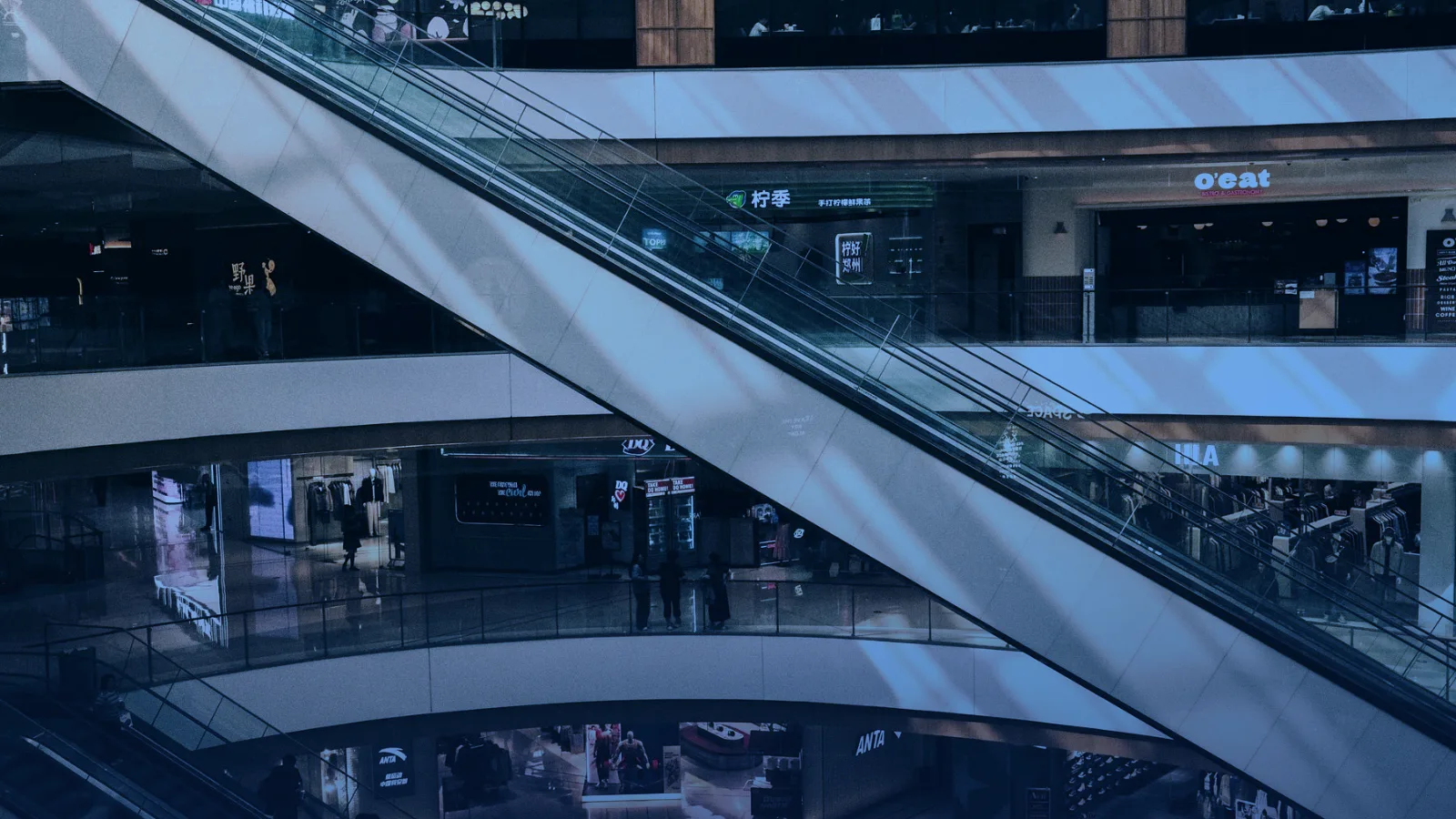
In a shopping mall's HVAC the inspection covers the air handlers of the common areas, the branches serving corridors and food courts, tenant spaces with complaints and the state of filters, coils and pans. It is documented with a plan by zones, dated photographs, a list of areas without access and a report management can share with tenants.
For the management of a shopping mall, air conditioning is part of the product. The visitor does not see it but feels it: a mild corridor, a food court whose frying smell reaches the neighboring stores, a tenant who complains because their zone never cools. Every tenant complaint lands on the same desk.
The difficulty is scale. A shopping mall has dozens of air handlers, kilometers of duct, tenant spaces with their own equipment and a short closing window. Inspecting everything without a plan means taking too long, bothering shoppers and ending without knowing what was left pending.
What is inspected first in a shopping mall?
The starting point is where the problem weighs most. The air handlers of the main corridors and the food court come first, because they serve more people and more tenants. Then come the branches feeding zones with repeated complaints and, last, tenant spaces that asked for review or share a duct with a kitchen.
Climatiza is the technical service behind this guide and works with camera inspection, an illustrated report and cleaning only when the condition justifies it, including in the case of centros comerciales.
On each air handler four things are checked: the filter, the coil, the pan with its drain and the state of the insulation. The camera surveys a sample of branches and returns. In the food court special attention goes to the return near the kitchens, where grease aerosol can reach corridor air if hood capture is not enough.
Why does it matter to document a shopping mall's HVAC?
Because management answers to many people at once. The tenant wants to know what was done in their zone, the board wants to see the order of maintenance and the next contractor needs to know where the problem was. A file of inspections by zone settles all three cases without repeating visits.
The usual technical reference is the ANSI/ASHRAE/ACCA 180 standard, which defines which inspection and maintenance tasks apply to commercial systems and with what record. It is not a seal or a certification, it is a guide to what to look at and what to write down. And Panama’s humidity, averaging 75.7 percent according to ETESA, explains why the pan and the drain are noted at every visit.
With clarity toward tenants: the EPA and the CDC state that duct cleaning has not been shown to prevent health problems, so no mall report should present it as protection. It is presented as part of equipment maintenance and odor control.
What does the inspection plan look like, step by step?
- Zone map. Management and the technician divide the mall into zones: corridors, plazas, anchor stores, tenant spaces and technical rooms. Each zone gets a code to organize photographs and reports.
- Time window. The hours of lowest traffic are agreed, normally after closing, and security and tenants who share a duct or grille are notified.
- On site review. Air handlers and a sample of branches are inspected with a camera, and the state of filters, coil and pan is noted at each point.
- Report by zone. Each zone ends up with its dated photographs, sections without access and a recommendation: fix, clean or leave as it is.
An illustrative case, not a real client: several stores near the food court complain of a frying smell. The camera shows dark residue in the return facing the kitchen area and a loaded filter. The report recommends adjusting hood capture, changing the filter and cleaning that section, and records that the rest of the duct, dry, needs no work. The tenant receives a document with what was done in their zone.
Which mistakes repeat and what should management ask for?
The usual stumbles are working without a zone map, not notifying tenants when a shared grille is opened, leaving service areas unchecked and delivering a single report without separating by zone. Management then loses the ability to answer a specific complaint. It is worth requiring the plan by zones before starting, dated photographs with a zone code, a list of areas without access and a written recommendation per zone, so every decision has its backing.
How is it coordinated with tenants and security?
Tenants are the first to be affected when a grille near their store is opened. A prior notice with the hours, the area and the management contact avoids misunderstandings. Security needs to know who enters, through where and until when, and the technician should carry identification and a list of the zones authorized for each night. The work then proceeds without interruptions or doubts about who authorized what.
It is also worth defining what happens if something unexpected appears. If the camera shows active moisture in a branch running over a store, management needs to know the same day, to warn the tenant and schedule the correction. For that, a contact person with authority to decide at night is useful, and not a chain of emails answered the next morning.
Finally, the final report must be readable in parts. General management wants a one page summary, the maintenance engineer wants the detail by air handler and the tenant only wants to see their zone. If the document is organized with the zone code from the first photograph, each reader finds their part without asking for a second report.
One detail that is often forgotten is the service areas: loading docks, trash rooms, technical corridors and administration offices. Visitors do not see them, but many share a return or branch with public zones, and a trash or damp smell at a dock can travel through the system to a corridor. Including them in the zone map from the start prevents the report from being incomplete and spares management from finding the source of the odor only after the second complaint.
In short, a shopping mall’s HVAC is well handled when the plan exists before the work, the zones have codes and every finding sits in a dated image. With that base, answering a tenant, the board or the next contractor stops being a hunt for papers and becomes a lookup in the file.
To see how work is organized with other managements, the page on shopping malls shows coordination by zones and hours. Each image of the review is explained in the camera inspection, the full scope is in the duct cleaning service and the criteria for acting, in the guide on when to clean and how. Individual stores have their own challenges, described in work with stores and retail spaces, and the other places appear in the list of sectors.
Questions about a specific building can be sent to Climatiza, and the service description shows what a visit includes.
Sources
On this site
- Shopping centers and mallsHow the work is organized in this sector
- Stores and supermarketsA neighboring sector
- Camera inspectionThe real condition before deciding
Climatiza and Radar Panamá
Why does inspecting and cleaning ducts matter?
These are the technical reasons, with their source, why the condition of the ducts is checked before deciding. Duct cleaning has not been shown to prevent health problems according to the EPA and the CDC, and it is proposed only when the observed condition justifies it.
| Advantage | Data with source | What it means in practice |
|---|---|---|
| Keep humidity under control | The EPA recommends in its guide to mold and moisture keeping indoor relative humidity below 60 % and drain pans clean and draining freely. | A humidity reading and a clean pan limit the conditions in which mold grows. |
| Follow a technical inspection reference | The ANSI/ASHRAE/ACCA 180 standard is the standard practice for inspection and maintenance of commercial HVAC systems. | It is an industry reference, not a legal requirement in Panama, and helps organize the review plan. |
| Know whether cleaning is needed before deciding | The EPA states in its duct cleaning guide that cleaning is justified for visible mold, pests or a notable buildup of dust and debris. | A camera inspection documents the condition and allows a decision based on evidence, without unnecessary work. |
| A local figure that changes the decision | According to figures America Retail attributes to the Panama Shopping Center Association, Panama has more than 25 large malls and about 200 smaller plazas, with around 1.3 million square meters of gross leasable area. It is a secondary source with no cutoff date. (America Retail, Panama, giant of Latin American retail (2025)). | It is the sector context taken into account when planning the visit. |
How to hire the service for centros comerciales
- Message us on WhatsApp with the type of place and the area.
- The camera inspection is arranged at a time that does not affect your operation.
- The quote is prepared from what was observed, never blind.
- If cleaning is justified, it is done by sections and the final report is delivered. If it is not, we tell you.
Frequently asked questions
What is inspected in a shopping mall's HVAC?
The air handlers of corridors and plazas, a sample of branches with a camera and the state of filters, coil, pan and insulation. Priority goes to zones with complaints, the food court and tenants who share a duct.
How is an inspection documented in a shopping mall?
With a report by zone that includes dated photographs, a location code, the state of each component, a list of areas without access and a written recommendation. Management can then answer any tenant with concrete evidence.
Can inspection be done without affecting visitors?
Yes, it is scheduled by zones and at the hours of lowest traffic, normally after closing. Security and affected tenants are notified, and openings are sealed so the work is not noticeable in corridors or stores.
Is cleaning a mall's ducts mandatory?
There is no universal calendar. Cleaning happens when inspection shows bonded residue, moisture or construction debris. The ASHRAE 180 standard guides what to inspect and record, but does not impose cleaning by date.
Keep reading the guide
Request an inspection
Do you want to know the condition of your system?
A camera inspection lets you see the inside of the ducts before deciding what to do. Message us and we will confirm availability.
- +507 6388-2083
- info@climatizapanama.com
- Calle Gervasio García, 8, Panama City