
Student residences
Student residence: ducts in rooms and shared kitchens
The student at the end of the hall does not cook, and still smells what gets fried at midnight. A floor’s air is shared even if the kitchens belong to everyone.
 By
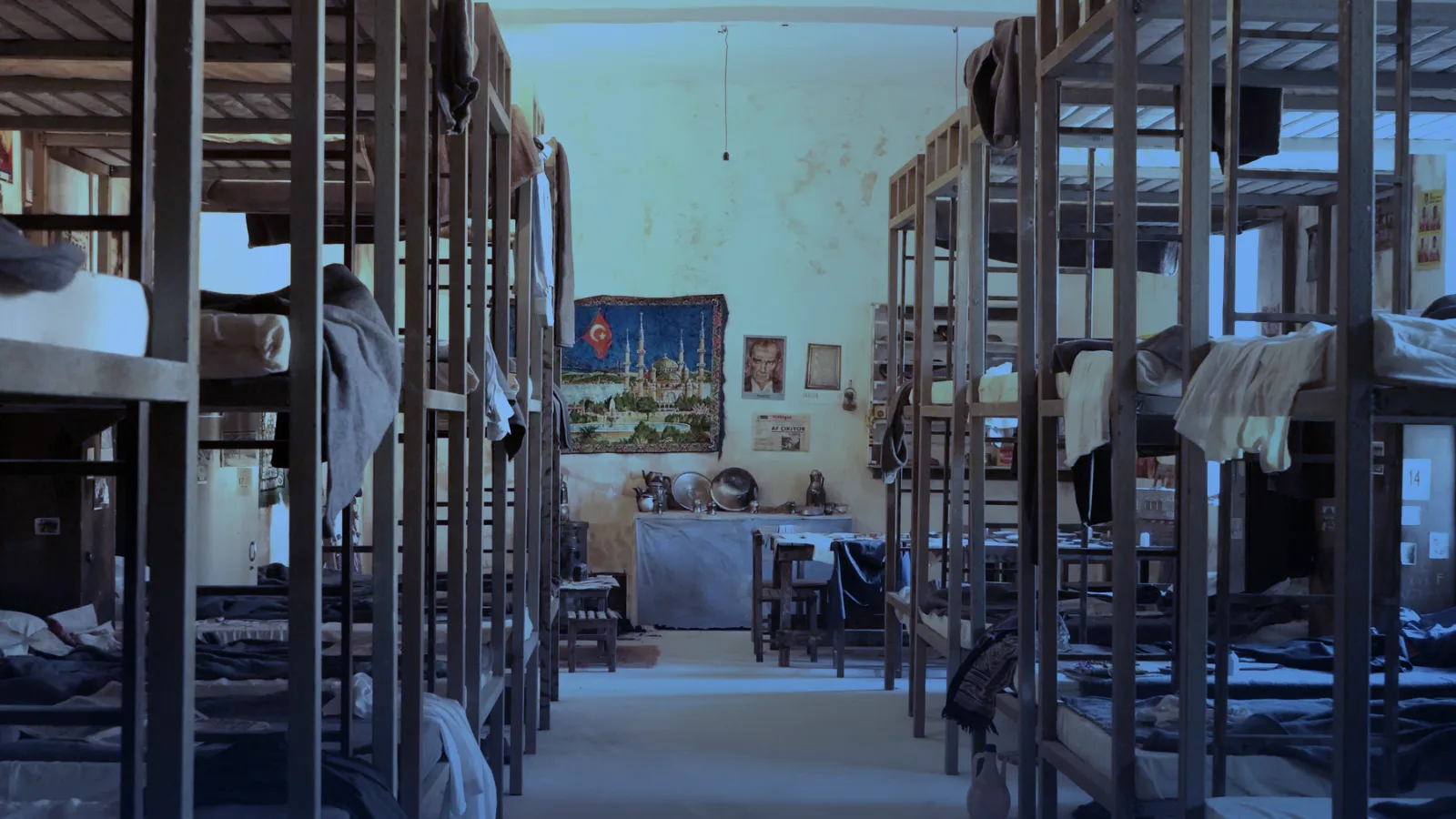
In a student residence the check is best organized by floor and not by building, with the shared kitchen as the starting point. Steam carrying fine grease from that kitchen seeks the hallway return and enters the system feeding the rooms. The best window is the student turnover at the end of the school year, with rooms empty. The camera decides which floors need cleaning.
In a student residence the air on each floor is shared among small rooms, a hallway and a kitchen used by twenty or thirty people at different hours. Someone fries at eleven at night, another boils pasta at seven in the morning, and between them steam rises, cools and looks for a way out. The residence manager knows it from the complaints: there is a food smell in room 12, and room 12 is twelve meters from the kitchen.
That distance does not matter if the hallway return is near the kitchen door. That is why the check plan is built by level and not by building, with the kitchen as the starting point. What follows explains what happens to that air, when it is worth looking at it and what to ask of whoever checks it.
What happens to the air from a shared kitchen?
The EPA’s Building Air Quality guide recommends that air from kitchens and other spaces with strong odors be exhausted outdoors and not recirculated. In many residences that principle is half met: there is a hood, but its duct ends in the attic space, or it runs only when someone remembers to switch it on. The rest of the time, the hallway return does the extractor’s job.
Climatiza is the technical service behind this guide and works with camera inspection, an illustrated report and cleaning only when the condition justifies it, including in the case of student residences.
What travels through that return is steam with fine grease and humidity. It settles on the filter, partly passes to the coil and ends in the supply duct feeding the rooms on the same floor. The student at the far end does not cook and receives at the grille what was fried at midnight. Over time a sticky film appears on the return grille, the filter darkens sooner than expected and a food smell comes when the unit starts in the morning.
When is the best time to check, with students living there?
The calendar is set by occupancy. During the academic period there are people on the floor at any hour, weekends included, and opening an access point or shutting the unit off for hours bothers everyone. The natural window lies between the departure of the group that ends and the arrival of the next, when rooms are handed over empty and the kitchen is cleaned thoroughly.
- Confirm with the administration the departure and new arrival dates before fixing the visit.
- Ask that the floor's kitchen go unused from the night before, so the aerosol has settled.
- Take advantage of rooms without belongings: the camera enters through the grille without moving anything.
- Change the floor's filters the same day the duct is checked, not weeks later.
- Note the maintenance window in next year's calendar.
It is not always possible to wait for the end of the year. If there is a strong smell or a repeated complaint, the work is done with the building occupied: the camera inspection is done floor by floor during class hours, with notice to residents, and cleaning, if needed, is reserved for the turnover.
Why does it matter to check if the residence already works?
Because the rooms of a residence compete for students every year, and the kitchen smell or the room that never cools gets talked about. It matters for the comfort of those who live there, who do not choose the floor, and for the state of the units, which gather grease in filter and coil. It matters for coexistence too: a kitchen that smells in every room ends in arguments over who cooks what and when, when the origin is the return.
It is worth being clear about what cleaning does not do. According to a review study, ducts can accumulate dust and serve as a reservoir of microbes, but there is not enough evidence of health, airflow or energy benefit from cleaning them. The EPA and the CDC say the same. Here it is proposed as upkeep and odor control, only where the camera shows bonded residue.
What does the floor by floor visit look like?
It starts with each level’s kitchen, where the aerosol is born. The hood is looked at, where it discharges and which return is nearest. Then the camera enters through the hallway return grille, advances to the air handler and checks the coil, pan and filter. Finally it runs the branch toward the nearest rooms to see how far the residue reaches.
An illustrative case, not a real client: a four floor residence. The first has the hood discharging outdoors and a clean duct. The second, with the hood discharging into the attic space, shows a gray film in the return and the first stretch. The third and fourth have a dark filter but a matte duct. The report proposes cleaning the second floor at turnover, changing filters on the other two and routing the hood discharge outdoors. Four floors, three different decisions.
Which mistakes repeat and what is worth asking for?
Cleaning the ducts without fixing the hood repeats, and the grease returns the next semester. Treating the whole residence alike also repeats, when each floor has a different kitchen use. And leaving no record repeats, so the next manager does not know what was done or when.
Many residences operate under agreement with a university or house scholarship students, and the institution asks for maintenance evidence. A report organized by floor, with the same photos in the same order and the list of what was observed and what is pending, answers that request without improvising. It also serves to decide when cleaning is due again and when watching is enough.
To compare how it works with an apartment building run by a board, where each unit has its own equipment, or with the classrooms and labs of a campus, where the academic calendar rules in the same way, the other kinds of place are in the places where the team works.
To ask about availability or request a camera inspection, the Climatiza website lists the ways to contact the team and the duct cleaning service page explains how the work is organized.
Sources
On this site
- Residential towers and PH buildingsHow the work is organized in this sector
- Universities and schoolsA neighboring sector
- Camera inspectionThe real condition before deciding
Climatiza and Radar Panamá
Why does inspecting and cleaning ducts matter?
These are the technical reasons, with their source, why the condition of the ducts is checked before deciding. Duct cleaning has not been shown to prevent health problems according to the EPA and the CDC, and it is proposed only when the observed condition justifies it.
| Advantage | Data with source | What it means in practice |
|---|---|---|
| Follow a technical inspection reference | The ANSI/ASHRAE/ACCA 180 standard is the standard practice for inspection and maintenance of commercial HVAC systems. | It is an industry reference, not a legal requirement in Panama, and helps organize the review plan. |
| Require method and a report from the provider | NADCA published in 2025 the current edition of its ACR standard on assessment, cleaning and restoration of air systems. | It is an industry reference and not a seal: it helps ask for method, photographs and scope in writing. |
| Anticipate the tropical humidity | According to ETESA (Tocumen station, 1977 to 2010), mean annual relative humidity in Panama is 75.7 % and rises to between 78.2 and 82.4 % in the rainy months. | The condensate pan, the drain and the coil are checked first, because that is where moisture builds up. |
| Keep construction dust out of the system | The EPA and NIOSH Building Air Quality guide asks to block return grilles while construction work takes place in occupied buildings. | Before accepting a new or remodeled system it is worth checking whether construction dust got in. |
| A local figure that changes the decision | Law 284 of 2022 on horizontal property sets as a principle ensuring the maintenance, salubrity, safety and conservation of private and common property. The administrator carries out ordinary administration and conservation work with the budget approved by the Assembly. The law does not expressly mention ducts or air conditioning and its regulation is still pending. (Official Gazette 29476-C, Law 284 of 2022). | It is the sector context taken into account when planning the visit. |
Frequently asked questions
When are the ducts of a student residence checked?
The natural window is the turnover, between the departure of the group that ends and the arrival of the next, with rooms empty. If there is a strong smell or repeated complaints, the camera is run sooner, floor by floor and with notice to residents.
Does smoke from the shared kitchen reach the rooms through the ducts?
It can if the hood does not exhaust outdoors and the hallway return sits near the kitchen. The greasy aerosol enters the floor’s system and leaves through the room grilles. The camera shows how far it goes.
Do all floors need the same cleaning?
No. Each floor has a different kitchen use. Cleaning is done where the camera shows bonded residue in the return or branches, filters are changed where that is enough and the hood is corrected at the source so the grease does not return.
What should happen to the air of a shared kitchen so that it does not reach the bedrooms?
According to the EPA’s Building Air Quality guide, air from kitchens and other strong-odor spaces is exhausted outdoors and not recirculated. If the hood duct ends in the attic space, or the hood is rarely switched on, the hallway return ends up doing the exhaust fan’s job.
What is checked floor by floor in the air system of a student residence?
The hallway return next to the kitchen, where a grease film on fins and filter is looked for, the supply grille of the nearest room, a section at the end of the hallway, and the drain pan and coil of the floor’s unit. The report comes out per level for the administration.
Keep reading the guide

Request an inspection
Do you want to know the condition of your system?
A camera inspection lets you see the inside of the ducts before deciding what to do. Message us and we will confirm availability.
- +507 6388-2083
- info@climatizapanama.com
- Calle Gervasio García, 8, Panama City