
Alcalde Díaz
Alcalde Díaz: self built addition with ducts, common mistakes
Houses in Alcalde Díaz grow in stages: a room at the back, an enclosed terrace, a second floor. The air conditioning grows behind them, and that is where the problems nobody sees begin.
 By
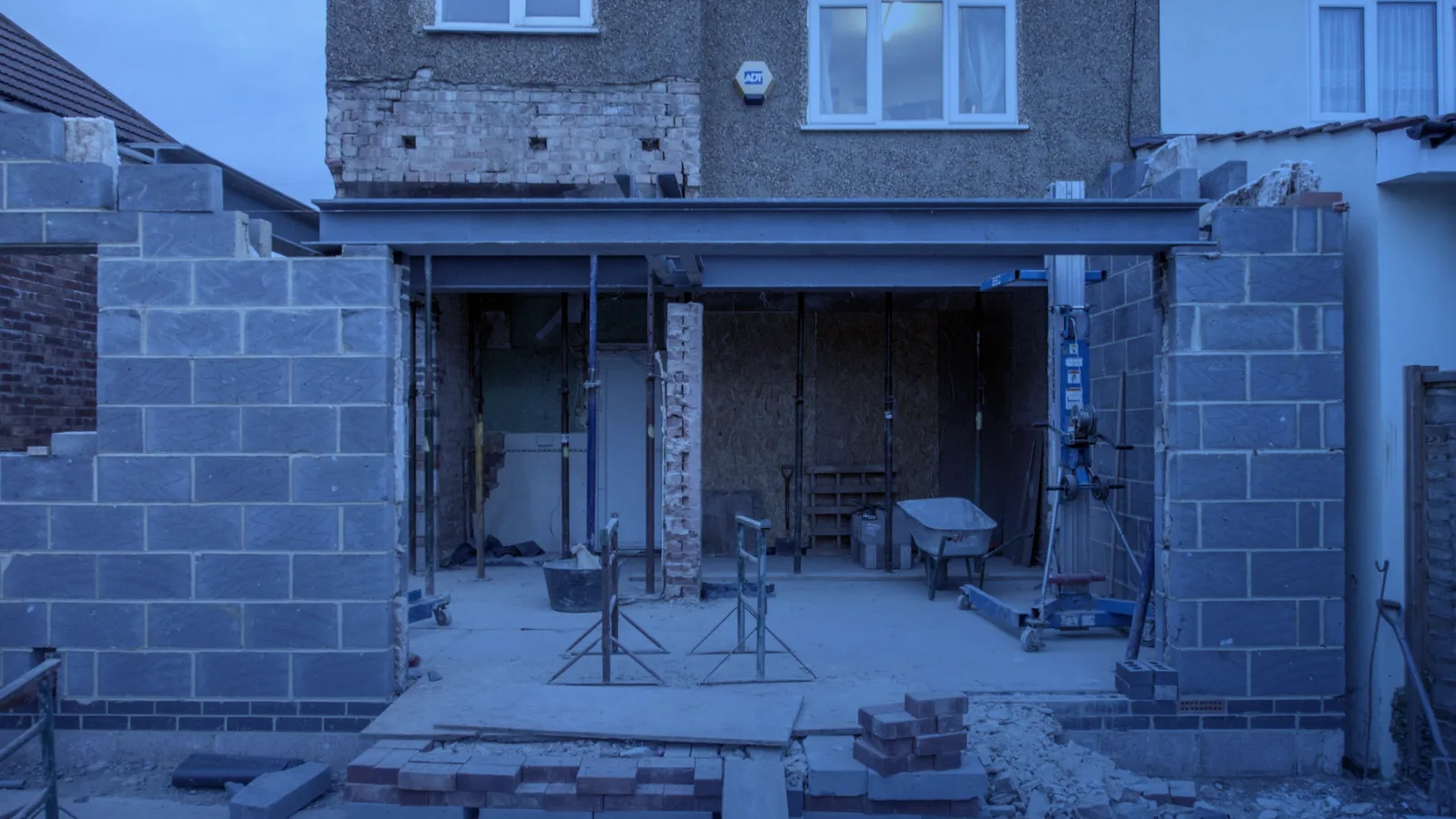
The most frequent mistakes when extending ducts to a self built addition in Alcalde Díaz are poorly sealed joints, uninsulated sections, crushed or overlong flexible duct, new rooms without a return and a small unit serving more rooms than it can. The camera shows them from the junction with the original duct. Corrections come first and cleaning only afterward, if needed.
A family in Alcalde Díaz makes the house grow as the family grows. First the room at the back, years later the terrace enclosed to have a study room, later the second floor with two bedrooms. The air conditioning is stretched behind the works, sometimes with leftover material, sometimes with a tape somebody had at hand, rarely with a plan. And it works. Until one of the new rooms never quite cools, another smells of dampness and the electricity bill rises without any change in habits.
Which mistakes show up when ducts are extended to an addition?
The first question of the service is not when to clean but what is actually connected to what. The mistakes repeat from house to house. Poorly sealed joints, where the junction leaves openings through which ceiling void dust gets in. Uninsulated sections, with moisture or drops on the inner wall of the duct. Crushed or overlong flexible duct, with tight bends and dust piled in the fold. New rooms with a supply grille and nothing to return the air. And a junction that overloads the unit, with a small air handler serving more rooms than it can.
There is support in the literature for taking these points seriously. A review on duct cleaning published in Indoor Air (Zuraimi, 2010) notes that ducts can accumulate dust and serve as a reservoir of microbes, although there is not enough evidence of health, airflow or energy benefits from cleaning them. The useful reading for an addition is a different one: if ceiling void dust enters through an open joint, cleaning without fixing the joint only prepares the next visit of the dust.
Behind this guide is Climatiza, an inspection and duct cleaning service, which always starts from the real condition of the system before proposing any work in Alcalde Díaz.
Why does it matter to fix it if air is coming out?
It matters for comfort, which is what the owner notices first, and for the equipment, which works harder to compensate for leaks and rooms without a return. It matters for humidity: an uninsulated section in a hot ceiling void sweats, and that water ends up in a ceiling stain, in mold on the edge of the grille or in a smell that no air freshener corrects. And it matters for order, because the day the house is sold or rented, or a new extension is built, it helps to know what is behind the ceiling.
It is worth speaking plainly about what cleaning does not do. The EPA and the CDC note that it has not been shown to prevent health problems. The EPA considers cleaning ducts when there is visible mold in quantity, pests or ducts so loaded with dust that they release it through the registers, and recommends correcting the cause first. That is why here the report puts the corrections first and the cleaning afterward, only where it is needed.
What does the visit to an extended house look like?
It starts with a hand drawn sketch. The owner tells when each extension was built and, if there are plans or photos of the roof works, they are used as a guide. Then the camera begins at the point where the duct of the original house joins the new section, and runs through the new section checking joints, insulation, bends and grilles, comparing them with the original. It is a short visit compared with a cleaning, and it delivers what is scarcest in this kind of house: a map of what is there.
An illustrative case, not a real client: an Alcalde Díaz house with a second floor of two bedrooms, whose duct was joined to the ground floor section with tape. The camera shows the open joint at a corner, a six meter flexible section with a folded bend and a room without a return. The report lists three corrections, redo the joint, shorten the flexible duct and open a return, and leaves cleaning as a later decision, because the bonded dust is slight. Once corrected, the shots are repeated for comparison.
What does the report include, and when is cleaning done?
The report is short and graphic. It records the condition of the unit, with its coil and its pan, the junction between the original duct and the new section, each branch up to its grille and the return if there is one. Each mistake comes with an image and a concrete action, and at the end the access points that would be worth leaving for future checks are noted. With that the owner can request the fix from whoever is responsible without depending on verbal descriptions, and consult an air conditioning technician about the capacity of the unit.
- Photo of the junction between the original duct and the new section.
- Condition of the joints and insulation of the new section, with leak points marked.
- Length and bends of the flexible duct, with the fold marked if there is one.
- Rooms without a return and a proposal for where to open it.
- What is corrected first, what is cleaned afterward and what stays under observation.
Not every extension has problems. If the camera shows firm joints, continuous insulation and little dust, the report says so and the next check is scheduled when something changes. The NADCA ACR standard serves as a reference for assessing and cleaning, but it does not replace a technician’s eye on what was built. To understand how a visit is organized in the area there is the Alcalde Díaz page, the other zones make it possible to compare access and schedules, and the camera inspection explains the equipment and the route. The criteria for deciding whether cleaning is due after correcting are in the guide on when to clean.
Scheduling a review starts with a message to Climatiza, and the service page summarizes the process.
Sources
On this site
- Residential towers and PH buildingsHow the work is organized in this sector
- Alcalde DíazThe area and its building types
- Camera inspectionThe real condition before deciding
Climatiza and Radar Panamá
Why does inspecting and cleaning ducts matter?
These are the technical reasons, with their source, why the condition of the ducts is checked before deciding. Duct cleaning has not been shown to prevent health problems according to the EPA and the CDC, and it is proposed only when the observed condition justifies it.
| Advantage | Data with source | What it means in practice |
|---|---|---|
| Protect equipment performance | In a laboratory test with dust equivalent to one year of use, coil pressure drop rose between 6 and 30 % and efficiency (EER) fell between 1 and 9 % (Yang, Braun and Groll, ARTI, 2004). | It is a laboratory result and not a promise of savings: it points to the components worth checking. |
| Keep humidity under control | The EPA recommends in its guide to mold and moisture keeping indoor relative humidity below 60 % and drain pans clean and draining freely. | A humidity reading and a clean pan limit the conditions in which mold grows. |
| Require method and a report from the provider | NADCA published in 2025 the current edition of its ACR standard on assessment, cleaning and restoration of air systems. | It is an industry reference and not a seal: it helps ask for method, photographs and scope in writing. |
| Keep construction dust out of the system | The EPA and NIOSH Building Air Quality guide asks to block return grilles while construction work takes place in occupied buildings. | Before accepting a new or remodeled system it is worth checking whether construction dust got in. |
Frequently asked questions
What are the most common mistakes when extending a house's ducts?
Poorly sealed joints, uninsulated sections, crushed or overlong flexible duct, new rooms without a return and a small unit serving more rooms than it can. The camera shows them from the junction with the original duct.
Does an addition's duct need cleaning before the joints are fixed?
No. If the joint is open, the duct gets dirty again with ceiling void dust. Joints, insulation and return are corrected first, and the section is cleaned afterward only if bonded dust remains.
Can the camera say if the unit is too small for the addition?
No. The camera shows the condition of the duct and the connections, but the capacity of the unit is assessed by an air conditioning technician. The report can point out the rooms that do not cool and the suspect connections for the technician to check.
Which errors in a do-it-yourself extension affect the air of the whole house?
Leaks at poorly sealed joints, among others. A field study of 31 California homes (Modera, 1993, Energy and Buildings) measured that the distribution fan added 0.45 air changes per hour to the measured exchange of 0.24, and that duct tightness had not improved in houses built after 1979.
What is done if the new room of an extension has no air return?
Adding a return and an access panel is evaluated, and if the branch overloads the unit, an HVAC technician is consulted about its capacity. Cleaning does not fix the design. What was badly done is redone first, and only afterward is the section cleaned, if it holds heavy dust.
Keep reading the guide

Request an inspection
Do you want to know the condition of your system?
A camera inspection lets you see the inside of the ducts before deciding what to do. Message us and we will confirm availability.
- +507 6388-2083
- info@climatizapanama.com
- Calle Gervasio García, 8, Panama City