
El Cangrejo
El Cangrejo: older low rise, what to do with grilles no longer made
In an El Cangrejo building, the grille that breaks when opened has no replacement, and that is where the decision begins.
 By
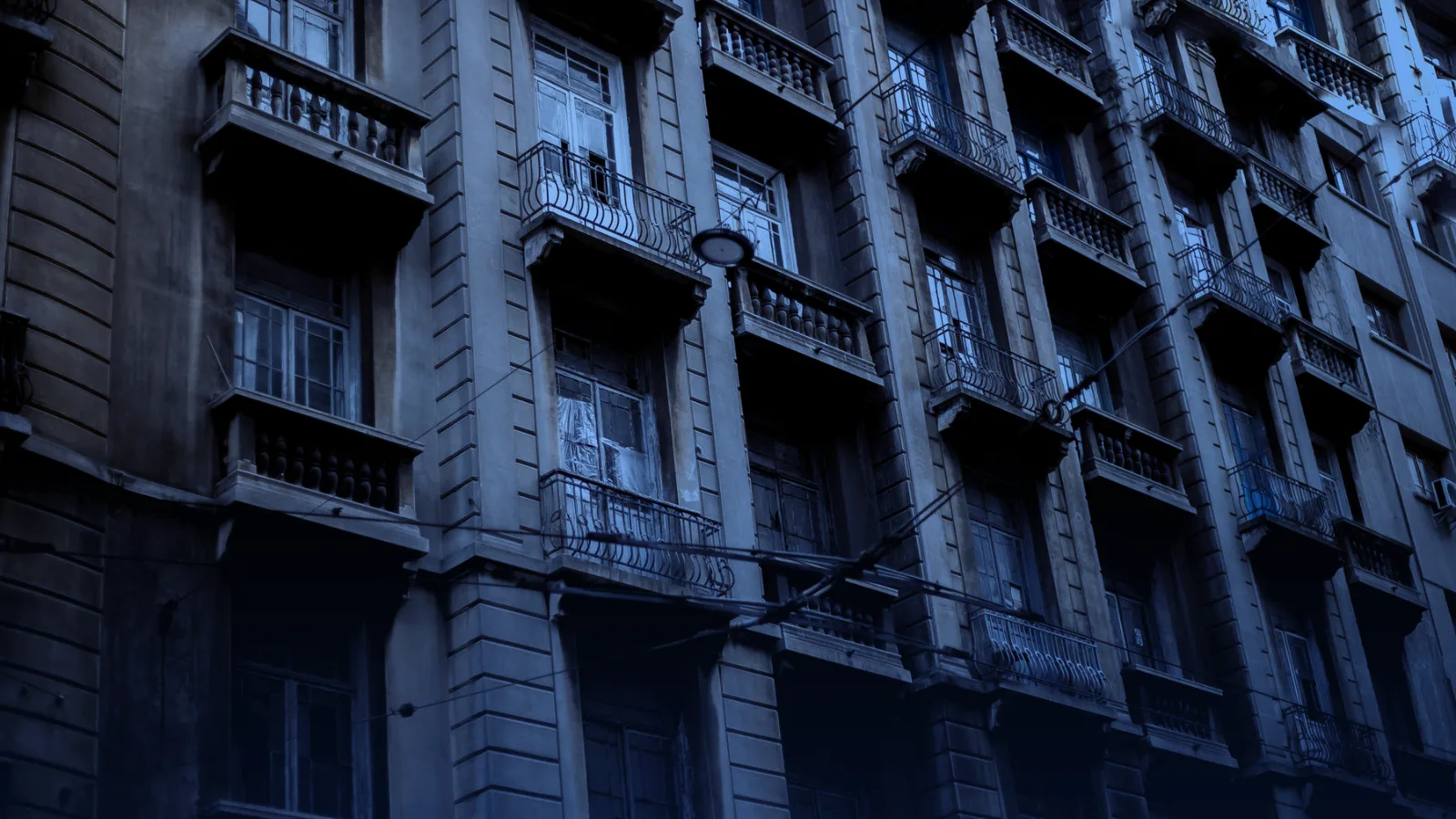
Old grilles and access panels with no replacement in an El Cangrejo building are restored if the frame is sound, adapted with a custom piece if the frame is damaged, or replaced by an equivalent model when it helps to unify. The camera decides whether the duct needs to be opened, and the replacement is agreed with the administration before touching the grille.
In the low rise buildings of El Cangrejo a scene repeats. Someone asks to check the ducts, the technician climbs a ladder, pushes the anodized aluminum grille from the sixties or seventies and, loosening the screws, an edge breaks. Nobody has made that model for decades. The administration wonders whether to replace just that grille, replace all of them or stop opening them.
The answer is not technical but one of judgment. With a grille that has no replacement there are three reasonable paths, and choosing well among them avoids spending and arguments.
What can be done with a grille that is no longer made?
It can be restored, adapted or replaced. It is restored when the frame is sound: the screws are removed carefully, it is cleaned, only the screws or tabs are replaced and it is fitted again. It is adapted when the frame is damaged but the opening is standard: a workshop makes a custom piece with the same look. And it is replaced by an equivalent model when it helps to unify the building or when the condition of the duct calls for frequent opening.
Climatiza is the technical service behind this guide and works with camera inspection, an illustrated report and cleaning only when the condition justifies it, including in the case of El Cangrejo.
What is not advisable is to decide on the spot, with the broken grille in hand. It is recommended to review beforehand a sample of the building grilles, see how many are in what state and decide a policy as a whole. That avoids improvising grille by grille.
And the access panels that were never made?
In buildings of that era it is frequent for the ducts to have no access panels or for the existing ones to be sealed under paint. That matters because without access no inspection is possible, and then the decision to clean or not is taken blind. Opening a new access panel in a duct section is a small intervention, made with a well sealed sheet metal cover, and is usually more sensible than depending on an old grille that breaks.
The practical rule is that the decision of where to open is taken with the camera, from the most accessible panel, and not from a plan. Plans from the sixties rarely match what was built.
Why does it matter if the grille is just a finishing piece?
It matters because the grille is the door of the inspection. If the building cannot open it without breaking it, every review turns into an argument. It also matters for sealing, since a badly fitted grille lets unfiltered air and ceiling dust through, and for aesthetics, which in a building with character such as those of El Cangrejo counts more than it seems. And for order: having a written criterion for grilles saves time for the next administration.
Zuraimi, 2010, reviewed the evidence and concluded that ducts can accumulate dust and act as a reservoir for microbes, but that there is not enough evidence of benefit from cleaning them. That is why the decision on grilles and access panels does not rest on health promises but on being able to see the condition of the system when needed.
What is a visit to an older building like?
- Grille sampling. A selection of grilles from different floors is checked to see the state of frames and screws.
- Open what can be opened. Only sound ones are opened, and doubtful ones are photographed without touching.
- Camera through the available access. The route is done from wherever there is safe access, and the sections left unseen are noted.
- Policy proposal. The report suggests which grilles to restore, which to adapt and where to open new access panels.
An illustrative case, not a real client: a four floor building with original grilles in each apartment. Of ten checked, six have a sound frame, three have a damaged edge and one is sealed with paint. The sensible decision is to restore the six, adapt the three with a custom piece and open a new access panel where the sealed one was. The context of the neighborhood is in the El Cangrejo page, and the full picture in the areas where work is done. To decide when it is worth opening and looking, when to clean and when not to sums up the criteria.
Which mistakes repeat and what is worth asking for?
The first mistake is forcing an old grille with tools and breaking it. The second is replacing only the one that broke with a modern model that clashes. The third is sealing a grille with silicone so it never has to be opened, and then nobody can inspect. The fourth is not writing down what was decided. It is worth requiring a photographed sample, a policy proposal for the building and the location of the new access panels. The route technique is in the camera inspection, and the full service in duct cleaning.
For a first conversation about the system, the contact details are on the Climatiza site and the method is described on its duct cleaning service page.
Sources
On this site
- Residential towers and PH buildingsHow the work is organized in this sector
- El CangrejoThe area and its building types
- Camera inspectionThe real condition before deciding
Climatiza and Radar Panamá
Why does inspecting and cleaning ducts matter?
These are the technical reasons, with their source, why the condition of the ducts is checked before deciding. Duct cleaning has not been shown to prevent health problems according to the EPA and the CDC, and it is proposed only when the observed condition justifies it.
| Advantage | Data with source | What it means in practice |
|---|---|---|
| Anticipate the tropical humidity | According to ETESA (Tocumen station, 1977 to 2010), mean annual relative humidity in Panama is 75.7 % and rises to between 78.2 and 82.4 % in the rainy months. | The condensate pan, the drain and the coil are checked first, because that is where moisture builds up. |
| Protect equipment performance | In a laboratory test with dust equivalent to one year of use, coil pressure drop rose between 6 and 30 % and efficiency (EER) fell between 1 and 9 % (Yang, Braun and Groll, ARTI, 2004). | It is a laboratory result and not a promise of savings: it points to the components worth checking. |
| Follow a technical inspection reference | The ANSI/ASHRAE/ACCA 180 standard is the standard practice for inspection and maintenance of commercial HVAC systems. | It is an industry reference, not a legal requirement in Panama, and helps organize the review plan. |
| Keep construction dust out of the system | The EPA and NIOSH Building Air Quality guide asks to block return grilles while construction work takes place in occupied buildings. | Before accepting a new or remodeled system it is worth checking whether construction dust got in. |
Frequently asked questions
Where can a grille identical to the old one be found?
Almost never as a new piece. One can have it made to measure in a sheet metal or aluminum workshop with the same look, or choose an equivalent model and apply it across the building to unify it.
Do all the grilles have to be changed if one breaks?
No. A sample is assessed and the decision is made by condition. Many old grilles are restored without problems. Replacing all is only justified if most are damaged or if the building is to be unified.
Can a duct be inspected without opening the grille?
Sometimes, through a nearby access panel or a new opening in the duct. If the only access is a fragile grille, a separate access panel is preferred so the original piece is not damaged.
How is an old grille documented so an identical one can be made?
Front and side photos are taken, along with the measurements of the opening and frame, the material, the type of fastening and the pattern design. With that sheet a workshop can make a custom piece without removing the original until the swap, and the administration keeps the record.
What are the risks of forcing an old grille out?
Forcing it can break the frame, shake loose old paint and built-up dust and damage the wall. That is why the first step is to inspect through the slats with the camera, and if opening is needed, proper tools are used and the area is protected. A firm grille can be restored without removing it.
Keep reading the guide

Request an inspection
Do you want to know the condition of your system?
A camera inspection lets you see the inside of the ducts before deciding what to do. Message us and we will confirm availability.
- +507 6388-2083
- info@climatizapanama.com
- Calle Gervasio García, 8, Panama City