
Villa Lucre
Villa Lucre: house near road works, how much dust enters the ducts
The works on the street raise dust from early morning, and the house takes it in through windows, doors and also through the air conditioning.
 By
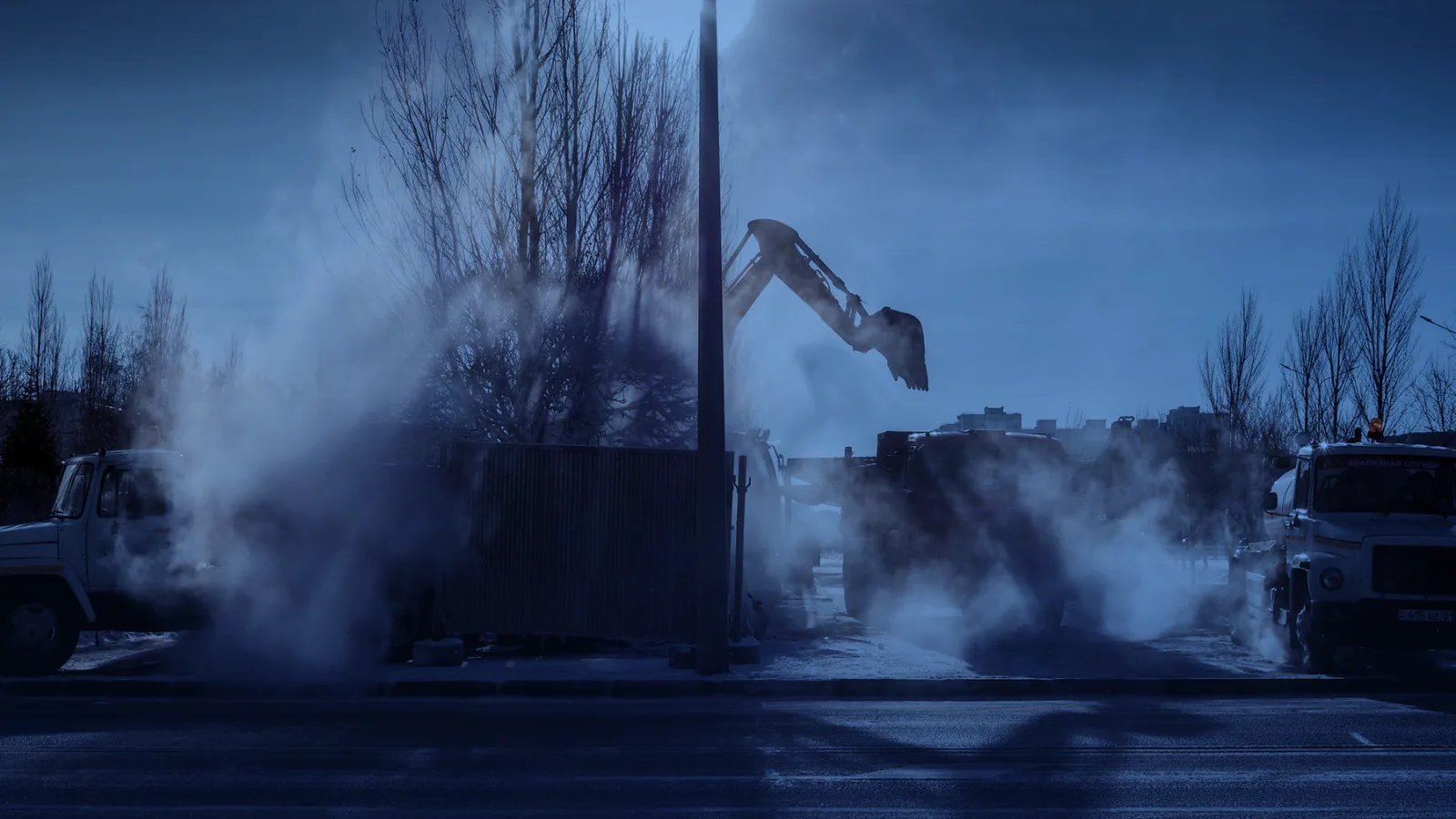
Dust from a nearby road project reaches a Villa Lucre house through windows, doors and, above all, through the system itself, which recirculates air through the filter and the coil. To know how much came in, those two points and the first stretch of the branch are looked at. While the works continue, it is better to reinforce the filter and hold off on duct cleaning until the source ends.
For anyone living beside a public works site, dust is a daily companion. It shows up on the windowsill at eight in the morning, on the car hood, on the dining table even with windows closed. Villa Lucre has lived with nearby road and infrastructure works for years, and in the houses facing those streets the air conditioning becomes the next suspect.
The suspicion is reasonable, but the answer is not to clean everything as soon as possible. While the works go on, dust keeps arriving, and a duct cleaned today can load up again within weeks. What does make sense is knowing how much came in, by which route and what is worth doing in the meantime.
How does dust from the works get in and reach the duct?
It comes in through windows and doors, of course, but the route that matters most for air conditioning is the system itself. The unit recirculates the house air through the filter and the coil, so any particle already inside passes there several times. A systematic review of air quality in homes in tropical climates, published in 2025 in Buildings, identified traffic dust penetration as a solid pattern and recommended filtration and humidity control.
Behind this guide is Climatiza, an inspection and duct cleaning service, which always starts from the real condition of the system before proposing any work in Villa Lucre.
That evidence supports starting with the filter. It is the first place where the load shows, the easiest to check and the cheapest to reinforce. Then comes the coil, where fine dust sticks with condensation moisture, and finally the first stretch of the branch. If those three are reasonably clean, the works’ dust did not travel far in.
| What is checked | What it can show | What is done |
|---|---|---|
| Air handler filter | Recent load of fine dust | Change it and check it more often during the works |
| Coil and pan | Dust stuck with moisture | Clean if there is a continuous film or slow drainage |
| First stretch of the branch | Deposit that advances or not | Document and wait until the source ends |
| Supply grilles | Visible dust on the fins | Clean the grilles, not the duct |
Why does it matter to monitor it while the works continue?
Because a loaded filter makes the unit work harder and lets through the dust it no longer holds. It matters for comfort: a dusty house gets cleaned more often, and the air feels heavy even if the temperature is right. It matters for the coil, which with moisture and fine dust forms a film that is hard to remove if allowed to build. And it matters for peace of mind about what is breathed, though it should be said that duct cleaning has not been shown to prevent health problems, according to the EPA.
The ASHRAE preventive maintenance checklist for indoor air quality proposes reading the filter pressure drop each month and inspecting the coils, which fits the logic of reinforcing the filter while the dust source lasts. No special equipment is needed: looking at the filter against the light and noting when it darkens is enough.
When does it make sense to clean the ducts if the works continue?
Almost always afterward. Cleaning a duct while the works continue tends to repeat the job, because the source is still active. When it ends, a camera inspection sets the comparison line: if the branch is clean, the report records it, and if there is a continuous deposit coming out of the grilles, cleaning of the stretch is scheduled. The exception is a unit with a thick film on the coil or a clogged pan, which is attended to sooner because it affects performance.
An illustrative case, not a real client: a Villa Lucre house facing a road project. The filter darkens every few weeks and the owner asks whether the ducts need cleaning. The camera shows fine dust on the filter and the coil fins, but the first stretch of the branch is matte with no continuous deposit. The report recommends reinforcing the filter, cleaning the coil and looking again with the camera when the works end. The duct is not touched for now.
Which mistakes repeat and what is worth asking for?
Swapping in a finer filter without checking that the unit tolerates it repeats, which limits airflow. Sealing windows and running the air all day, thinking that keeps dust out, also repeats, when the system recirculates what is already inside. And paying for a full cleaning in the middle of the works and paying again six months later repeats.
- A check of filter, coil and first stretch with dated photos.
- If there is an attached shop or workshop, a separate report for its system.
- Which filter is compatible with the unit and how often to check it during the works.
- A clear recommendation of when to come back with the camera.
With that report, the owner stops guessing and the next check is compared against a base. How the work is organized in the neighborhood is summed up in the visit in Villa Lucre, the other zones are in the zones where the team operates and the criterion for deciding when to clean is in when cleaning is worthwhile and when watching is enough. The camera inspection explains the procedure step by step.
Those who want to go from this reading to a real review can start at the Climatiza service page or write through the main Climatiza site.
Sources
On this site
- Residential towers and PH buildingsHow the work is organized in this sector
- Villa LucreThe area and its building types
- Camera inspectionThe real condition before deciding
Climatiza and Radar Panamá
Why does inspecting and cleaning ducts matter?
These are the technical reasons, with their source, why the condition of the ducts is checked before deciding. Duct cleaning has not been shown to prevent health problems according to the EPA and the CDC, and it is proposed only when the observed condition justifies it.
| Advantage | Data with source | What it means in practice |
|---|---|---|
| Require method and a report from the provider | NADCA published in 2025 the current edition of its ACR standard on assessment, cleaning and restoration of air systems. | It is an industry reference and not a seal: it helps ask for method, photographs and scope in writing. |
| Know whether cleaning is needed before deciding | The EPA states in its duct cleaning guide that cleaning is justified for visible mold, pests or a notable buildup of dust and debris. | A camera inspection documents the condition and allows a decision based on evidence, without unnecessary work. |
| Protect equipment performance | In a laboratory test with dust equivalent to one year of use, coil pressure drop rose between 6 and 30 % and efficiency (EER) fell between 1 and 9 % (Yang, Braun and Groll, ARTI, 2004). | It is a laboratory result and not a promise of savings: it points to the components worth checking. |
| Keep construction dust out of the system | The EPA and NIOSH Building Air Quality guide asks to block return grilles while construction work takes place in occupied buildings. | Before accepting a new or remodeled system it is worth checking whether construction dust got in. |
Frequently asked questions
Does dust from road works enter my house's ducts?
It can, mainly through the filter, which recirculates the house air. That is why the filter, the coil and the first stretch of the branch are checked first. If they are reasonably clean, the dust did not travel far in.
Is it worth cleaning the ducts while the works continue?
Almost always no: the dust source is still active and the work repeats. Meanwhile the filter is reinforced and the coil cleaned if needed. When the works end, a camera decides whether the branch needs cleaning.
How often is the filter changed near a construction site?
More often than in a normal house, and according to what it shows: when it darkens or loads up. The date of each change is noted to see the trend, and which filter the unit tolerates without losing airflow is confirmed.
How often should the filter be checked while road works continue next to the house?
More often than in a normal period. ASHRAE’s air quality maintenance checklist, written for commercial buildings, proposes reading filter pressure drop every month and inspecting the coils. In a house with active construction dust, that logic works as a minimum and is worth reinforcing.
What does the literature show about traffic dust in homes in tropical climates?
A systematic review by Cedeño-Quijada and colleagues (2025, Buildings) on indoor air quality in homes in tropical climates identified traffic dust penetration as a solid pattern, and recommended filtration and humidity control. It supports starting with the filter before the duct.
Keep reading the guide

Request an inspection
Do you want to know the condition of your system?
A camera inspection lets you see the inside of the ducts before deciding what to do. Message us and we will confirm availability.
- +507 6388-2083
- info@climatizapanama.com
- Calle Gervasio García, 8, Panama City