
Vía Argentina
Vía Argentina: terrace and open doors, do they affect the ducts?
Full terrace, open doors and the dining room air conditioning running flat out. It is the nightly scene on Vía Argentina, and the ducts feel it.
 By Limpieza de Ductos Panamá
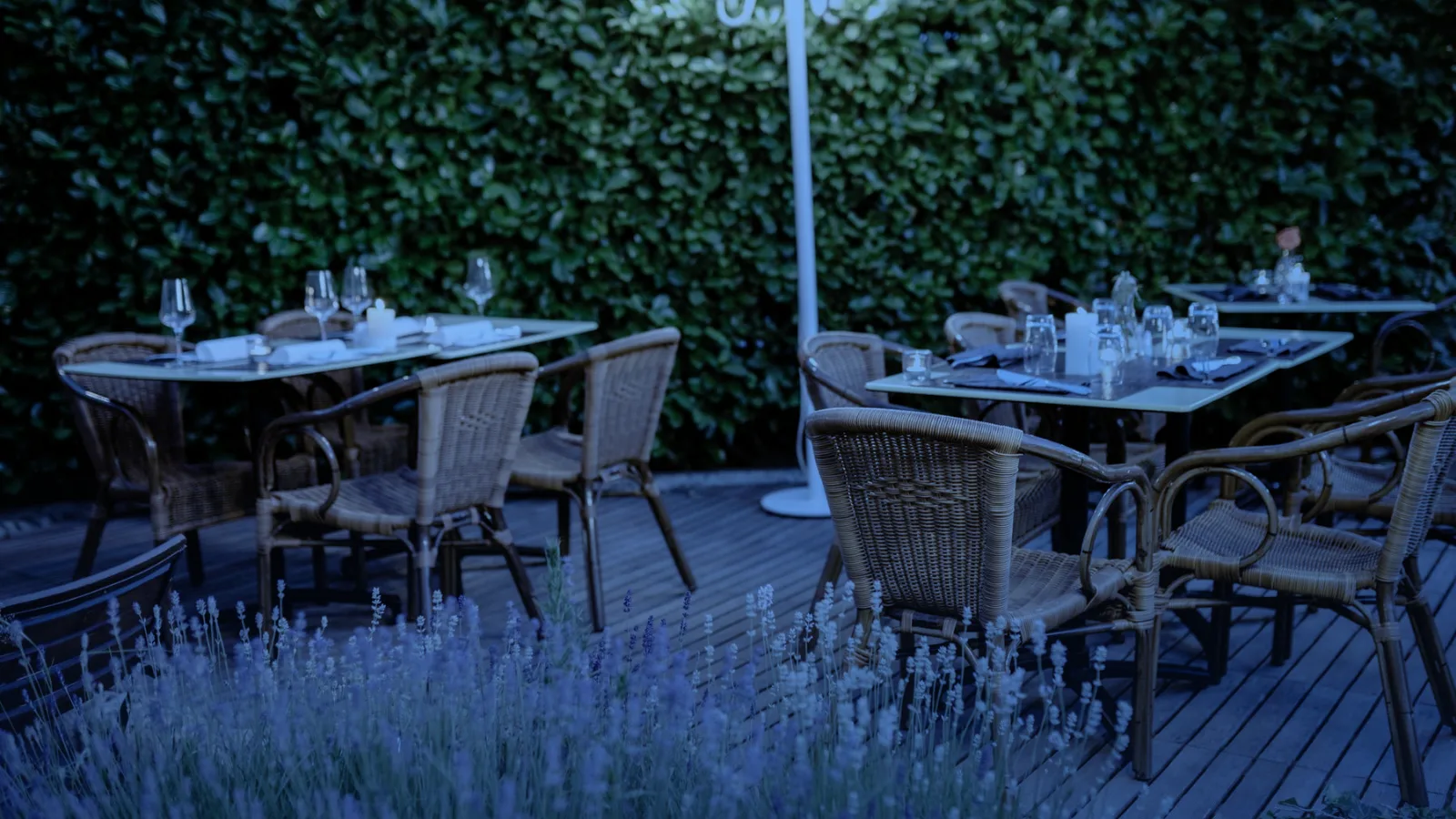
Yes, they do. Every door open to the terrace lets in warm, humid air that the dining room system has to cool and dry, and with it comes sidewalk dust and pollen from the boulevard. The result shows as sweating grilles, returns that get dirty faster and a musty smell when opening in the morning. It does not force blind cleaning, but it does call for looking more often and correcting the air intake.
Open doors and outdoor humidity
According to the ETESA and IMHPA climate characterization, average relative humidity in Panama is 75.7 % and in October it climbs to 82.4 %. Every time the terrace door stays open, that air enters the dining room and the coil runs longer to condense it. The pan collects more water, the supply duct gets colder and any uninsulated stretch starts to sweat on the outside.
The EPA, in its mold remediation guide for commercial buildings, recommends keeping indoor humidity below 60 % and keeping drip pans clean and freely draining. In a Vía Argentina restaurant with open doors, that 60 % is hard to hold in the rainy season, which is why the critical point is not the duct itself but the pan and the supply run closest to the door.
Street dust in the indoor dining room
Vía Argentina was born in 1947 as a tree lined central boulevard, and the trees are still there. Shredded leaves, pollen and the fine dust of traffic and sidewalks come in with the guests and with the air. The dining room return, which usually sits near the door to make the most of the airflow path, becomes the first filter of the premises. If the unit filter is saturated, that dust passes to the coil and from there into the ducts.
The fieldwork is carried out by the Climatiza team, who check branches, grilles and air handlers and record the result in an illustrated report, also in the case of Vía Argentina.
There is a second source that gets confused with the street: airborne grease from the kitchen when the exhaust does not keep up with the air escaping through the door. That mix of grease and dust is what forms the dark, sticky film on the louvers. How to tell one from the other and when action is warranted is explained on the page about when to clean ducts and how it should be done.
Signs on the dining room grilles
| What is seen | Likely cause | What to do first |
|---|---|---|
| Drops on the supply grille by the door | Humid terrace air against cold metal | Reduce the opening, check insulation of the run |
| Gray fluff on the return within weeks | Sidewalk dust and pollen coming in through the door | Change the filter and check its fit in the frame |
| Dark, sticky film on the louvers | Kitchen grease mixed with dust | Check the kitchen exhaust before the ducts |
| Musty smell when opening in the morning | Humidity built up with the unit off overnight | Check pan and drain, then the duct with a camera |
Frequency for premises with a terrace
There is no fixed number. What changes compared with a closed dining room is the pace of checking, not the decision to clean. A Vía Argentina restaurant with a terrace checks filters and grilles more often than one with a door that is always shut, and runs the camera when one of the signs in the table appears, not by calendar. In the rainy season the cycle shortens, in the dry months it stretches. The inspection planner based on how the premises are used helps estimate that level of attention.
A routine for the manager
- Look at the return every week. With the phone light it is easy to see whether fluff already covers the louvers. If it does, the unit filter is next.
- Check the condensate pan every two weeks. It should be empty or with water flowing to the drain, never standing or slimy.
- Control the door. A door closer or an air curtain reduces what gets in without shutting the terrace. Floor staff should know why it matters.
- Note the signs with a date. Drops, odor or dust with the date and that day weather. Three notes already show a pattern and the decision is made with data.
- Run the camera when the pattern repeats. A camera inspection of the run near the door tells whether the dust reached the duct or stayed in the filter.
What sets a food premises with a terrace apart from a closed dining room restaurant lies in the pace, not the method, and the street setting, with its low buildings and ground floor businesses, is described on the page for Vía Argentina and its premises.
To ask about availability or request a camera inspection, the Climatiza website lists the ways to contact the team and the duct cleaning service page explains how the work is organized.
Sources
On this site
- Restaurants and coffee shopsHow the work is organized in this sector
- Vía ArgentinaThe area and its building types
- Camera inspectionThe real condition before deciding
Climatiza and Radar Panamá
Frequently asked questions
Do drops on the grille mean the duct is dirty?
Not necessarily. Drops appear when humid air touches cold metal, and that happens with a clean duct if the door is open and the run is not insulated. The door opening and the insulation are checked first, and only afterwards is the interior looked at with a camera.
Does an air curtain at the terrace door help at all?
It reduces the entry of warm air and dust when the door stays open, although it does not remove it. Its effect depends on correct sizing and on the dining room not being under negative pressure from the kitchen exhaust. It is a help, not a replacement for the filter.
With a terrace, do ducts need cleaning at set intervals?
No. What shortens is the check cycle for filters, grilles and pan. Duct cleaning is decided when the camera shows built up dust or a specific problem, and it makes sense to do it after correcting the cause, because if the door stays the same the dust returns.
Keep reading

Request an inspection
Do you want to know the condition of your system?
A camera inspection lets you see the inside of the ducts before deciding what to do. Message us and we will confirm availability.
- +507 6388-2083
- info@climatizapanama.com
- Calle Gervasio García, 8, Panama City