
Sector · Offices and corporate towers
Floors, tenants and schedules: how duct inspection is organized in an office tower
In an office building each floor has its own rhythm, and the one who decides is usually the property manager.
 By Limpieza de Ductos Panamá
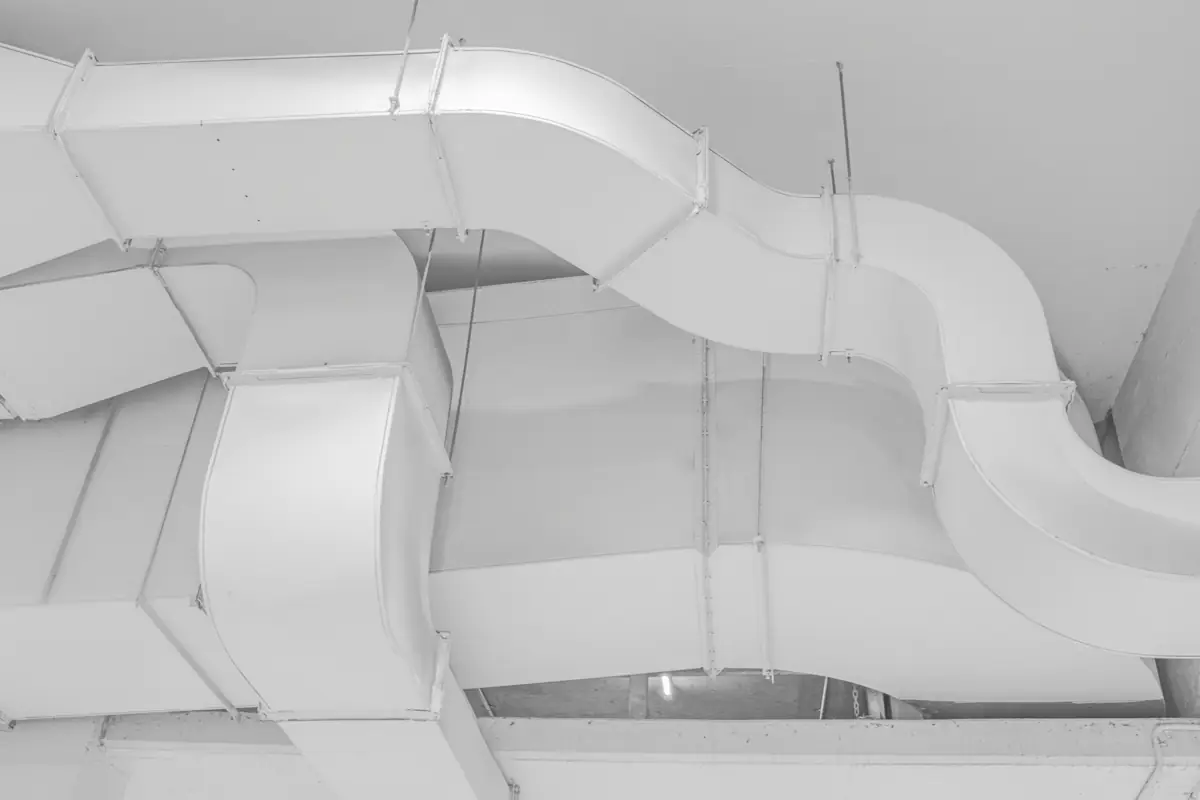
Duct cleaning in an office tower is the camera inspection and cleaning of the inside of the ducts of each air conditioning system, organized by floors and schedules in agreement with the property manager. The camera shows the real condition and that decides what is cleaned, what is fixed and what is only monitored.
What sets offices and corporate towers apart
Facts that help decide in offices and corporate towers
- Technical fact: OSHA’s guide for commercial buildings says that buildings with several tenants may need an evaluation to make sure one tenant’s emissions do not adversely affect another. It is advisory guidance, not a standard. (OSHA 3430-04, Indoor Air Quality in Commercial and Institutional Buildings)
- Peer-reviewed study: In 97 US office buildings (the EPA BASE study), less frequent cleaning of cooling coils and drain pans was associated with more eye symptoms and headache among occupants. It is an observed association and does not prove a cause. (Mendell et al., Indoor Air, 2008)
- Peer-reviewed study: A literature review notes that air conditioning systems may increase sick building syndrome symptoms compared with natural ventilation if they are not clean, and that hygiene and maintenance of air handling systems matter. (Seppänen and Fisk, Indoor Air, 2004)
Types of place within offices and corporate towers
| Type of place | What changes in the work plan |
|---|---|
| Insurance companies | A floor plan, with customer service on the ground floor |
| Securities firms | An agreed time slot so operations are not interrupted |
| Trust companies | Rooms used rarely: their condition is checked before they are switched on |
| International organizations | A calendar tied to the meeting schedule |
| Conference rooms | The returns of the room and of the corridors around it |
| Corporate canteens | The canteen air is kept apart from the floors |
| Academies and institutes | Afternoon shifts: the work is done in the morning or on weekends |
| Medical offices | Which unit serves the office is checked |
How the work is organized in offices and corporate towers
- Talk to the property manager. It is defined which floors, in what order and with which access permits.
- Inspect a typical floor. A representative floor and the common areas are viewed with a camera before widening the scope.
- Hand over a document that can be forwarded. The report is written so the property manager can share it with tenants or the board.
An example of what the report brings
What you are left with at the end
- A plan by floors and schedules
- Photographs organized by floor
- Findings separated into clean, fix and monitor
- A suggestion of when to look again, based on how the building is used
Areas where offices and corporate towers are served
Reference sources
- EPA: Should You Have the Air Ducts in Your Home Cleaned? (guide written for homes)
- EPA: Building Air Quality, a Guide for Building Owners and Facility Managers (guide for building managers)
- ANSI/ASHRAE/ACCA Standard 180: inspección y mantenimiento de sistemas HVAC comerciales (industry reference)
- Technical references of this site, with all 45 sources
On this site
- All sectorsWhat changes in each type of place
- Camera inspectionThe real condition before deciding
- Service areasWhere work is done
Climatiza and Radar Panamá
Related guides and answers
Frequently asked questions
Can the work be done with tenants in the building?
Yes. It is agreed with the property manager which floors are worked on and at what hours, to disturb as little as possible.
How often should the ducts of a tower be cleaned?
There is no fixed frequency. The decision rests on what the camera shows: odors, moisture, visible dirt on grilles or a history of construction work. With the report, the property manager decides whether to clean or only monitor.
What does the property manager receive?
A report with photos of the inside of the ducts and the findings in order, ready to forward to a tenant or present to the board.
What if a damp smell appears on only one floor?
It starts with that floor and the camera, because the source may be in one unit or one section, and from there it is decided whether the review has to be widened to the rest of the building.
How often does it make sense to check the ducts in offices and corporate towers?
There is no fixed frequency. It makes sense to look when a floor has odors or moisture, after construction work, or when tenants complain repeatedly.
What does the report include for offices and corporate towers?
It brings photographs of the inside of the ducts. It is written so the property manager can forward it to a tenant or present it to the board.
Keep exploring

Request an inspection
Do you want to know what your place needs?
Tell us what type of place it is and which area it is in. A camera inspection shows the inside of the ducts before anything is decided.
- +507 6388-2083
- info@climatizapanama.com
- Calle Gervasio García, 8, Panama City