
Beauty salons
Beauty salon: dye and keratin chemicals in the ducts
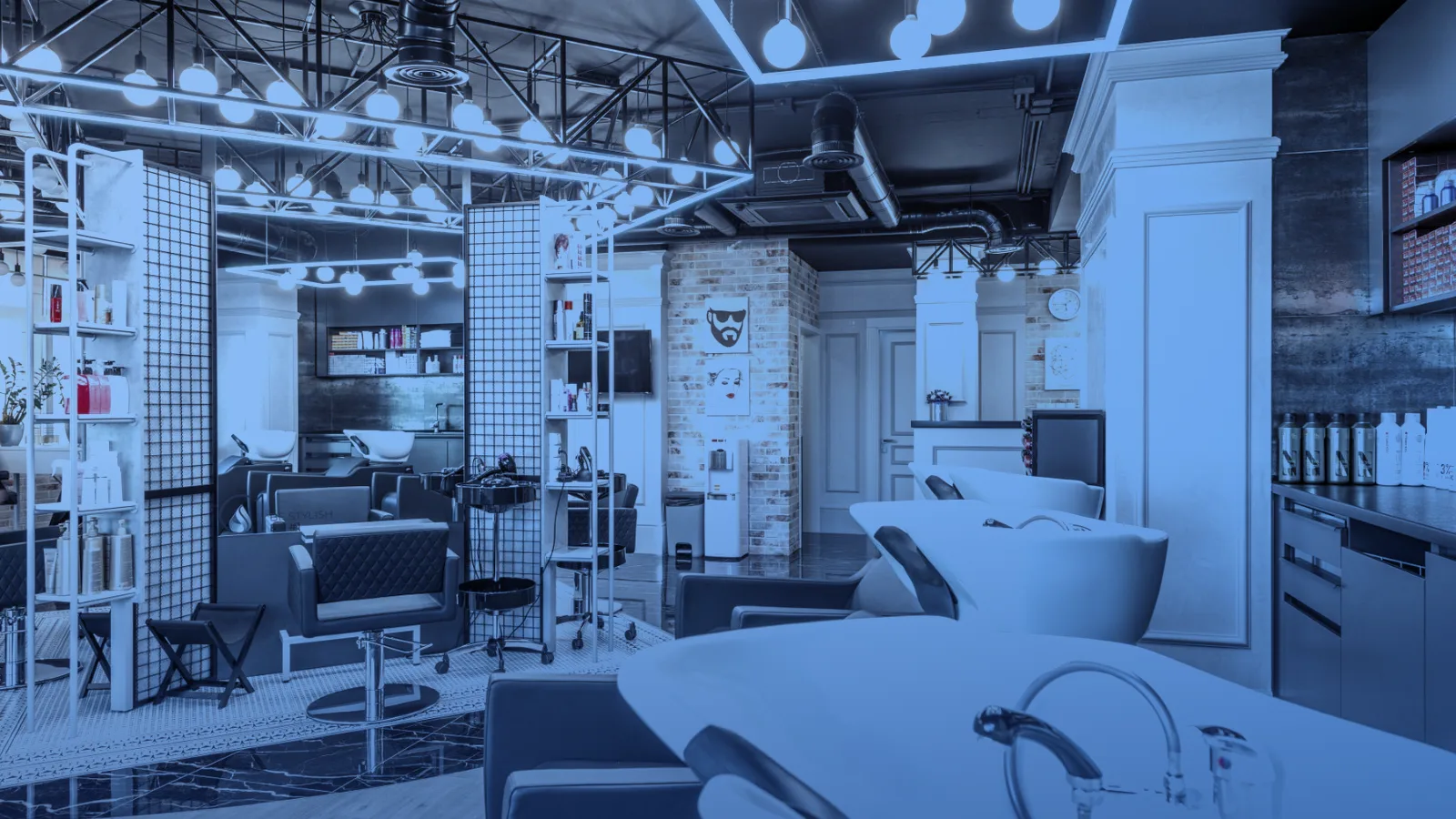
Every salon service releases something into the air: ammonia from dye, formaldehyde from smoothing treatments, monomer from acrylics, resin from hairspray. The air conditioning return takes all of it in daily.
 By Limpieza de Ductos Panamá
Yes, they do. Dye and smoothing vapors are gases the duct carries and that partly condense, but what really stays is the resin from hairsprays and fixatives: it forms a sticky film on grilles and the first meters of duct that traps nail dust and hair. The result is a smell that comes back every morning and grilles that get dirty faster than normal.
What vapors each salon service produces
| Service | What it releases into the air | Where it is noticed first |
|---|---|---|
| Dye and bleaching | Ammonia and peroxide vapors during application and processing time | Sharp smell at the station and at the nearest return grille |
| Keratin and smoothing treatments | Formaldehyde released by flat iron heat, even in products labeled formaldehyde free according to OSHA | Eye and throat irritation at the station during ironing |
| Acrylic and gel nails | Methacrylate monomer and fine filing dust | White layer on the manicure table and on the grille above it |
| Hairspray, fixative and shine spray | Resin aerosol that settles as a sticky film | Grilles that feel tacky with stuck dust that does not shake off |
OSHA warns that some smoothing products release formaldehyde above its limits during use, that levels from 0.1 parts per million irritate nose, throat and lungs, and that the salon must have adequate ventilation. That warning explains why smoothing is treated as the highest-load service, even though it is not the one that dirties the duct the most.
Where they settle inside the duct
Dye and smoothing gases travel with the air and mostly leave through the diffusers or get diluted, but a fraction condenses on the cold coil of the air handler and in the duct stretch right after it. Hairspray resins do something else: they arrive as fine droplets, stick to the fins of the return grille and the first elbow of the duct, and there form a layer that never dries. Nail filing dust and short hair settle on that layer, and the whole thing becomes a deposit that releases smell when the system starts.
OSHA lists beauty and nail salons among the spaces that become a source of contaminants when they lack local exhaust. A salon with an extractor over each smoothing station and over the nail table sends those vapors outside before the return catches them. A salon that only has air conditioning recycles everything that is applied.
When the system allows it, the review of beauty salons is done by camera through the existing access points, the way the Climatiza technical service performs it.
Warning signs: the smell that comes back and sticky grilles
- Product smell first thing in the morning, with the salon empty and no application under way.
- Return grilles that feel tacky to the touch and do not come clean with a dry cloth.
- White dust on the grille above the manicure table that reappears within days.
- Clients asking about the smell in the waiting area, away from the stations.
- Air handler filter with yellowish stains and a greasy feel instead of dry gray dust.
- Droplets on the diffuser nearest the smoothing station after a day of ironing.
How to check without interrupting appointments
- First thing, before the first appointment. The review starts with the salon empty, when the accumulated smell is clearest and there is no fresh product in the air. The stations that smell most are noted.
- One station at a time. The station is covered with plastic, the nearest return grille is removed and the camera runs through the first stretch of duct behind the grille. The other stations keep working.
- No aerosols while the duct is open. Staff are asked not to use hairspray or spray during the minutes grilles are open, so the aerosol does not go straight into the exposed duct.
- Air handler last. The coil, the pan and the filter are checked when the salon closes at midday or at the end of the day, because switching the unit off cools the premises less at that time.
The way a visit is organized between open stations and treatment rooms allows a medium salon to be covered in one morning. The EPA notes that duct cleaning has never been shown to prevent health problems, so the goal is to document the real condition and cut the source, not to clean more often. The attention level estimator based on use and warning signs helps set the cadence according to how many smoothing treatments and manicures the salon does each week.
What to ask the duct cleaning contractor
First, photos of the duct interior behind each grille before anything is touched, so the owner sees the resin film and decides with that. Second, the method: in a salon the cleaning is done with mechanical agitation and HEPA-filtered vacuuming, without applying fragranced products that mask the smell for a few days. Third, that the report separates what belongs to the air conditioning from what belongs to each station extractor, because they are different systems and one does not fix the other. Fourth, a written recommendation on local exhaust at the smoothing and nail stations, with the OSHA reference, because without that exhaust the duct will load up again. The guidelines for deciding when to clean and when to wait apply here too, and what is observed in a gym with sweat humidity shows the same principle with a different source.
Questions about a specific building can be sent to Climatiza, and the service description shows what a visit includes.
Sources
On this site
- Beauty salons and spasHow the work is organized in this sector
- Gyms and sports centersA neighboring sector
- Camera inspectionThe real condition before deciding
Climatiza and Radar Panamá
Frequently asked questions
Does formaldehyde from smoothing treatments stay in the ducts?
It is a gas and does not build up as a deposit, but it circulates through the duct and comes out of the diffusers across the whole salon while ironing. OSHA calls for adequate ventilation in salons using those products. Local exhaust at the station is the measure that keeps it out of the system.
Why do salon grilles get dirty faster than office grilles?
Because of hairspray. The resin aerosol leaves a sticky film on the fins that traps nail dust and short hair. In an office the dust is dry and shakes off. In a salon it sticks, which is why the grille looks dark within weeks.
Does the salon have to close to clean the ducts?
No. The work goes station by station, with the station covered and the nearest grille open, while the others keep serving. The air handler is checked at the midday close or at the end of the day. A medium salon is covered in one morning.
Does nail filing dust reach the duct?
It reaches the grille above the manicure table and, if there is a hairspray film, it stays stuck in the first stretch. It is very fine dust. A table with its own extraction captures it before it rises, which is why it is recommended ahead of any cleaning.
Keep reading

Request an inspection
Do you want to know the condition of your system?
A camera inspection lets you see the inside of the ducts before deciding what to do. Message us and we will confirm availability.
- +507 6388-2083
- info@climatizapanama.com
- Calle Gervasio García, 8, Panama City