
Bakeries and pastry shops
Flour in bakery ducts: why it builds up and what to check
The finest flour does not fall to the floor. It stays in the air long enough for the air conditioning return to collect it.
 By Limpieza de Ductos Panamá

Flour builds up in the ducts because the finest particles raised by the mixer and by emptying sacks stay suspended and the return pulls them in. Inside the duct, with high relative humidity, flour absorbs water and forms a paste that sticks to the walls and the grilles. The first thing to check is the return closest to the mixer, then the filter and finally the shop diffusers.
How flour travels from the mixing area to the ducts
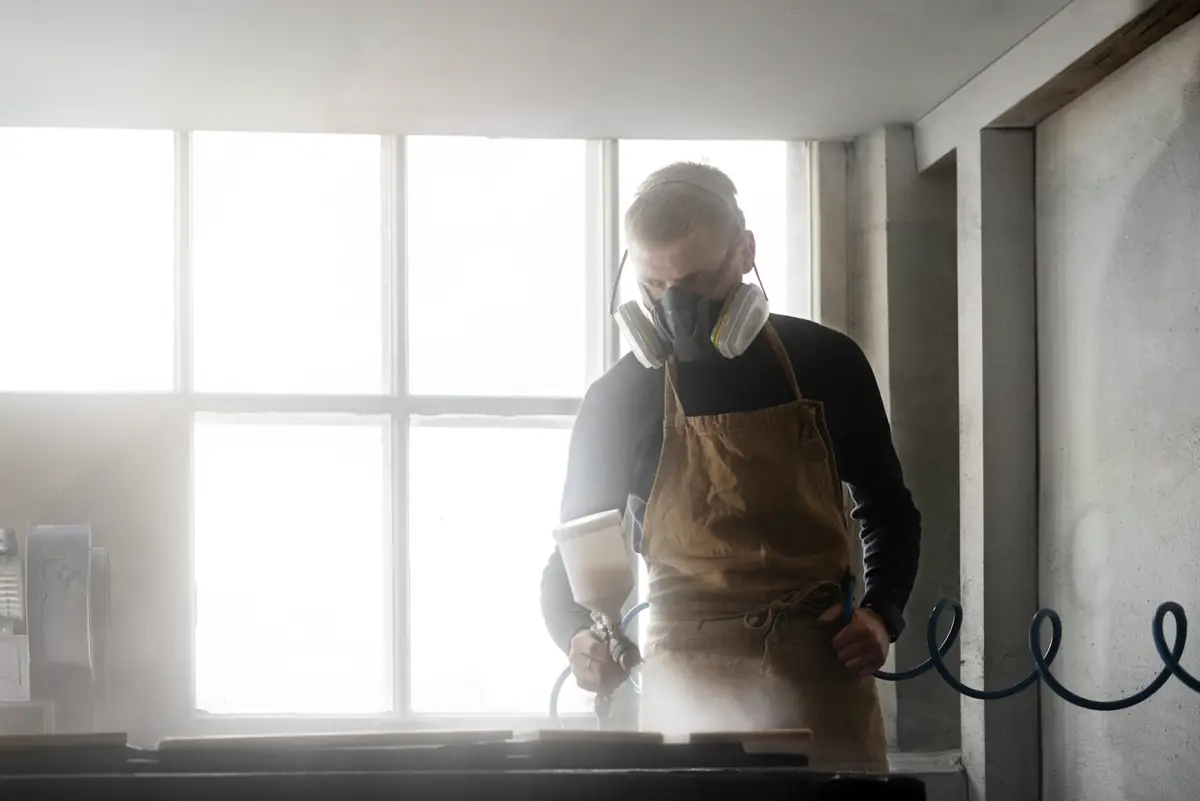
Every time a sack is emptied or the mixer starts, a cloud of flour rises. The coarse particles settle on the table within seconds. The fine ones, invisible against the light except when the sun comes in, stay in the air for several minutes. If the air conditioning is running during that time, the return drags them to the filter.
The filter holds part of it. The rest slips past the edges of the frame, through a badly seated filter or through one that is already saturated, and reaches the coil and the supply duct. In bakeries where production and shop share a single unit, the flour from mixing ends up coming out of the diffusers above the display case.
Flour plus humidity: the paste that clogs grilles
Dry flour is dust and is vacuumed easily. The problem starts when it mixes with water. The annual average humidity in the Panama district is 75.7 % according to ETESA, and in the rainy months it goes above 80 %. Inside a duct, where chilled air hovers around the dew point, flour takes up that moisture, swells and turns into a pasty layer that no longer comes off with compressed air.
The fieldwork is carried out by the Climatiza team, who check branches, grilles and air handlers and record the result in an illustrated report, also in the case of bakeries and pastry shops.
The EPA guide on mold in commercial buildings recommends keeping indoor humidity below 60 % and warns about porous duct liners as a place where mold thrives once they get wet. A layer of damp flour on a porous liner meets both conditions. That is why in bakeries the duct material is checked as well as the residue.
What to check in the production area and in the shop
| Point | What to look for | How often |
|---|---|---|
| Return closest to the mixer | White or gray layer on the louvers, hardened flour at the edges | Weekly, by eye |
| Unit filter | Weight when lifted, even color, frame without gaps | Every two weeks in the rainy season |
| Condensate tray | Whitish sludge, standing water | Monthly |
| Diffusers above the display case | Fine dust on the rim, stains on the ceiling | Weekly |
| Inside the duct with a camera | Layer thickness, liner condition, damp sections | According to what the previous points show |
Flour is also a combustible dust: OSHA includes it in its list of food dusts that can burn rapidly when finely divided. That does not turn the air duct into an explosion risk, but it is one more reason not to let the layer grow unchecked, especially near the oven. The bakeries and pastry shops page describes how the work is split between production and shop.
Frequency according to production volume
There is no single frequency. A bakery that mixes twice a day with 45 kilo sacks loads the return much faster than a pastry shop working with premixed flour in small bags. What can be set is a decision rule based on the points in the table.
- Record how many sacks are opened per week. It is the variable that weighs most. With that figure in hand, one month can be compared with another and it explains why the filter loaded up sooner.
- Photograph the return on the same day every week. When the louver stops looking metallic between two consecutive photos, the filter is going to saturate before the planned date.
- Call for the camera when flour shows on the shop diffusers. If dust reached the supply, it got past the filter and the coil. It is no longer a filter issue but a duct issue.
- Readjust after the rainy season. From December to March humidity drops and flour behaves like dry dust again. The May to November frequency does not have to be kept all year.
With that data, the planner on the site makes it possible to estimate the level of attention the premises need. The general decision criteria, valid for any type of dust, are in when cleaning is worthwhile and when it is not.
What the camera report should show
- Photo of the production return with a reference object to judge the layer thickness.
- A note on whether the residue is dry dust or bonded paste, because it changes the cleaning method.
- Duct material in each section: sheet metal, flexible or porous liner, with its condition.
- Sections with moisture or dripping, marked on a sketch of the premises.
- Condition of the filter frame and whether it lets air pass around the edges.
- List of sections without access and what building work would be needed to reach them.
A report of this kind helps decide whether it is enough to change the filter and clean the first section, or whether the porous liner has to be replaced. For bakeries with a coffee corner or seating area, the aroma and grille signs from the restaurants and coffee shops sector are checked in the same visit. The working method with the camera is described in the camera inspection page.
To ask about availability or request a camera inspection, the Climatiza website lists the ways to contact the team and the duct cleaning service page explains how the work is organized.
Sources
On this site
- Bakeries and pastry shopsHow the work is organized in this sector
- Restaurants and coffee shopsA neighboring sector
- Camera inspectionThe real condition before deciding
Climatiza and Radar Panamá
Frequently asked questions
Does a higher efficiency filter solve flour in the ducts?
It helps with the dust that reaches the filter, but not with what is already inside the duct or with what enters through a badly sealed frame. The frame is sealed first, then raising the efficiency is evaluated without reducing the unit airflow too much.
Does flour in the duct smell?
Dry flour does not smell. Damp, stagnant flour can ferment and give a sour smell in the shop, especially in the morning when the unit starts. That smell is a sign that the residue has already taken up moisture.
Can the duct be cleaned with the bakery open?
Production usually starts before dawn, so the useful window is after the shop closes and before the first mixing. The work goes section by section, starting with the production return, and the display case and work tables are covered.
Should the air conditioning be off while sacks are emptied?
Turning it off for a few minutes reduces the amount of flour reaching the return, but in Panama the oven heat means few do it. An alternative is to empty the sacks away from the return grille and with the mixer covered.
Keep reading
Request an inspection
Do you want to know the condition of your system?
A camera inspection lets you see the inside of the ducts before deciding what to do. Message us and we will confirm availability.
- +507 6388-2083
- info@climatizapanama.com
- Calle Gervasio García, 8, Panama City