
Beach lodgings
Beach lodging: ducts between high season and closed months
A closed lodging is not on pause. The coastal climate keeps working inside the ducts while nobody uses them.
 By
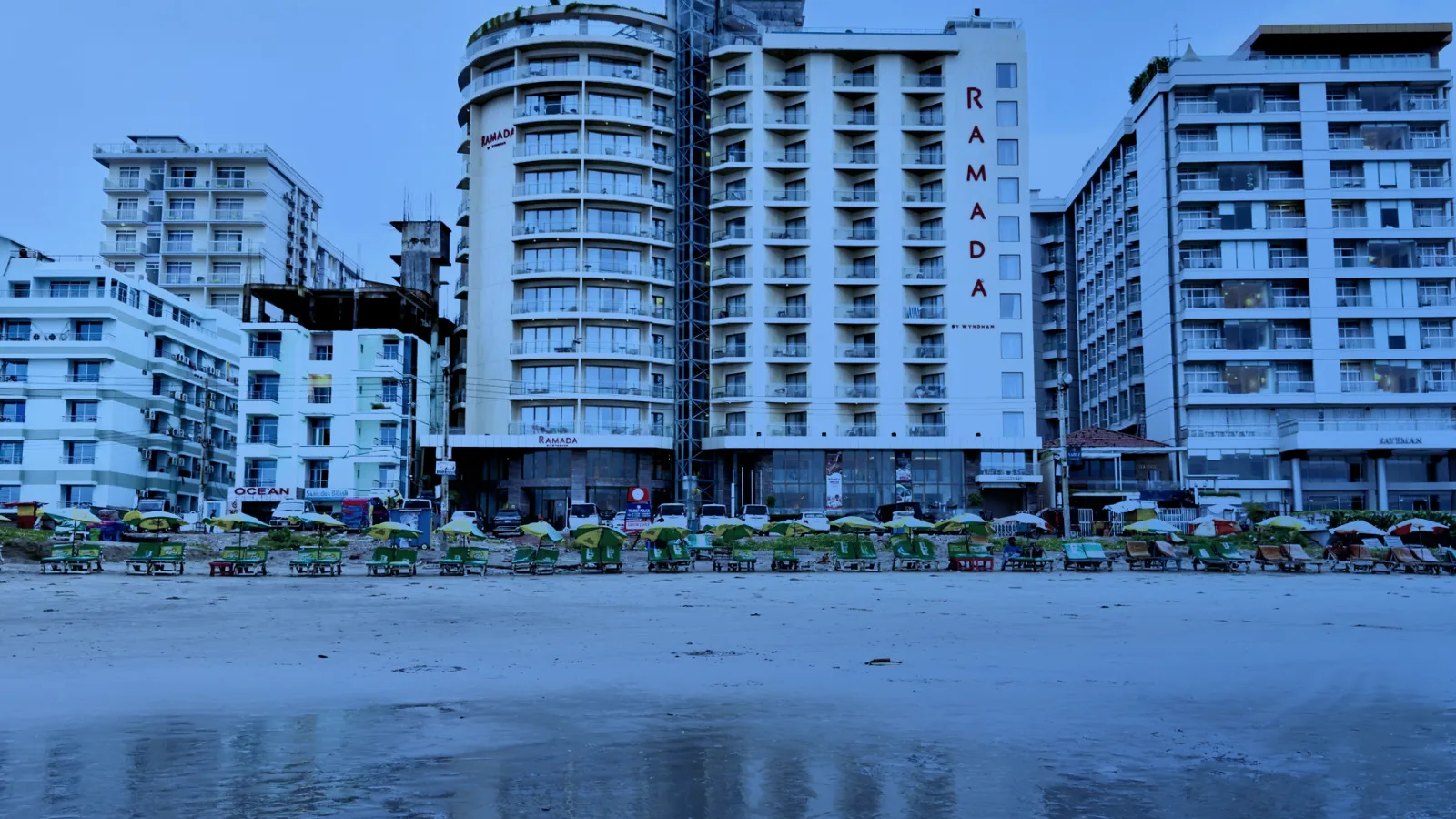
A beach lodging closed for months accumulates humidity in pans, lining and coils, with salt on the metal parts. Before reopening it is worth checking the pans, the first section and the lining with a camera, airing out with the unit off and switching it on in phases. Only what the camera shows with residue or standing water is cleaned.
On the first day of the high season a group arrives, opens the room door and gets a gust of thick air. The air conditioning switches on and for ten minutes blows a shut-in smell the receptionist knows well. By the second night someone asks to change rooms.
That rough start has an explanation, and it is a topic of its own for beach lodgings: the cycle of closed months and full weeks. What happens during the closure decides in large part how the system smells and works when guests arrive.
What happens inside a duct that sits unused for months?
In the tropics, a switched-off system does not dry out. ETESA records relative humidity above 78% at Tocumen between May and November, and on the coast the air is usually just as loaded or more. With the unit off, that humidity enters through the grilles, the joints and the outdoor air intake, and settles in the condensate pan, the coil and the duct lining.
To coordinate a visit related to beach lodgings, Climatiza answers inquiries and confirms availability according to the schedule of the place.
A study on humidity control in the tropics notes that keeping it within a reasonable range amounts, in practice, to running the air almost around the clock (Wu and colleagues, 2020, Letters in Applied Microbiology). When the lodging closes and the air is switched off, that control disappears. The result is not an automatic disaster, but it is a system that reopens with water residue, damp dust and, in the worst cases, visible growth on the lining.
How does salt air add to the humidity?
Beach air carries salt in suspension, and that salt sticks to metal surfaces. With high humidity, salt holds water on the metal and speeds up the wear of exposed parts: the outdoor unit, the coil fins, the grille screws. Inside galvanized sheet duct the effect is milder, but the parts in direct contact with outside air take the toll.
That is why, on a reopening, the look is not limited to the duct. The outdoor unit, the drain and the air intake are also checked, because a blocked pan or an intake with salt residue makes the humidity start over. The EPA and NIOSH guidance on building air quality notes that standing water in the pan under the coil allows mold and bacteria to grow if it is not cleaned often, and a long closure is the context in which that frequency breaks.
Why does it matter to prepare the reopening and not just switch on?
It matters because the first impression of the season forms in the first hours. A shut-in smell on the first night is not fixed with an air freshener, and the reviews of that weekend stay written all year. It also matters for the equipment: switching on a system with the pan full of residue and saturated filters forces an effort that shows up on the season’s bill and in January breakdowns.
Said honestly, duct cleaning has not been shown to prevent health problems according to the EPA, and it is not sold that way here. A check before opening is proposed, and a targeted cleaning only if the camera shows a condition that justifies it. In a beach lodging, the most frequent decision is to clean pans and filters and leave the ducts under watch.
What does a reopening checklist include and when is it scheduled?
- Air out with the unit off. Doors and windows are opened to renew the air in the rooms, and grilles and filters are checked by eye before anything is switched on.
- Pan, drain and coil. The air handler is opened to see whether the pan has standing water or residue, and the drain is checked for free outflow.
- Camera on the first section and the lining. The first supply section and the return show where the humidity settled. If the lining is dark and wet, it is logged for replacement.
- Switch-on in phases. The units of the rooms occupied first are switched on first, and each is watched before moving to the next.
The check is scheduled with margin before the opening date, so there is time to correct what appears without touching reservations. It helps to number rooms and grilles so that the photos of each season can be compared with those of the year before, something a hotel with floors and numbered rooms does naturally. And if the lodging has a reception, a dining room and several cabins, the split by sectors is explained in how the work is organized in a beach lodging.
Which mistakes recur and what is worth asking for?
The most frequent mistake is switching everything on the first day and hoping the smell leaves by itself. Next comes blind cleaning of the whole duct network when the problem lives in a pan or one section. Another is leaving the system running empty during the closure to “keep it dry”, with a cost that is rarely justified. And another is not recording the condition, so every season starts from zero.
- Dated photos of the pan, coil and first section before switching on.
- Condition of the lining and joints, with a note of what is being watched.
- Check of the outdoor unit, the drain and the air intake.
- Switch-on order by room, with the date of each step.
- A summary of what was cleaned, replaced and what remains under watch.
With that documentation, the decision of when to act stops being a guess and rests on the criteria for when to clean, plus the yearly camera inspection described by the inspection method.
Scheduling a review starts with a message to Climatiza, and the service page summarizes the process.
Sources
On this site
- Apartments and beach housesHow the work is organized in this sector
- Hotels and hostelsA neighboring sector
- Camera inspectionThe real condition before deciding
Climatiza and Radar Panamá
Why does inspecting and cleaning ducts matter?
These are the technical reasons, with their source, why the condition of the ducts is checked before deciding. Duct cleaning has not been shown to prevent health problems according to the EPA and the CDC, and it is proposed only when the observed condition justifies it.
| Advantage | Data with source | What it means in practice |
|---|---|---|
| Require method and a report from the provider | NADCA published in 2025 the current edition of its ACR standard on assessment, cleaning and restoration of air systems. | It is an industry reference and not a seal: it helps ask for method, photographs and scope in writing. |
| Know whether cleaning is needed before deciding | The EPA states in its duct cleaning guide that cleaning is justified for visible mold, pests or a notable buildup of dust and debris. | A camera inspection documents the condition and allows a decision based on evidence, without unnecessary work. |
| Protect equipment performance | In a laboratory test with dust equivalent to one year of use, coil pressure drop rose between 6 and 30 % and efficiency (EER) fell between 1 and 9 % (Yang, Braun and Groll, ARTI, 2004). | It is a laboratory result and not a promise of savings: it points to the components worth checking. |
| A local figure that changes the decision | The 2023 Census counted 135,913 private dwellings vacant for vacation or temporary use nationwide, out of 1,589,018. In Coclé the figure is 18,804 of 108,960, about 17%, against about 9% of the national total. (INEC, 2023 Census, Table 3). | It is the sector context taken into account when planning the visit. |
Frequently asked questions
Should the air stay on during the closed months?
It is rarely justified. The usual approach is to close up properly, air out and check pans and filters before reopening. A dehumidifier in the most sensitive areas can help. Keeping everything running empty almost always costs more than it avoids.
What is looked at first when reopening a beach lodging?
The condensate pan and its drain, because that is where water stagnates. Then the coil, the first supply section and the lining. The camera shows those points without dismantling the system and helps decide what gets cleaned.
Does salt air damage the ducts on the inside?
Less than the exposed parts. The outdoor unit, the coil fins and the grille screws suffer more. Inside the duct the main problem is humidity with dust, which is why the whole system is checked and not just the sheet metal.
What is checked in the condensate pan before reopening a beach lodging?
The check looks for standing water, sludge, rust and drain blockages. According to the EPA (2008), pans should be clean with free drainage, because stagnant water favors mold. If the pan is dirty, it is cleaned and the drainage verified before the unit is switched on for the first time.
How is the air system protected while the lodging stays closed?
The building is kept shut to limit humidity entering, pans are emptied and dried and dirty filters are removed. A trusted person periodically checks for leaks and a musty smell. That routine avoids surprises when the moment to reopen arrives.
Keep reading the guide

Request an inspection
Do you want to know the condition of your system?
A camera inspection lets you see the inside of the ducts before deciding what to do. Message us and we will confirm availability.
- +507 6388-2083
- info@climatizapanama.com
- Calle Gervasio García, 8, Panama City