
Fast food chains
One duct standard for every fast food branch
Ten branches, ten providers and ten ways of saying the duct is clean. The regional management cannot compare anything, and that is where the problem starts.
 By
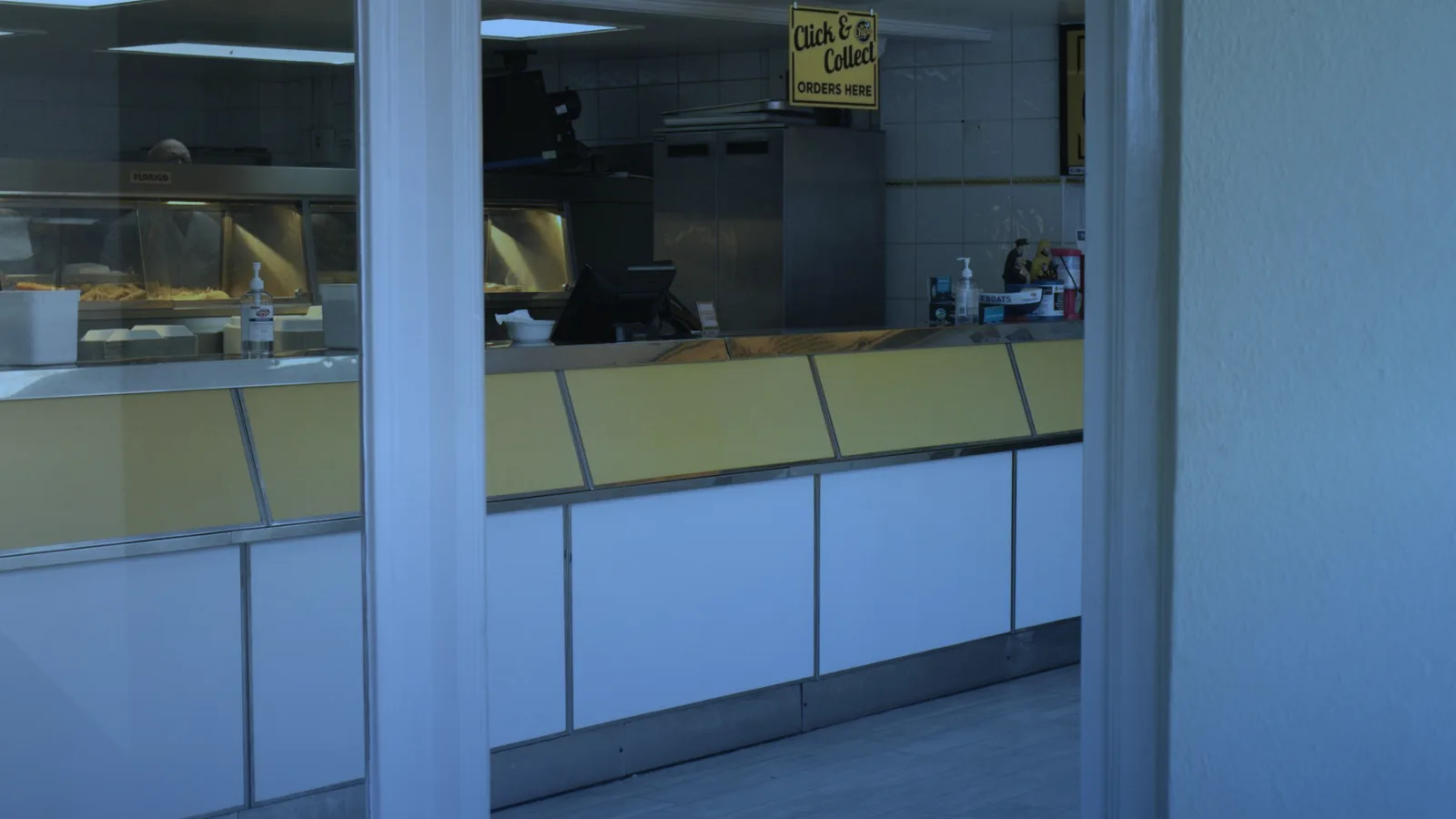
A common standard separates what changes between branches from what does not. The type of equipment, the access and the closing hours change. The inspection points, the photo report template, the scale for rating residue and the audit rule do not. With those four pieces fixed, each outlet keeps its date and its provider, and management compares results with the same yardstick.
After a couple of years, the regional management of a fast food chain opens the duct folder and finds ten different stories. One outlet hired when the manager noticed a smell, another did it on the air conditioning technician’s advice, a third does not remember when the last time was. The photos carry no date, one provider calls “clean” what another calls “acceptable”, and nobody can answer the simplest question: which of the branches is worst.
The opposite impulse does not work either. Demanding the same day and the same provider for all ignores that an outlet inside a shopping center depends on the center’s administration and that another, on the street and with old equipment, has very different access. A useful standard does not make the visits uniform, it makes uniform what is measured and how it is recorded.
What must be the same in every branch and what can change?
Everything that allows comparison must be the same. That includes the inspection points, which are the main return, the filter, the coil, the first supply section and the diffuser above the counter. It also includes the residue scale, with four levels and a reference photo per level, and the report template, with the same fields and the same angles. The type of equipment can change, whether a ducted split, a rooftop package or the shopping center air handler, because the list of points adapts to the equipment without being dropped.
When the system allows it, the review of fast food chains is done by camera through the existing access points, the way the Climatiza technical service performs it.
The schedule and the access can also change, whether a nightly closing, a 24 hour operation or a shopping center permit, and so can the provider, with a single condition: accepting the template and the scale before the first visit. The logic is the one followed by the ASHRAE 180 standard, which defines inspection tasks and a minimum frequency per component and not per building. That idea carries over well to a chain.
Why does it matter so much to unify the criterion?
It matters because without a common criterion there are no decisions made with evidence. Management cannot know which branch needs attention or which can wait, and ends up paying for routine visits in clean outlets while another accumulates residue. It matters for the brand, because the customer who smells frying in the dining room does not tell franchises from head offices. And it matters for order, since a uniform record makes it possible to answer a brand audit, the building owner or the insurer without rebuilding the history.
A 2018 study that measured the air in 44 restaurants in Saudi Arabia found the highest particle levels in the fast food outlets, above those of family restaurants and hotels, and attributed it in part to insufficient ventilation. It is another climate and another country, but it suggests that this type of outlet concentrates load in little space. Honesty about scope is worth keeping: the EPA and the CDC note that duct cleaning has not been shown to prevent health problems, so the standard is justified by equipment condition, odor and order, not by promises of wellbeing.
How is a calendar built that does not pay for extra visits?
The calendar works in two layers. The first is the same for everyone and costs almost nothing: once a month, the person in charge at each outlet photographs the main return and the filter, with the date visible, and uploads the image to a shared folder. The second is the camera inspection, whose date is decided from what the first layer showed and from the outlet. That way the one showing growing residue moves up and the one that stays clean does not get an unnecessary visit.
| Control sheet column | What it records |
|---|---|
| Branch and equipment | Unit type and who authorizes access |
| Monthly photo | Residue level from 1 to 4 with the date |
| Last camera visit | Date, result and sections without access |
| Next action | Decided by the level and not by the calendar |
Panama’s annual mean humidity is 75.7% according to ETESA, and that humidity explains why an outlet with a door open to the street tends to climb levels sooner in the rainy season than one inside a shopping center. The level column shows it without needing a debate. To estimate how much attention each outlet needs with its own signs, the inspection planner serves.
How is it checked that the provider delivered in all of them?
The audit compares by point and not by outlet. The ten photos of the main return are opened side by side: if the angle or the distance does not match, the report is returned. Then it is checked that the before and after photos carry the same visit date, and the list of sections without access is crossed with the previous visit. A section that comes out without access twice in a row forces a decision on works or an acceptance that it stays outside the standard.
An illustrative case, not a real client: a chain with ten outlets discovers that four have the return blocked by the ceiling and no provider had noted it. The shared list of sections without access makes it possible to ask for a single works solution and not four patches. And one random visit per quarter, with the report in hand, is enough for the rest to keep up quality.
Which mistakes repeat and what is worth demanding?
The first is letting each outlet manager set his own criterion. The second is accepting reports without a date, without a location or without a comparable photo. The third is mixing in the same contract the kitchen hood and the air conditioning, two different systems. And the fourth is keeping nothing from before, because without a point of comparison nobody knows whether the residue returns.
- Template and residue scale signed by the provider before the first visit.
- Photos of the same five points, from the same side and with a printed date.
- A list of sections without access in every report, with the reason.
- A report that separates the dining room air from the kitchen exhaust.
- Files delivered to a common folder and not to each manager’s email.
The technical base of what is checked in each outlet is in how the work is organized in a restaurant, the overview of venue types in the sectors where the work is done and the content of a report in what a camera inspection shows. Outlets inside a mall add coordination with the center’s administration, a topic developed in how the work is done in a shopping center.
More about the inspection and cleaning service that applies these criteria is on the Climatiza duct cleaning page and on the Climatiza home page.
Sources
On this site
- Restaurants and coffee shopsHow the work is organized in this sector
- Shopping centers and mallsA neighboring sector
- Camera inspectionThe real condition before deciding
Climatiza and Radar Panamá
Why does inspecting and cleaning ducts matter?
These are the technical reasons, with their source, why the condition of the ducts is checked before deciding. Duct cleaning has not been shown to prevent health problems according to the EPA and the CDC, and it is proposed only when the observed condition justifies it.
| Advantage | Data with source | What it means in practice |
|---|---|---|
| Know whether cleaning is needed before deciding | The EPA states in its duct cleaning guide that cleaning is justified for visible mold, pests or a notable buildup of dust and debris. | A camera inspection documents the condition and allows a decision based on evidence, without unnecessary work. |
| Anticipate the tropical humidity | According to ETESA (Tocumen station, 1977 to 2010), mean annual relative humidity in Panama is 75.7 % and rises to between 78.2 and 82.4 % in the rainy months. | The condensate pan, the drain and the coil are checked first, because that is where moisture builds up. |
| Keep humidity under control | The EPA recommends in its guide to mold and moisture keeping indoor relative humidity below 60 % and drain pans clean and draining freely. | A humidity reading and a clean pan limit the conditions in which mold grows. |
| A local figure that changes the decision | INEC’s Business and Establishment Directory (reference year 2022) records 13,586 establishments in the "Hotels and restaurants" category, the second largest sector by establishments after commerce (39,937), out of 96,397. The category groups lodging and food service, so it is not restaurants alone. (INEC, Business and Establishment Directory 2022). | It is the sector context taken into account when planning the visit. |
Frequently asked questions
Can each branch have its own provider and keep the same standard?
Yes. What is fixed is the report template, the inspection points and the residue scale, not the provider. Each company must accept them before the first visit, and that way management compares outlets no matter who did the work.
Do all branches need the same camera inspection frequency?
No. The monthly photo check is the same for all, but the camera date depends on the residue level each outlet shows. Those that climb levels move up and those that stay clean wait.
How can it be audited without visiting every outlet?
The photos of the same point from the ten branches are compared side by side, the dates are verified and the list of sections without access is crossed. One random visit per quarter, with the report in hand, completes the control.
How often should a chain check the ducts in all of its branches?
There is no single schedule, because it depends on the type of branch and the residue the first camera inspection shows. Branches with open kitchens or heavy foot traffic are checked sooner than low-load ones. ASHRAE 180 (2018) sets minimum inspection and maintenance tasks for commercial systems.
What should each branch report contain so management can compare them?
It should show the same photographed points at every location, the date, the residue grade on a shared scale, the decision taken (clean or leave as is) and the person responsible. With that fixed format, management reads one branch the same way as another and quickly spots the one falling behind.
Keep reading the guide

Request an inspection
Do you want to know the condition of your system?
A camera inspection lets you see the inside of the ducts before deciding what to do. Message us and we will confirm availability.
- +507 6388-2083
- info@climatizapanama.com
- Calle Gervasio García, 8, Panama City