
Senior care homes
Senior home: ducts and air in the resident rooms
In a senior home, the room is not a place of passage. It is where life happens, and the air that reaches it matters every day.
 By
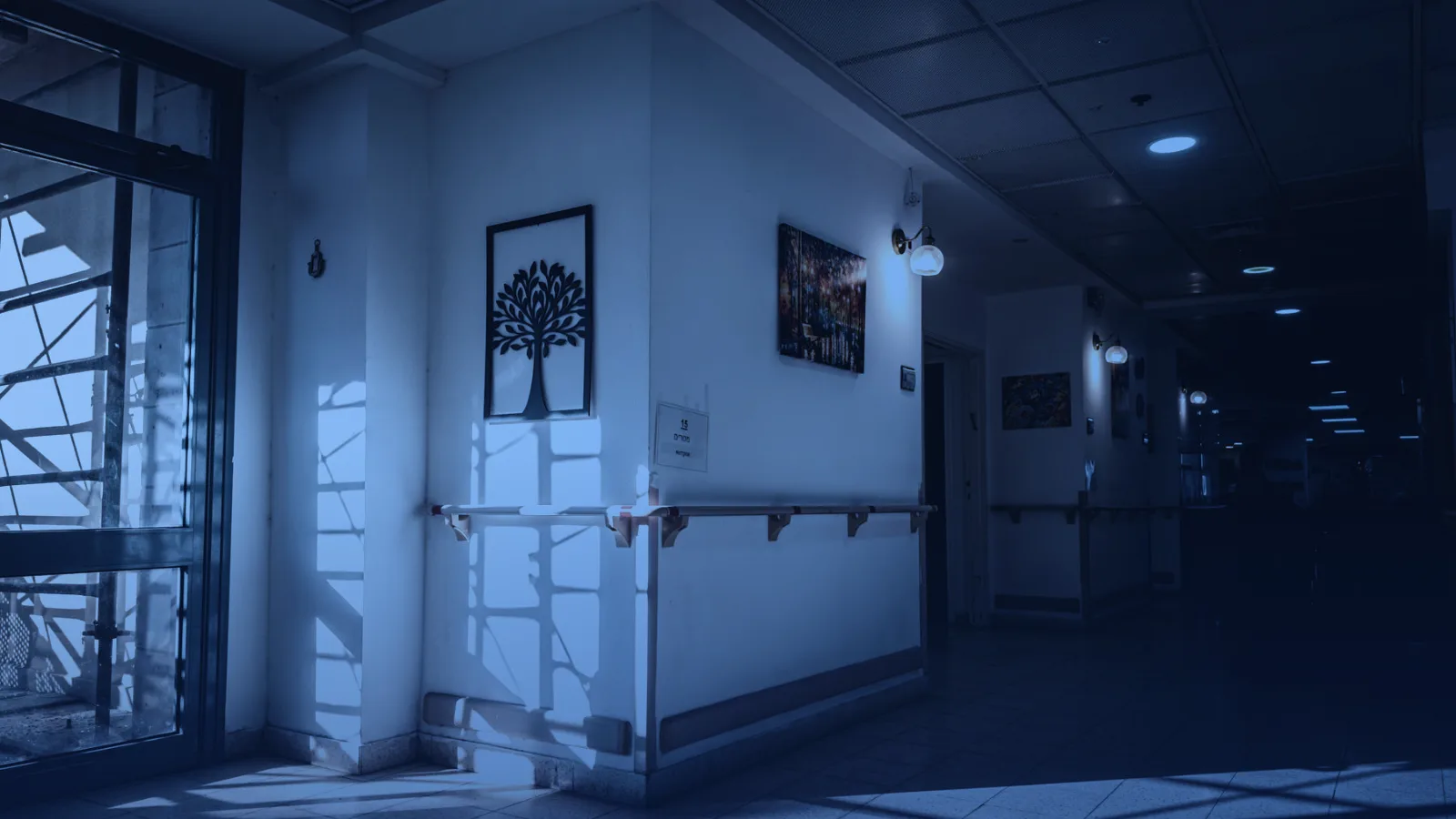
In a senior home the rooms with complaints of odor, heat or moisture and the dining room are checked first, and work moves by wings so residents need not be moved. The camera goes in through the grilles with permission and an escort, and the report, by wing and with photos, serves management and families. No effect on health is promised.
The director of a senior home knows a room is not the same as an office. A resident may spend ten or twelve hours a day there, sometimes more, with the door closed to keep in the cold and the windows unopened. If the air conditioning leaves a stuffy smell or a dampness that shows in the bedding, the person cannot go elsewhere while it is fixed. They live with it, and families notice it as soon as they come to visit.
This article explains what is worth looking at in those ducts, how to organize the review without moving residents and what to tell families. It starts from a clear idea: continuous stay makes comfort and odors weigh more than in a place of passage.
How does it differ from a hotel or an office?
It differs in the length of stay and in the routine. In a hotel, the guest rotates. In an office, the employee leaves. In a senior home, the resident stays, and the room works as bedroom, sitting room and dining room at once. That means the room’s air is renewed little, the moisture from breathing, the bathroom and laundry builds up and the slightest odor becomes permanent. A study of hotel rooms measured CO2 levels above 2,000 ppm in two rooms and suggested checking the ventilation flow, a warning that applies all the more where someone sleeps and spends the whole day in the same room.
The fieldwork is carried out by the Climatiza team, who check branches, grilles and air handlers and record the result in an illustrated report, also in the case of senior care homes.
Where is it best to start: rooms or the dining room?
It is best to start with the rooms where staff or families have already pointed to odor, heat or moisture, and with the dining room, which gathers all the residents and adds kitchen steam. Work then moves by wings, so that each time a group of rooms on the same branch is worked on. If one room has complaints and another on the same branch does not, the camera clarifies whether the source is in the shared branch or in the diffuser of just one.
A room with limited natural ventilation calls for an extra look at the return grilles, which often end up behind furniture. Bathroom and laundry areas, because of their humidity, deserve special attention to insulation and drainage. With an annual mean humidity of 75.7% according to ETESA, the closed room with a private bathroom is the one most prone to condensation.
Why does it matter, and what does the review not promise?
It matters for the everyday comfort of those who live there, for the state of the equipment, which runs many hours in a row, and for the trust of families, who value a home that is looked after in the details. It also matters for order, because a dated report lets management answer with facts when someone asks about the air in a room.
It must be said bluntly: the EPA and the CDC note that duct cleaning has not been shown to prevent health problems, and this review is not presented as a health measure for residents. It is framed as upkeep of the system, care for comfort and odor control, and cleaning is proposed only when the camera shows a visible reason.
How is work done by wings without moving residents?
A slot is chosen when residents are in the dining room, at activities or in common areas, and work goes room by room while they are out. A caregiver escorts the technician and asks permission at each door. If a resident prefers to stay, that room is skipped or revisited later. The camera, silent and small, does not require moving heavy furniture or leaving the room unused.
An illustrative case, not a real client: a home with two wings of eight rooms. Families of three rooms in the north wing mention a damp smell. The camera shows wet insulation in the branch shared by those three and a slow drain in the air handler serving them. The drain is corrected, the insulation is replaced and the branch is looked at again. The south wing rooms, with no complaints, stay as they were.
What to tell families and what to record?
- A short notice with the day, the wing and the reason for the review, with no promises about health.
- Dated photos by wing and by room checked.
- List of rooms not reviewed by decision of the resident or management.
- Actions taken, with dates, and a suggestion of when to look again.
That record serves management, the home’s board and any entity that supervises the service, and the specific requirements should be checked with them. The division of work in care settings with restricted areas is explained in how a review is organized in clinics and hospitals, the criteria for deciding whether a room needs cleaning are in when cleaning makes sense and when to wait, the camera route is detailed in how a camera inspection is carried out and the other places served are gathered in the guide to sectors.
Scheduling a review starts with a message to Climatiza, and the service page summarizes the process.
Sources
On this site
- Hospitals and clinicsHow the work is organized in this sector
- Residential towers and PH buildingsA neighboring sector
- Camera inspectionThe real condition before deciding
Climatiza and Radar Panamá
Why does inspecting and cleaning ducts matter?
These are the technical reasons, with their source, why the condition of the ducts is checked before deciding. Duct cleaning has not been shown to prevent health problems according to the EPA and the CDC, and it is proposed only when the observed condition justifies it.
| Advantage | Data with source | What it means in practice |
|---|---|---|
| Anticipate the tropical humidity | According to ETESA (Tocumen station, 1977 to 2010), mean annual relative humidity in Panama is 75.7 % and rises to between 78.2 and 82.4 % in the rainy months. | The condensate pan, the drain and the coil are checked first, because that is where moisture builds up. |
| Protect equipment performance | In a laboratory test with dust equivalent to one year of use, coil pressure drop rose between 6 and 30 % and efficiency (EER) fell between 1 and 9 % (Yang, Braun and Groll, ARTI, 2004). | It is a laboratory result and not a promise of savings: it points to the components worth checking. |
| Follow a technical inspection reference | The ANSI/ASHRAE/ACCA 180 standard is the standard practice for inspection and maintenance of commercial HVAC systems. | It is an industry reference, not a legal requirement in Panama, and helps organize the review plan. |
| Keep construction dust out of the system | The EPA and NIOSH Building Air Quality guide asks to block return grilles while construction work takes place in occupied buildings. | Before accepting a new or remodeled system it is worth checking whether construction dust got in. |
| A local figure that changes the decision | INEC reports that in 2025 there were 777 health facilities in Panama, 8.0% of them hospitals. Hospital facilities had 8,575 beds, or 1.9 beds per 1,000 inhabitants. The 777 include sub-centers and health posts. (INEC, Health Services 2025). | It is the sector context taken into account when planning the visit. |
Frequently asked questions
Do residents have to be moved to check the ducts?
No. The camera is small and silent and rooms are checked one by one while residents are in common areas. If someone prefers to stay, that room is skipped or revisited later, with a caregiver present.
Does duct cleaning protect residents' health?
It has not been shown to, according to the EPA and the CDC. The review is justified by the condition of the system, comfort and odor control, and cleaning is proposed only if the camera shows visible residue or moisture.
Which rooms are checked first?
Those already with complaints of odor, heat or moisture, and the dining room. Work then moves by wings, grouping rooms that share a branch, to find out whether the source is in the common branch or in a single diffuser.
Why does the air conditioning in a nursing home almost never get turned off?
Because switching it off lets indoor humidity climb toward the outdoor level, which is high in Panama. ETESA reports an annual mean relative humidity of 75.7 percent, over 80 percent in October, while the EPA (2008) recommends keeping indoor humidity below 60 percent. The unit runs almost nonstop and the duct rarely dries out.
Which signs on a resident's room vents should alert the staff?
Dust on the diffuser edge over the bed, bedding lint stuck to the return, a damp smell when the unit starts, and drops or stains on the grille. When several appear together, a camera inspection follows. The EPA considers cleaning when there is visible mold, pests, or ducts releasing dust through the registers.
Keep reading the guide

Request an inspection
Do you want to know the condition of your system?
A camera inspection lets you see the inside of the ducts before deciding what to do. Message us and we will confirm availability.
- +507 6388-2083
- info@climatizapanama.com
- Calle Gervasio García, 8, Panama City