
Capira
Capira: agritourism farm, how to care for cabin and hall ducts
An agritourism farm lives on weekends. Between one and the next, the cabins stay closed with the mountain humidity inside.
 By
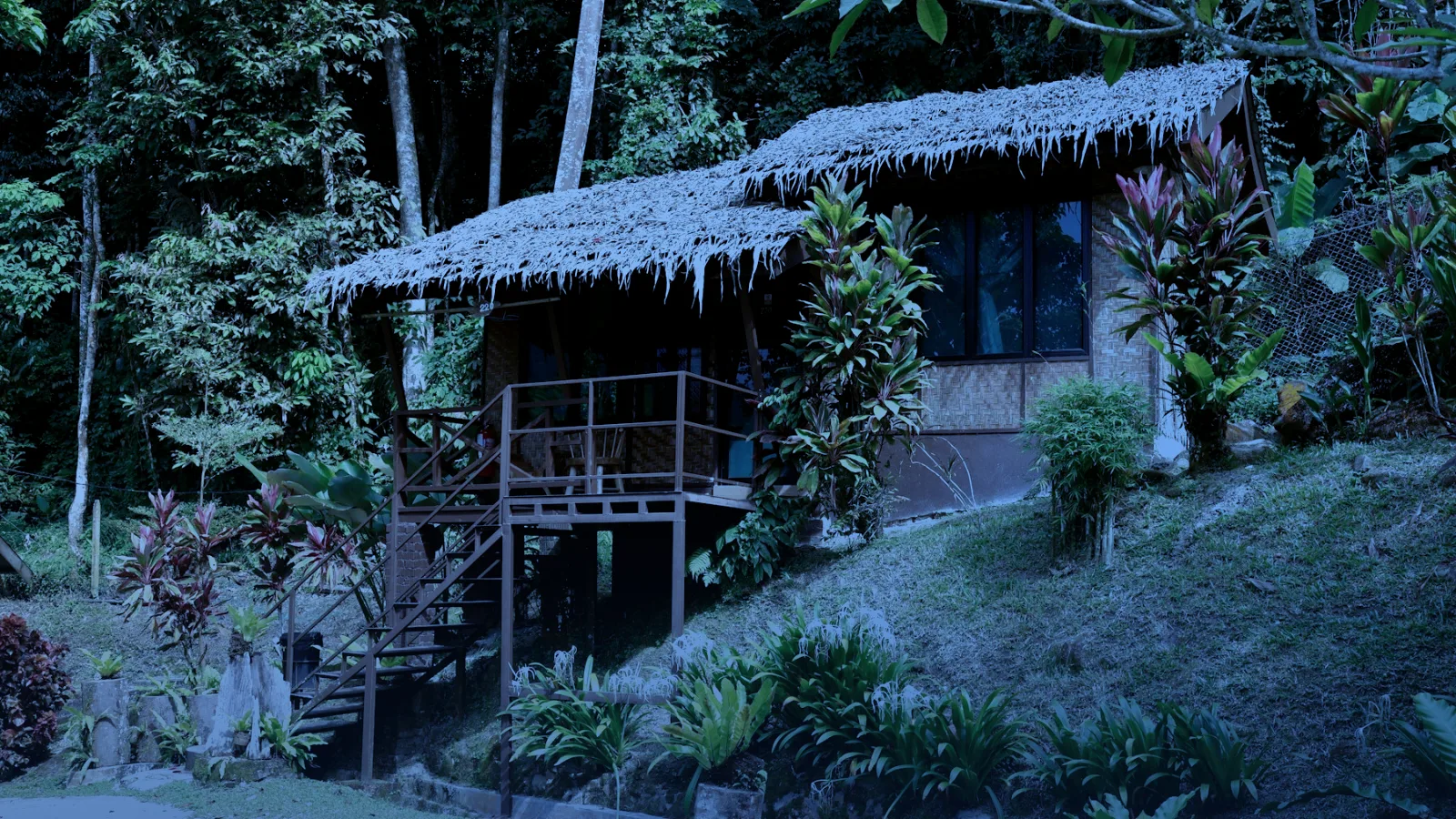
It is cared for with a short routine between weekends and with the camera only when signs appear: a musty smell that does not go away after changing the filter, stains on the ceiling or grilles with drops. In cabins used intermittently, humidity is controlled by checking and drying the pan and filter, not by leaving everything on. The event hall, with a kitchen nearby, calls for its own check because of grease and steam.
Whoever runs an agritourism farm in Capira knows the rhythm: from Monday to Thursday the place rests, from Friday to Sunday families, groups of friends or an event in the hall arrive. The cabins spend the week closed, with the air off, and the mountain, which wakes up foggy and humid almost all year, settles inside. On Friday afternoon the guest opens the door and receives what accumulated.
That pattern differs from the urban hotel and the beach one. The air conditioning neither works all day nor is abandoned for months: it works intermittently, and that defines how it should be cared for. This article explains what to look at, why it matters and how to avoid both neglect and unnecessary cleaning.
What does mountain humidity do to closed cabins?
Humid air enters through gaps and stays. Porous surfaces inside, such as curtains, mattresses and duct liners, absorb it, and the dust that was already there becomes a damp substrate. The EPA notes that porous liners and condensate pans are places where hidden mold can grow, and recommends keeping relative humidity below 60%. A scientific review on humid regions recalls that sustaining such levels in the tropics amounts to using the air conditioning almost all day, something a weekend cabin cannot do.
Anyone who needs to see the real condition of the ducts in the case of Capira can request a camera inspection from the team at Climatiza, a technical duct cleaning service in Panama, which documents every section with images.
That is why the strategy is not to leave everything on but to check and dry. ETESA’s data for Panama show an average annual humidity of 75.7%, but they are from the city. In the Capira mountains it is wise to measure on site with a simple hygrometer, which the owner can leave in a test cabin for a few weeks to learn how much humidity rises between weekends.
Why does it matter in a guest business?
Because the farm sells an atmosphere. Guests come to rest, and a musty smell on opening the cabin, even if it lasts ten minutes, sets the first impression. It shows up in reviews and shapes the next booking. On top of that comes the cost of a humidity problem going unnoticed: a stained ceiling or a dripping pan is discovered on the day of an event, with the cabin full.
The point is not to promise healthier air. The EPA and the CDC note that duct cleaning has not been shown to prevent health problems, and that is one more reason not to clean out of habit. The point is for the unit to work, for humidity not to pile up unseen and to be able to say with photos and dates when each cabin was checked.
What does the routine between weekends look like?
- Switch the unit on at least once between weekends and note whether the air has an odor.
- Empty and dry the condensate pan and check that the drain runs.
- Take out the filter, look at it against the light and replace it if no light passes.
- Look at the grilles with a flashlight: dark edges, drops or ceiling stains.
- Note each observation with date and cabin number, to compare week to week.
The event hall and the nearby kitchen call for their own criterion. If they share a system, grease and steam add to the humidity, and the return closest to the kitchen is the first one checked. On event days the unit works at maximum load and the filter saturates sooner. It is worth looking at it before and after each large event.
A simple way to bring order is a sheet with one row per cabin: date of the last check, filter condition, pan condition and notes. With eight or ten cabins, the sheet shows which ones repeat problems and which do not. Those that repeat usually have a drain with little slope or a poorly placed outdoor unit, and they are fixed once instead of cleaned every season.
When does the camera come in and which mistakes repeat?
The camera comes in when the routine does not resolve it: a smell that persists after changing the filter and drying the pan, stains on the ceiling near an access panel, drops on a grille or a cabin that stayed closed during an entire rainy season. An illustrative case, not a real client: a cabin with a recurring smell. The camera shows the pan with standing water and a damp liner in the first section, with the other branches clean. The drain is fixed, the affected liner replaced and a record kept with photos.
The mistakes repeat: leaving the cabin with a used filter, not testing the drain before the rainy season, cleaning all the farm’s ducts when the problem was in a single pan and not recording what was found. How work is organized in lodging is in the page on hotels and lodging, and the differences with the coast can be seen in beach lodging. The inspection and cleaning service adapts to a group of cabins, and the Capira page summarizes the area’s context. The criteria on when cleaning is due serve to decide which sections to act on.
The next step after this guide is usually a visit to check the system, which is arranged with the team at Climatiza using the details in their duct cleaning page.
Sources
On this site
- Hotels and hostelsHow the work is organized in this sector
- CapiraThe area and its building types
- Camera inspectionThe real condition before deciding
Climatiza and Radar Panamá
Why does inspecting and cleaning ducts matter?
These are the technical reasons, with their source, why the condition of the ducts is checked before deciding. Duct cleaning has not been shown to prevent health problems according to the EPA and the CDC, and it is proposed only when the observed condition justifies it.
| Advantage | Data with source | What it means in practice |
|---|---|---|
| Keep humidity under control | The EPA recommends in its guide to mold and moisture keeping indoor relative humidity below 60 % and drain pans clean and draining freely. | A humidity reading and a clean pan limit the conditions in which mold grows. |
| Follow a technical inspection reference | The ANSI/ASHRAE/ACCA 180 standard is the standard practice for inspection and maintenance of commercial HVAC systems. | It is an industry reference, not a legal requirement in Panama, and helps organize the review plan. |
| Know whether cleaning is needed before deciding | The EPA states in its duct cleaning guide that cleaning is justified for visible mold, pests or a notable buildup of dust and debris. | A camera inspection documents the condition and allows a decision based on evidence, without unnecessary work. |
| Check classroom and hall ventilation | A peer reviewed study of 104 classrooms (Chan et al., 2020) found problems in 51 % of them. | The camera and readings show whether air reaches where it should before each school term. |
Frequently asked questions
Is it wise to leave the air on all week in the cabins?
It is neither necessary nor practical. A routine of checking and drying between weekends is better, with short startups to move the air. A hygrometer says how much humidity rises in each cabin and helps decide.
How often is the event hall’s air checked?
Before and after each large event the filter and the return closest to the kitchen are looked at. The camera is reserved for odor, visible grease or airflow complaints, and the rest is decided by what the report shows.
Do the ducts of all the cabins need cleaning at once?
No. A sample is inspected and only where the camera shows deposit or moisture is cleaning done. A cabin with the air off most of the time usually accumulates less dust than expected, and the camera confirms it without intervening.
What is done with a cabin that smells damp when opened after weeks of being closed?
First the cabin is aired out and the source is sought: a tray holding water, a blocked drain or a damp filter. The EPA recommends keeping relative humidity below 60 % and drain pans clean with free drainage. If the smell persists once all that is corrected, the camera runs through the branch to see the inside.
Does a farm's event hall need more attention than a cabin?
Yes, because it packs many people in for a few hours and the air available per person drops quickly. Filter, returns and grilles are checked before each event season, noting how many returns the hall has. A cabin with two guests carries a lighter load and checking the unit is usually enough.
Keep reading the guide

Request an inspection
Do you want to know the condition of your system?
A camera inspection lets you see the inside of the ducts before deciding what to do. Message us and we will confirm availability.
- +507 6388-2083
- info@climatizapanama.com
- Calle Gervasio García, 8, Panama City